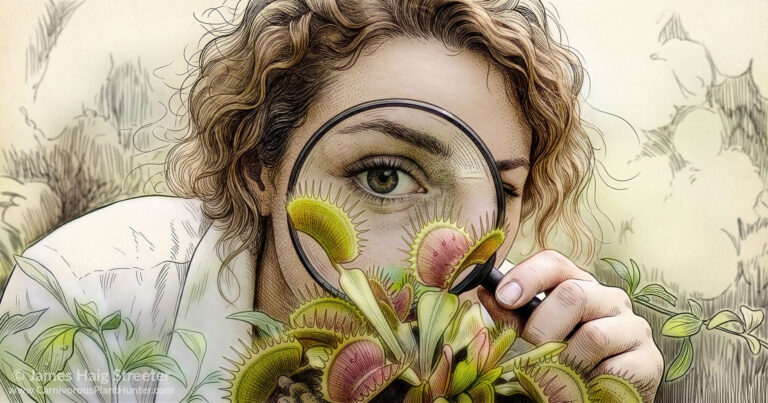
Plants That Change How You See
Why Carnivorous Plants Are More Than a Hobby. They’re a Lens on the Natural World
Noosa National Park, Australia
A spectacular giant sundew — and a rare chance to see evolution in action
Drosera binata, the Giant Fork-leaved Sundew, is rightly seen by many growers as a “must-have” plant in any carnivorous plant collection, and that has certainly been true for me. With its dramatic bright red forked leaves, it was one of the first carnivorous plants I bought as a teenager, looking far more exotic than the smaller and more restrained native sundews I had seen in the UK.
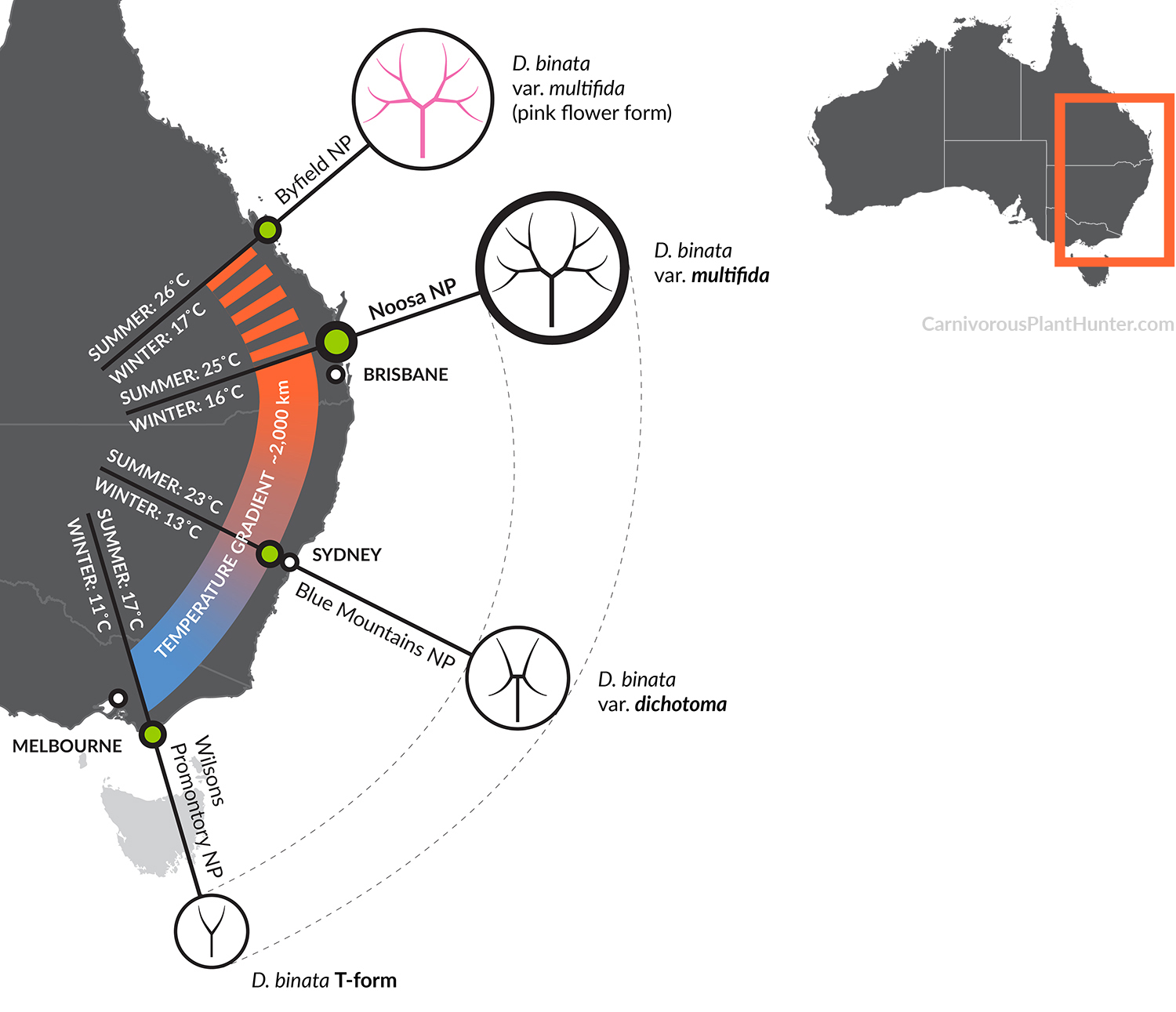
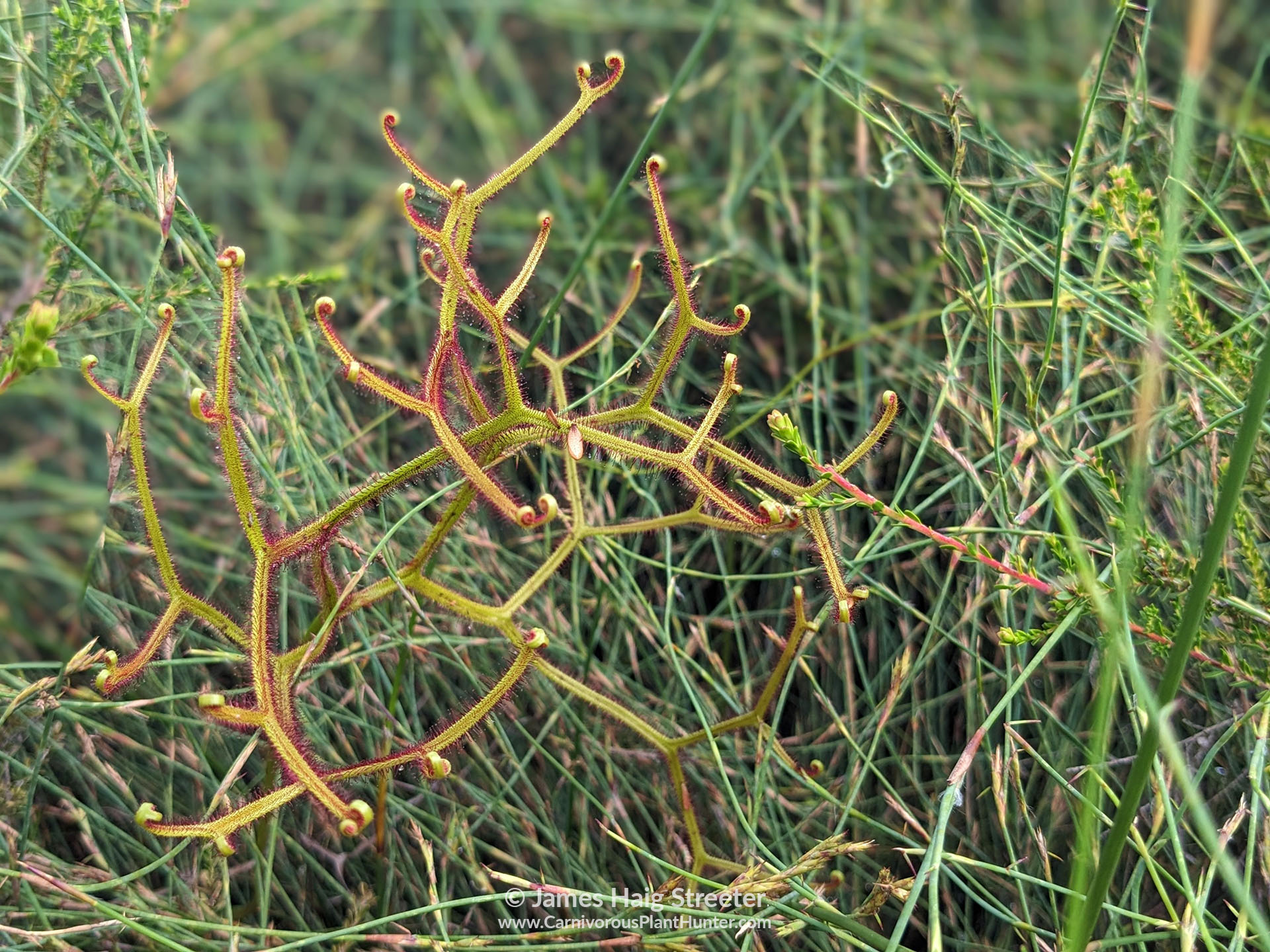
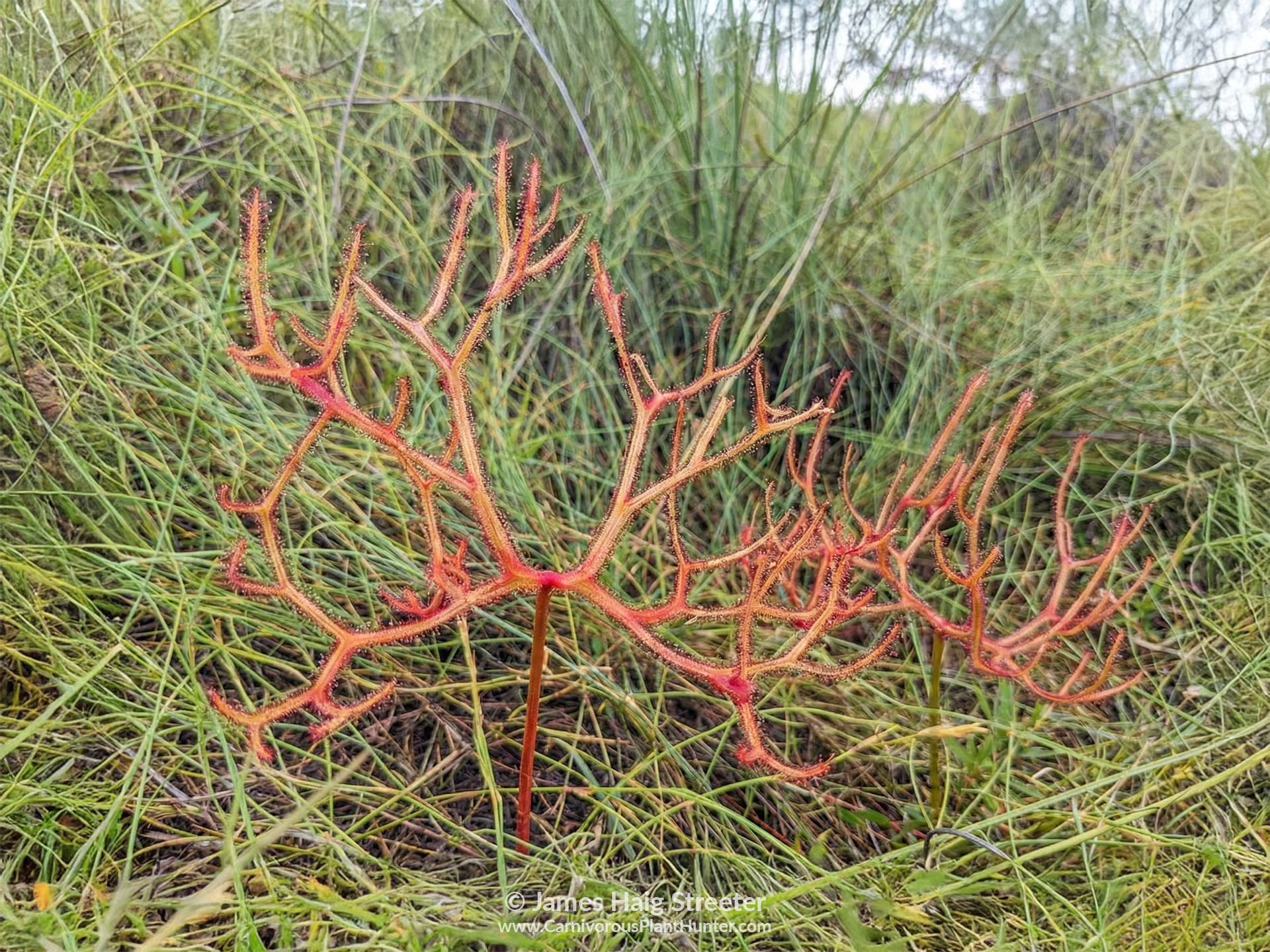
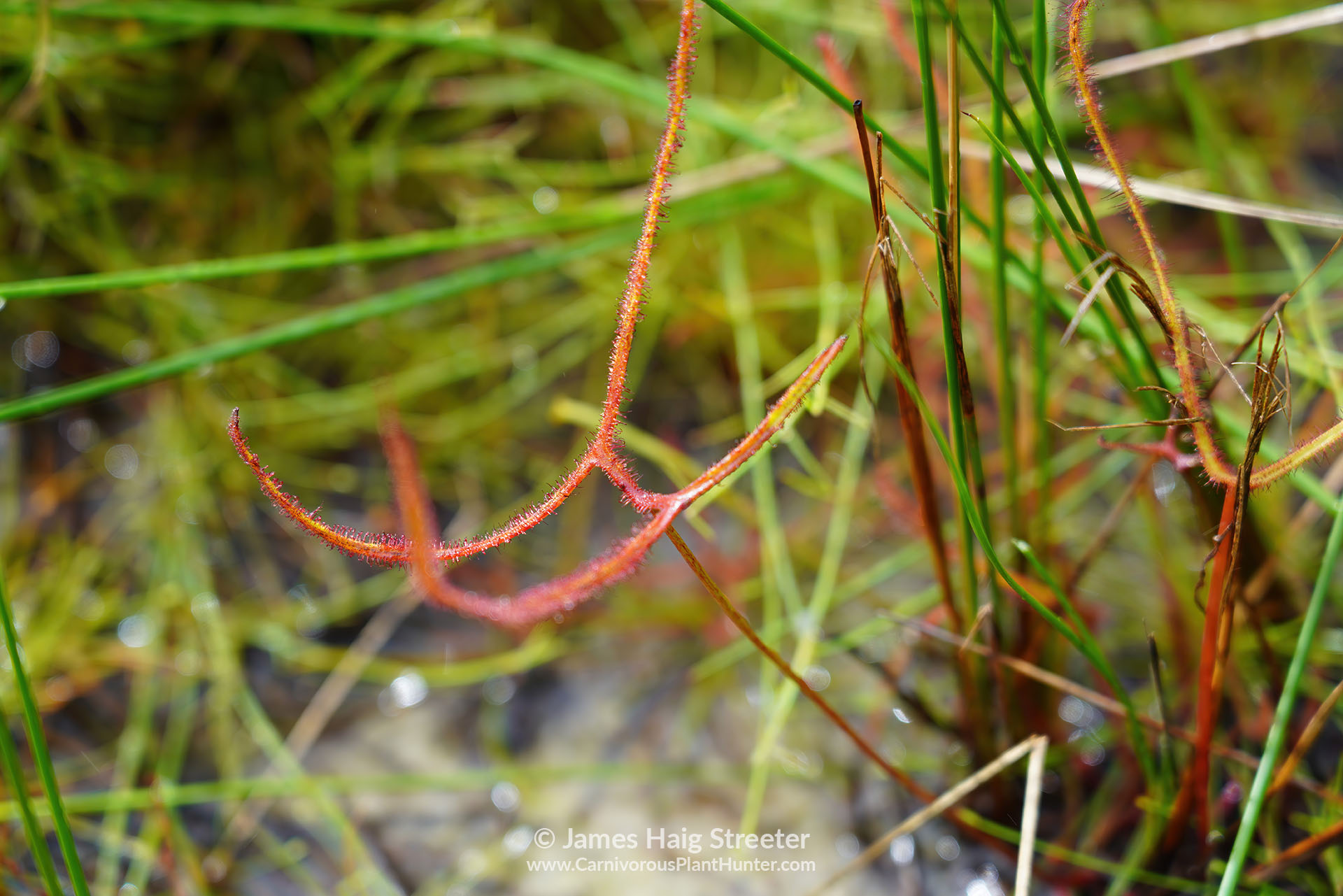
So when my family planned a road trip around Australia, seeing this species in the wild was high on my list. This was not only because I was fascinated to discover where this iconic Drosera grows naturally, but for another reason as well. Drosera binata occurs along much of Australia’s eastern coast, from Melbourne to Brisbane, but as you move from south to north something unusual happens: the plant changes form quite dramatically, with the leaves becoming progressively larger and more complex. In the south, it begins with the simple bifurcated leaf form known as Drosera binata T-form. Further north, the leaves divide again into Drosera binata var. dichotoma. And by the time you reach the northern end of its range, the leaves become significantly larger and more divided, producing the impressive, almost stag-horn-like form known as Drosera binata var. multifida.
This gradual change in form across a single species is known as a cline. It typically occurs when a species modifies its appearance in response to differing ecological pressures across its range. A plant growing at the base of a mountain, for example, may look slightly different from the same species higher up, where temperature, humidity, wind, or exposure have changed. In the case of Drosera binata, the shift appears to be linked to the climatic gradient along its roughly 2,000-kilometer range, from Melbourne’s cooler temperate climate to Brisbane’s subtropical one.
“…a bold example of how evolutionary adaptation shapes form across landscape and climate…”
My road trip was therefore going to trace this fascinating ecological cline, and I set out hoping to find these different forms along the way. Clines are especially interesting because they are also one of the ways new species can eventually arise. What begins as a gradual variation in form may, if populations later become physically isolated from one another, develop into more stable differences over evolutionary time. Eventually, those differences can become great enough that distinct species emerge. Darwin famously observed something similar in the finches of the Galápagos, where populations isolated on different islands developed distinct traits over time. This was, then, a chance not only to see one of Australia’s great sundews in the wild, but to see a bold example of how evolutionary adaptation shapes form across landscape and climate — and, in that sense, to witness evolution in action.
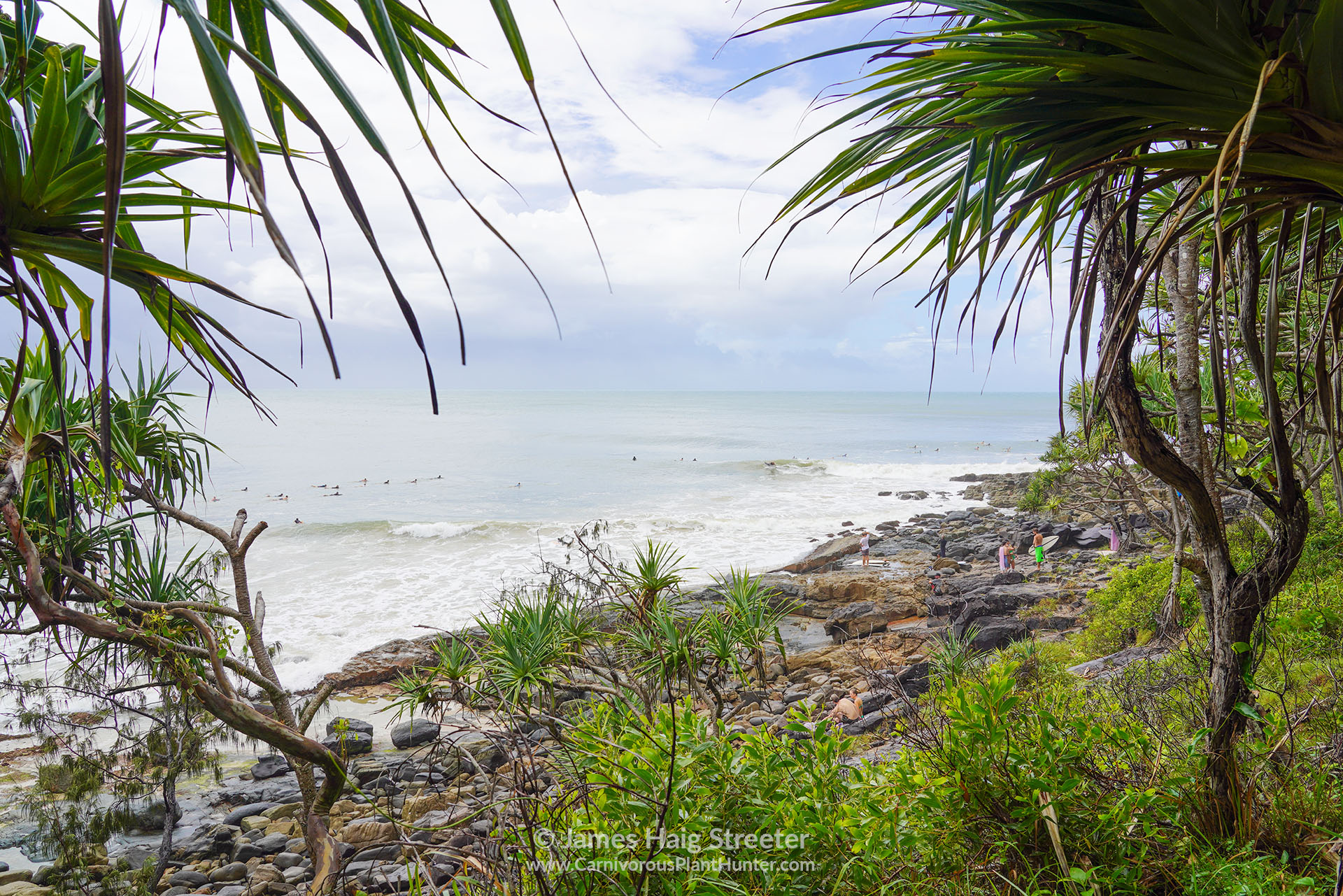
Noosa National Park marks the northernmost end of Drosera binata’s cline. The park protects one of the last significant remnants of coastal littoral rainforest, a habitat that once stretched along much of this coastline but has now been reduced by approximately 90 percent through coastal development, as people continue to seek homes with an ocean view. The town of Noosa Heads that surrounds the park is a surfer’s paradise, officially recognized as a World Surfing Reserve and famed for its long, peeling waves set against a picturesque rainforest backdrop.
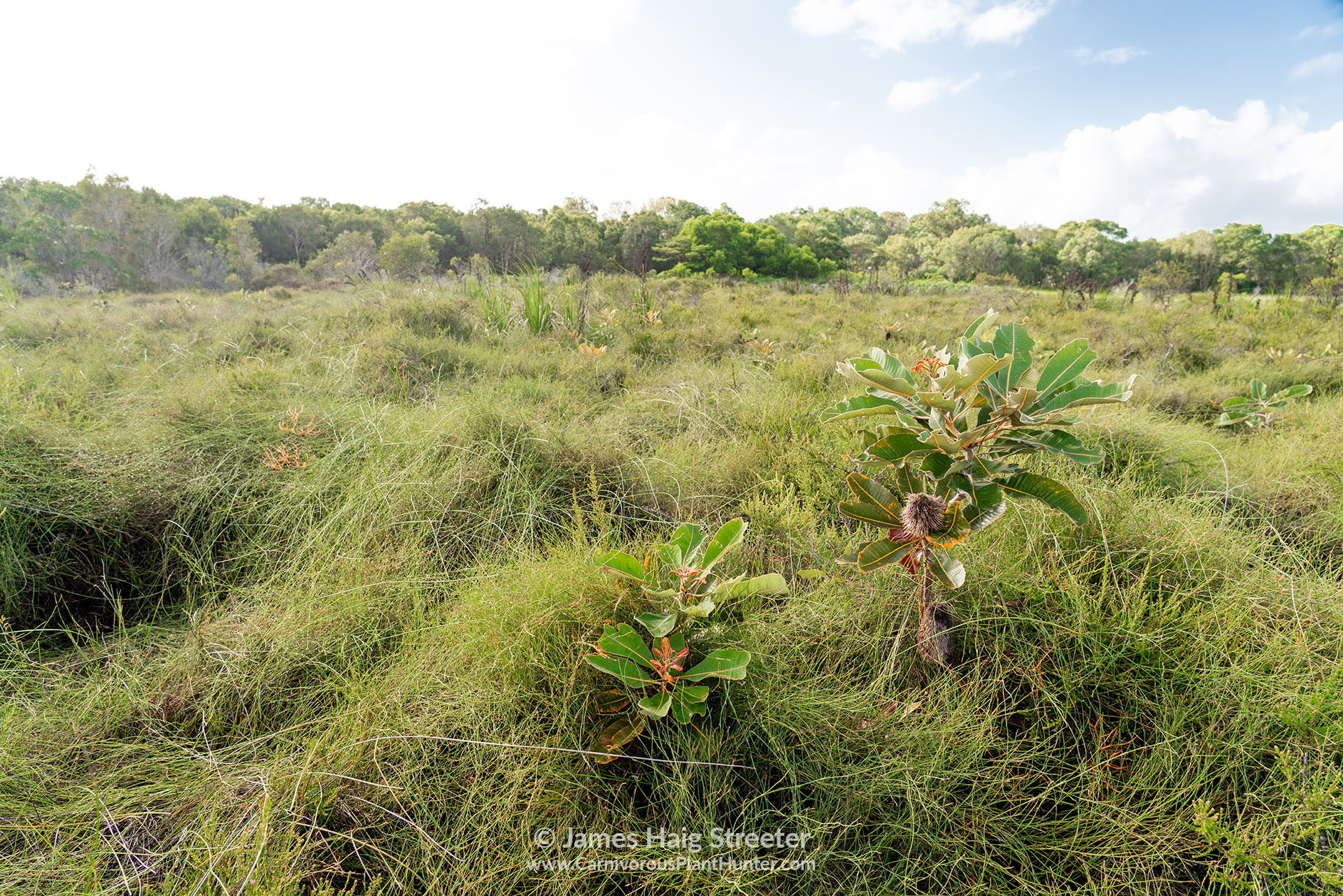
For the carnivorous plant hunter, however, the park holds another attraction as well: pockets of marshy wallum heathland. It is here, in these acidic, sandy bogs tucked behind the salt-pruned canopy of the rainforest, that the D. binata cline reaches its subtropical peak.
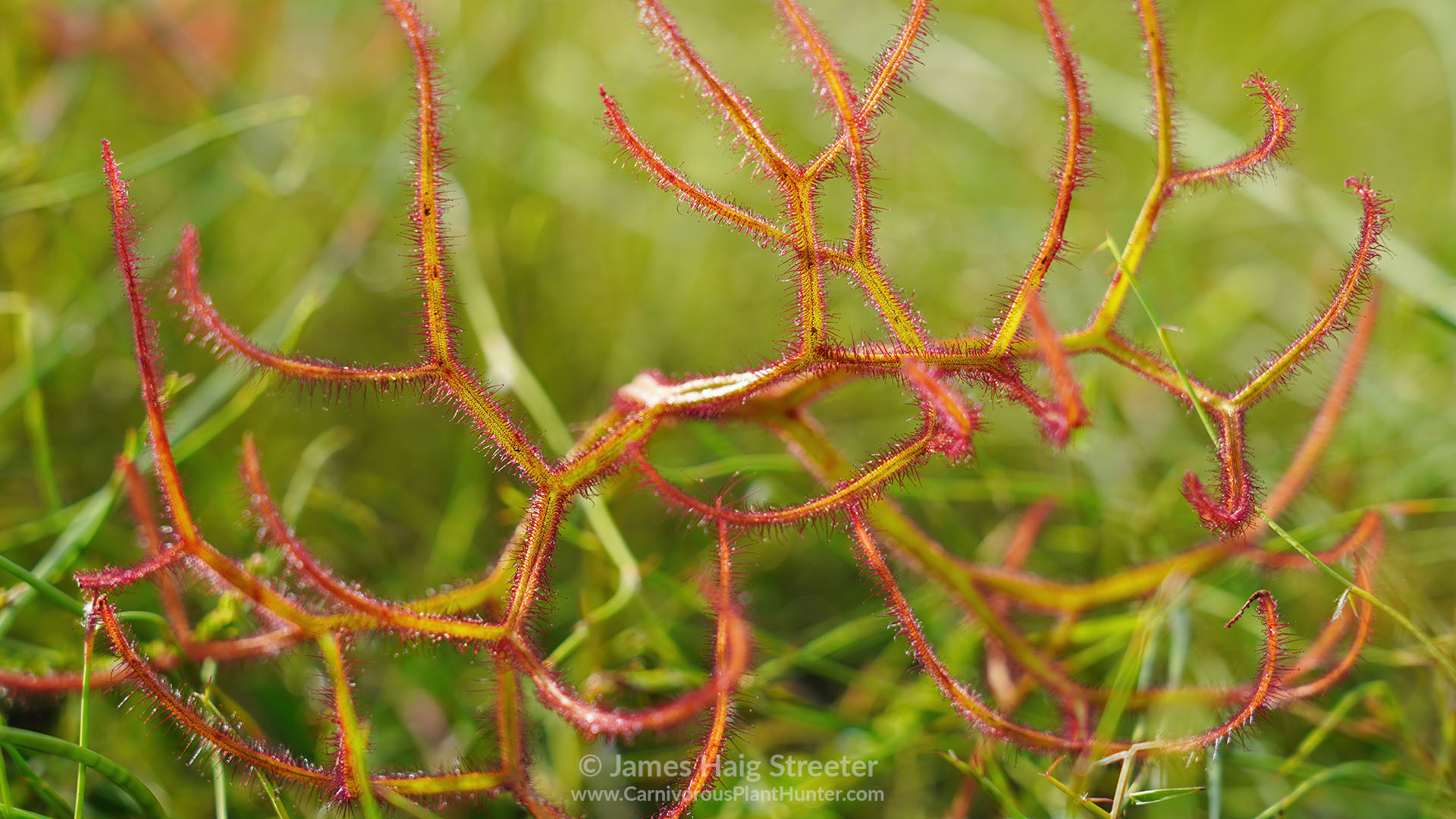
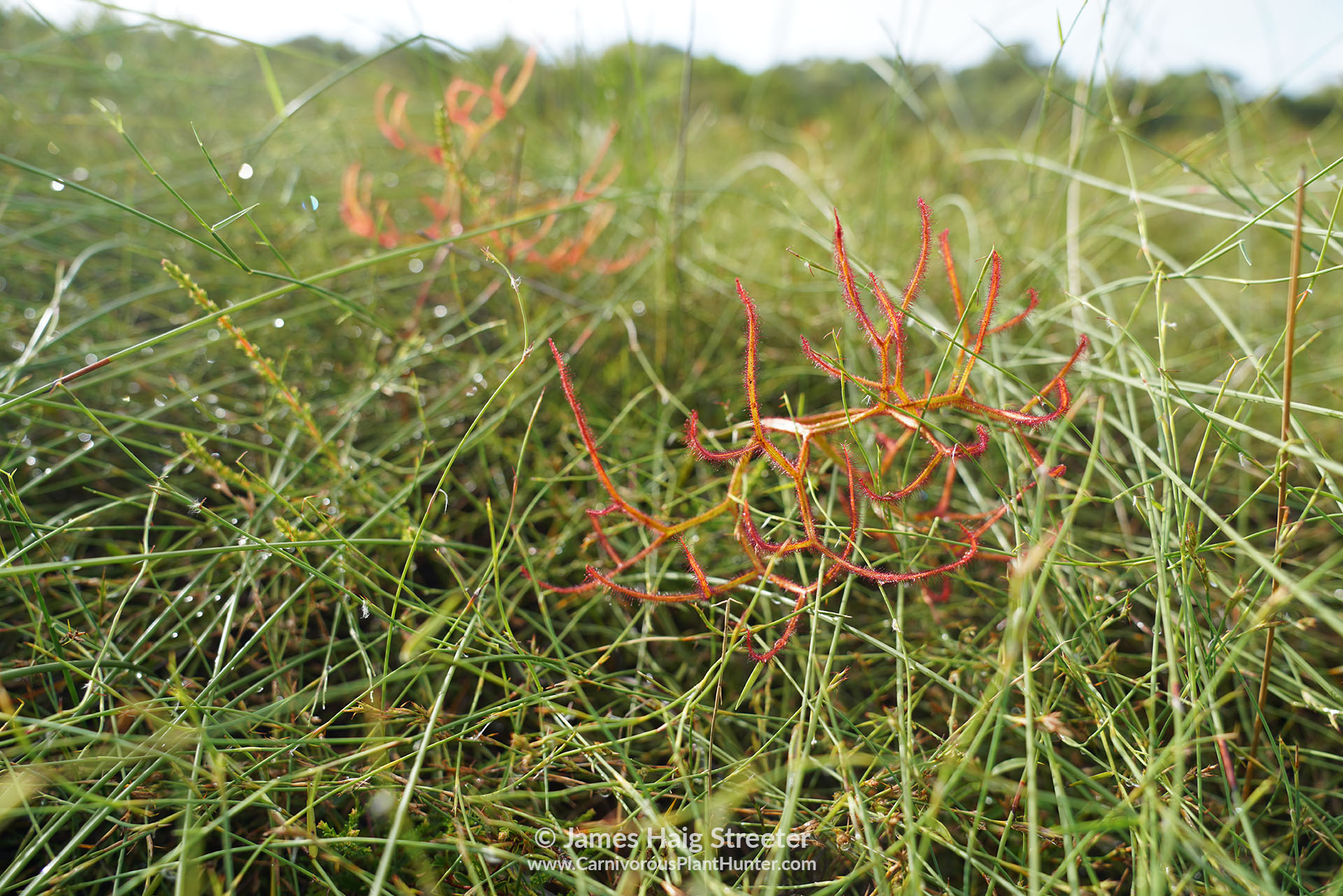
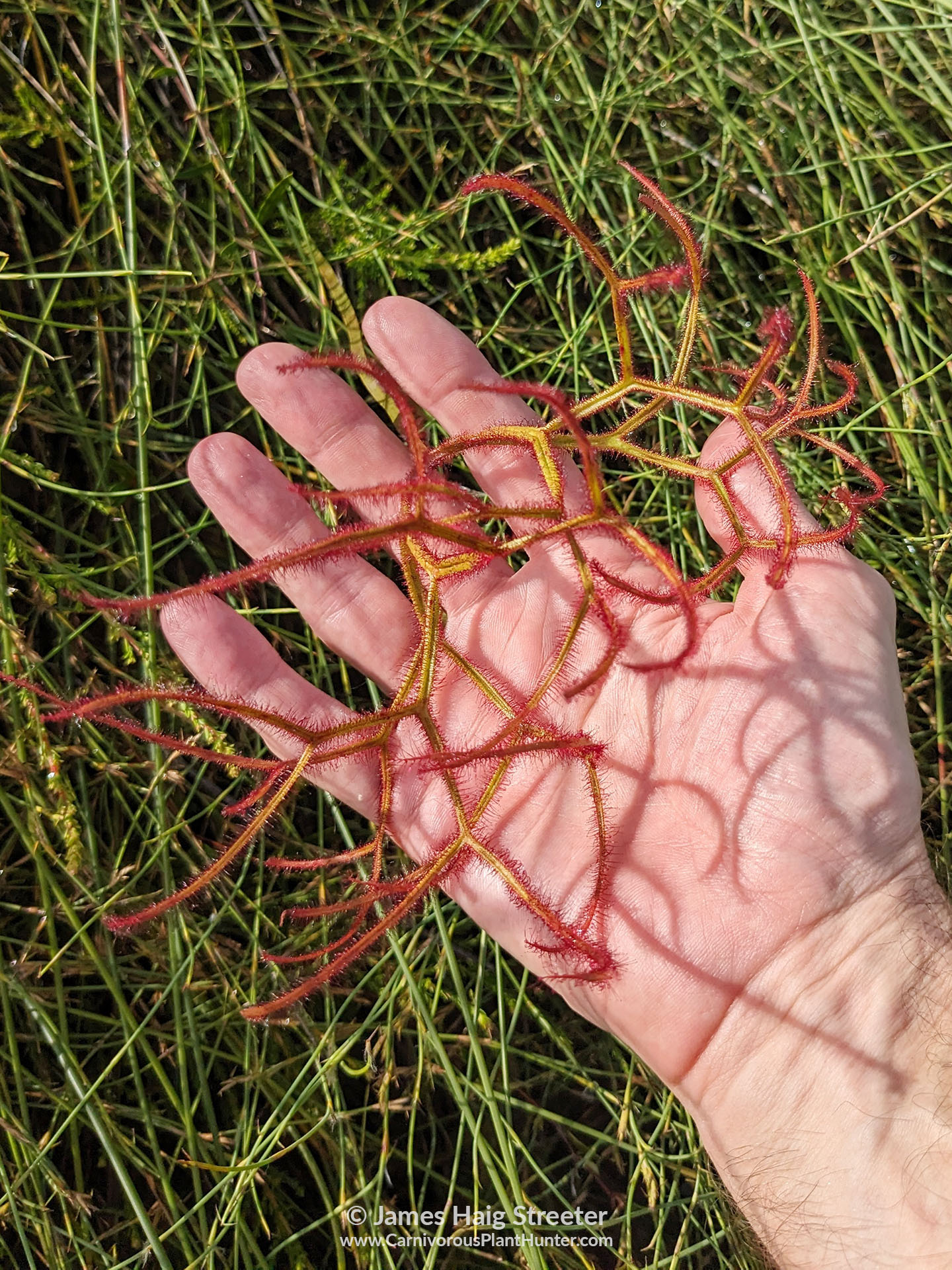
I used GPS data from iNaturalist to help track down these plants, and while the locations were not entirely accurate, they did put me in the general vicinity. Finding these carnivores in the place where they have evolved to grow at their largest was a great thrill, first discovering one plant roughly the size of my hand, and then, after a bit more searching, finding significantly larger leaves with more than 40 points. While it is possible to find such multi-point leaves in cultivation, sometimes labelled D. binata var. multifida ‘extrema’, these had a much larger spread than anything I had seen before. They sprawled over the surrounding rushes and sedges like giant red spiderwebs, these sit-and-wait predators no doubt functioning in much the same way as their arachnid counterparts.
One might be tempted to think that, if the plants increase in size with temperature, even larger monsters would be found in Queensland’s tropical north. But there seems to be a catch. While Australia plays host to around 60–70 percent of the planet’s Drosera species, more than 160 in total, only a handful are found in the hottest tropical areas. Being in the subtropical climate of Noosa brings several key advantages: there is a year-round growing season, and enzyme-driven prey digestion happens faster than in colder climates, enabling quicker access to nutrients. The high up-front energy cost of growing a large carnivorous leaf therefore pays off.
This is in contrast to the cooler-climate D. binata T-form, where cooler winters inhibit growth for part of the year, making smaller leaves with a lower up-front investment cost the more effective strategy. This is borne out by the fact that plants found in colder Tasmanian and New Zealand locations are also the smaller D. binata T-form. However, go hotter still and the excessive evaporation caused by all the sticky glands of a large sundew leaf becomes a major burden, with a plant increasingly struggling to keep pace with the water demand caused by extreme transpiration in 30°C+ summer temperatures. The Drosera that occur in these hotter climates have evolved specific strategies to counter this, such as forming smaller, compact rosettes with many fine white hairs to help capture moisture and reflect heat, as in the Petiolaris Complex, or developing a tolerance for shade and benefiting from the cooling effect of jungle canopies, as in Drosera adelae. The huge, sun-exposed leaves of Drosera binata var. multifida possess none of these high-temperature adaptations. The subtropical climate of Noosa, and comparable Brisbane ecosystems, therefore may well provide an optimal balance between heat, digestion efficiency, and transpiration cost, resulting in these giants of the sundew world.
So a question remains. Given the significant divergence in plant form between the simple, cool-adapted D. binata T-form and the complex form of the warm-adapted D. binata var. multifida, how likely is it that they will eventually become different species?
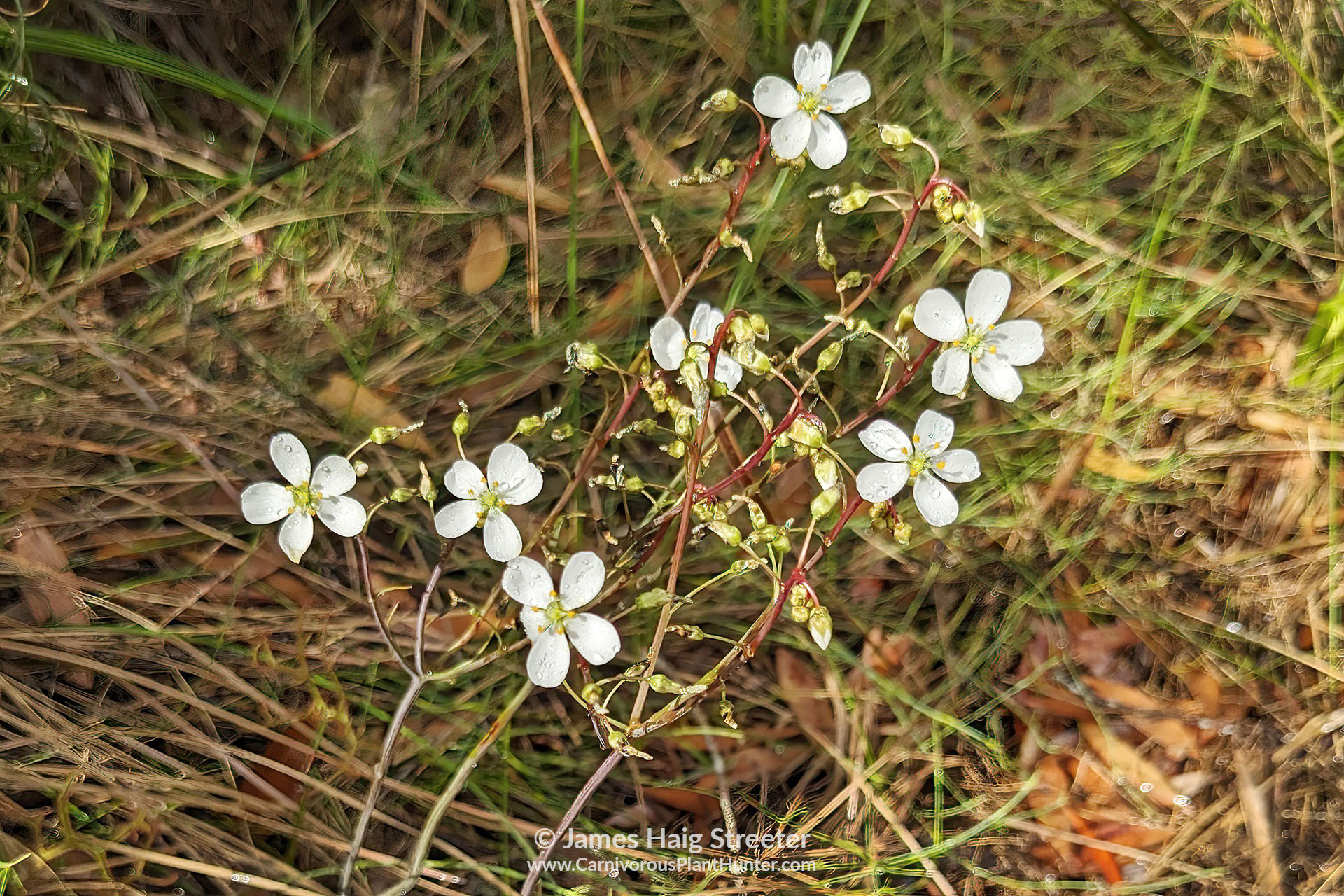
In fact, this may already be starting to happen. Approximately 600 kilometers farther north, in Byfield National Park, there is an isolated coastal population of Drosera binata var. multifida that is notable for typically producing pink flowers. Although Byfield does not share exactly the same climate as Noosa, it appears to offer a similarly suitable pocket of habitat.
Just as Darwin’s finches developed differing characteristics in isolation, this 600-kilometer geographic separation seems to have created a stable population of plants that differs clearly from the more typical white-flowered D. binata, in which pink flowers are a rarity. This pink-flowered form also appears to persist in cultivation, suggesting that the trait is stable. The emergence of a distinct, stable characteristic within a geographically separate population is one hallmark of a cline beginning to shift toward a new species, and a fascinating example of evolution continuing to play out before us.
During my trip I was fortunate enough to track down all three forms of D. binata as I travelled along its cline. However, their peak flowering season is typically from October to December, and as I was there in March I did not make the detour to see the pink-flowering Byfield plants. Something, then, to look forward to on a future exploration.
IUCN Conservation Rating: Not Evaluated (NE) – Not considered at risk in Australia under the federal EPBC Act but some local populations are treadened.
Drosera binata was assigned its Latin name in 1805. The name means “twinned” and refers to the dichotomous form of the single forked leaf of the typical T-form. This form is found across the colder parts of its range, including Tasmania and New Zealand.
In Australia, the larger dichotoma form is found mainly around Sydney. It typically has two leaf forks and four leaf points, though as many as 18 points have been recorded. North of Sydney, multifida can be found. This form typically has up to 40 points, with more than 100 reported. While these larger leaf types are not found in the colder parts of D. binata’s range, the T-form can still be found in southern Queensland, growing in small numbers alongside Drosera binata var. multifida.
The plant grows in a range of soils, from peat bogs to riverbank sand. It can also be found growing from cliffs where seeps provide continuous moisture, most notably in Sydney’s Blue Mountains National Park.
Noosa National Park is adjacent to the resort towns of Noosa Heads and Sunshine Beach, in the Sunshine Coast region of southeast Queensland. The closest airport is Sunshine Coast Airport (MCY), around 30 minutes away. For a major international gateway, Brisbane Airport (BNE) is around 1.5–2 hours away, depending on traffic. Brisbane itself is roughly the same distance.
Flowers: October – December: This is late spring and the best time to see Drosera binata in flower. That said, I did find one still in flower when I visited in March.
I visited in mid-March at the tail end of the rain, with not too many visitors, which seemed a good balance.
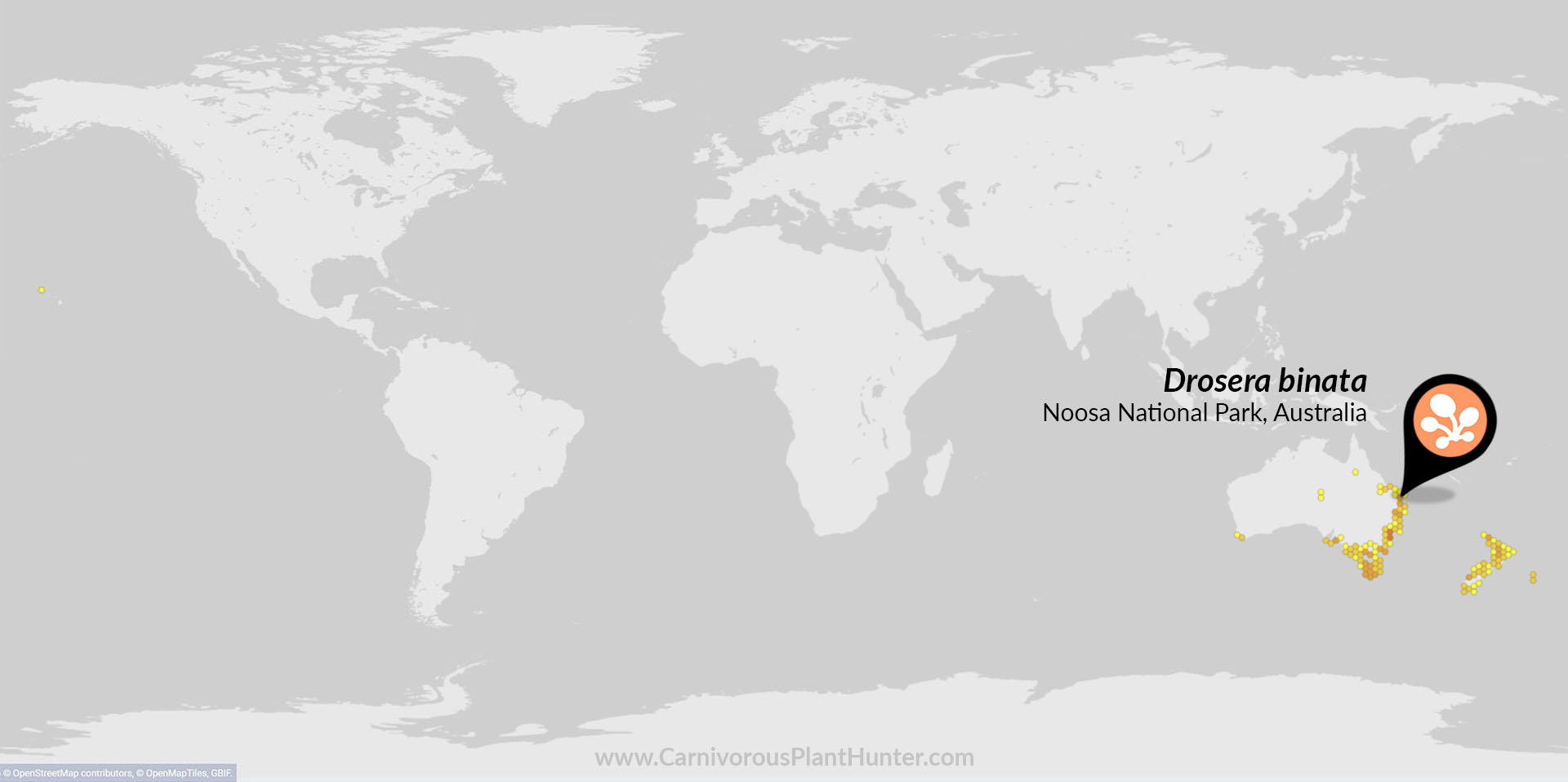
Map icons show approximate plant locations only, leaving the exact whereabouts to the intrepid explorer to uncover. GPS data from iNaturalist.org is a great starting point to do this.
Finding Drosera binata var. multifida at Noosa was memorable not only because of its sheer scale, but because it made a broader evolutionary pattern unusually easy to see. The plants are so bold, and the shift in form across their range so dramatic, that what might otherwise remain subtle or unnoticed becomes clearly visible in the landscape itself.
That is part of what makes clines so compelling. They show that evolution is not a static process to be read only in the fossil record, but an unfolding dynamic still happening in real time. Here, across a long stretch of Australia’s eastern coast, climate, geography, and isolation appear to be shaping a plant right before your eyes, pushing gradual variation toward something more distinct.
Carnivorous plants are especially good at making these processes visible because their adaptations are often so exaggerated that they are difficult to miss. In this case, the giant forked leaves of Drosera binata var. multifida act as a kind of lens, bringing into focus the quieter patterns of adaptation, divergence, and ecological constraint that operate throughout the natural world.
Looking for your next adventure?
Explore the Plant Map to discover more wild locations, habitats, and species around the world.
James is an award-winning landscape architect turned documenter of wild carnivorous plant habitats. He has spent decades tracking these remarkable species across the globe, guided by research, patience, and the joy of discovering plants in the places nature intended.
A member of the IUCN Carnivorous Plant Specialist Group, James founded the Carnivorous Plant Hunter to help people experience carnivorous plants in the wild, understand the stories behind them, and connect more deeply with the natural world.
What began as a personal project to map wild plant sightings has grown into a platform where exploration, science, and the wild world of carnivorous plants collide.
The free Ultimate Carnivorous Plant Nursery Guide will help you find trusted specialist nurseries in your region, so you can begin with healthy plants, avoid wild-collected material, and support conservation through ethical cultivation.
You’ll also receive the Explorer’s Notebook, giving you early access to new field stories, discoveries, and upcoming Explorer Guides.
Explorer’s Notebook emails are occasional and meaningful. Unsubscribe anytime.

Why Carnivorous Plants Are More Than a Hobby. They’re a Lens on the Natural World

The Green Swamp Preserve. One of the last strongholds of the Venus flytrap — and a mecca for carnivorous plant hunters.
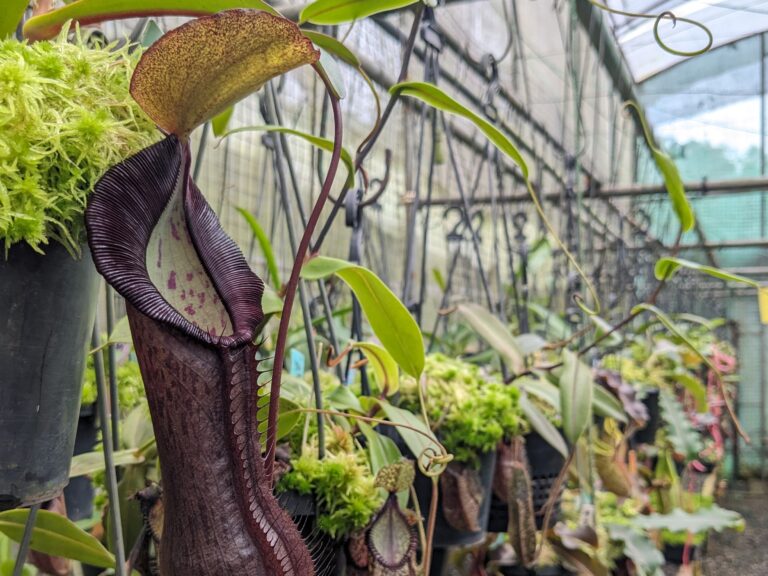
A free guide to buying carnivorous plants safely. Learn where to buy Venus flytraps and pitcher plants, avoid wild-collected plants, and grow them successfully.
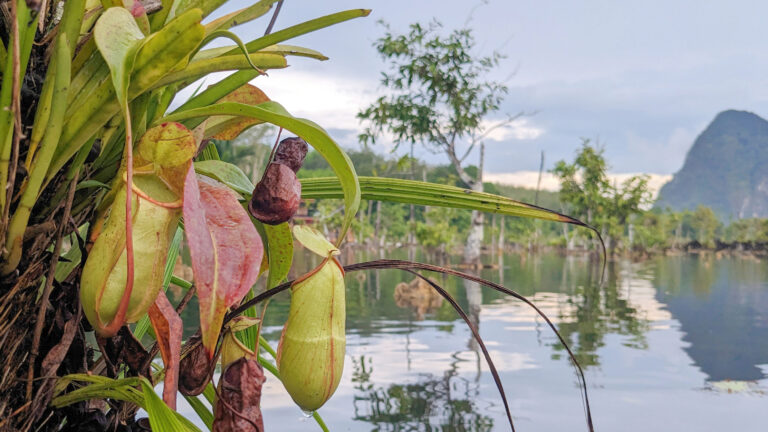
I found my first wild Nepenthes in the last place I expected — growing epiphytically in the middle of a lake.
And how to avoid the design by committee ‘camel’ syndrome.