Plants That Change How You See
Why Carnivorous Plants Are More Than a Hobby. They’re a Lens on the Natural World
Mirror Lake, Krabi, Thailand
I found my first wild Nepenthes in the last place I expected — growing epiphytically in the middle of a lake.
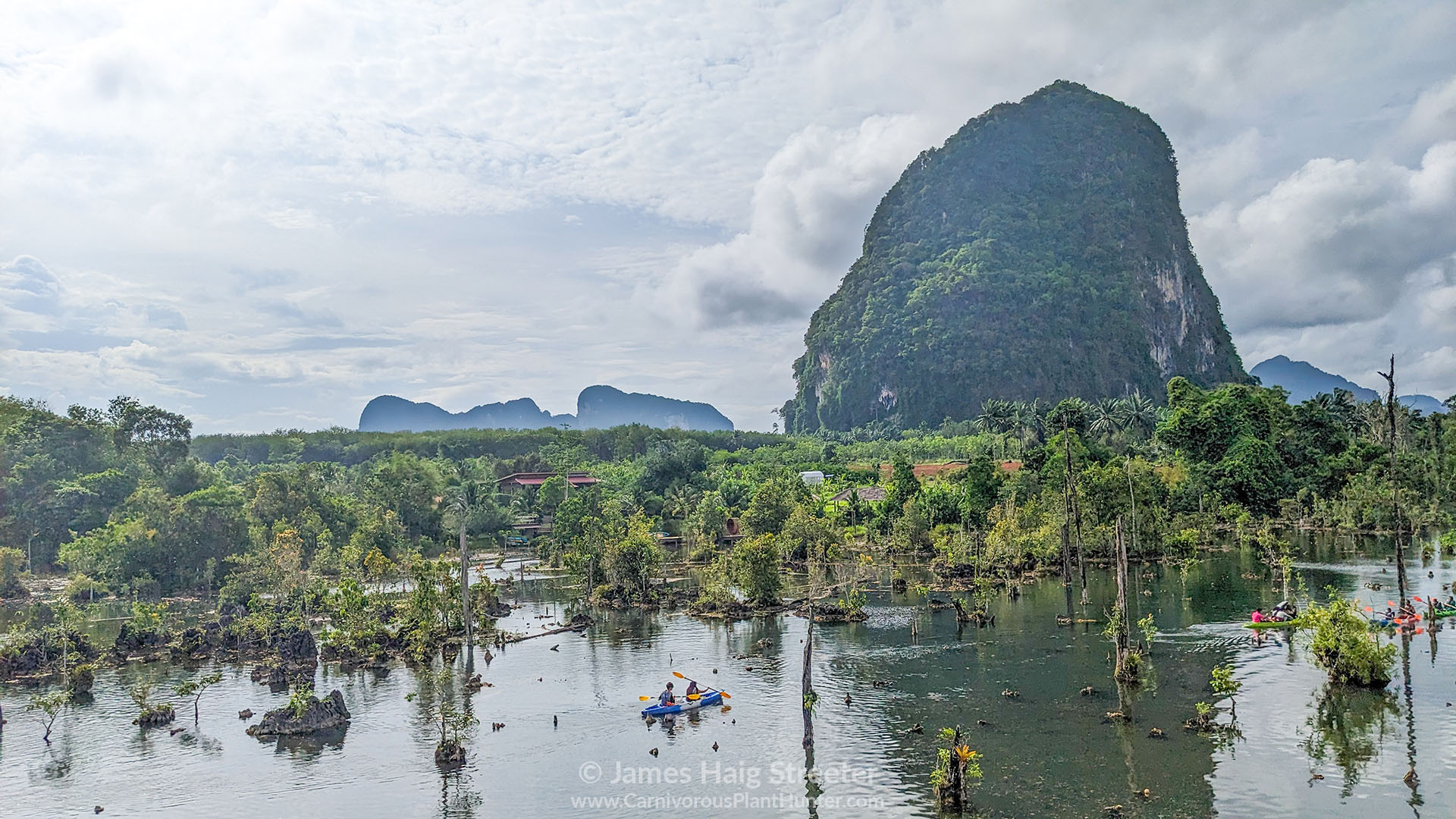
Krabi in southern Thailand is famed for its spectacular sea stacks, rising dramatically from Phang Nga Bay — including the famous “James Bond Island,” featured in The Man with the Golden Gun. These karst limestone formations are found throughout the region, extending inland and typically covered with dense jungle. They began as part of an ancient shallow sea, where the remains of corals, shells, and other marine life accumulated over millions of years and were compressed into thick beds of limestone. Much later, tectonic collisions lifted these former seabeds into the air, where tropical rain slowly dissolved and sculpted them into the jagged karst towers seen today. These areas can also serve as habitat for Nepenthes, which thrive in the moist yet well-drained environments these mountains create. The aptly named Nepenthes krabiensis is one such resident, growing at 600–700 meters above sea level. But the steep, jagged terrain can make tracking them down extremely difficult.
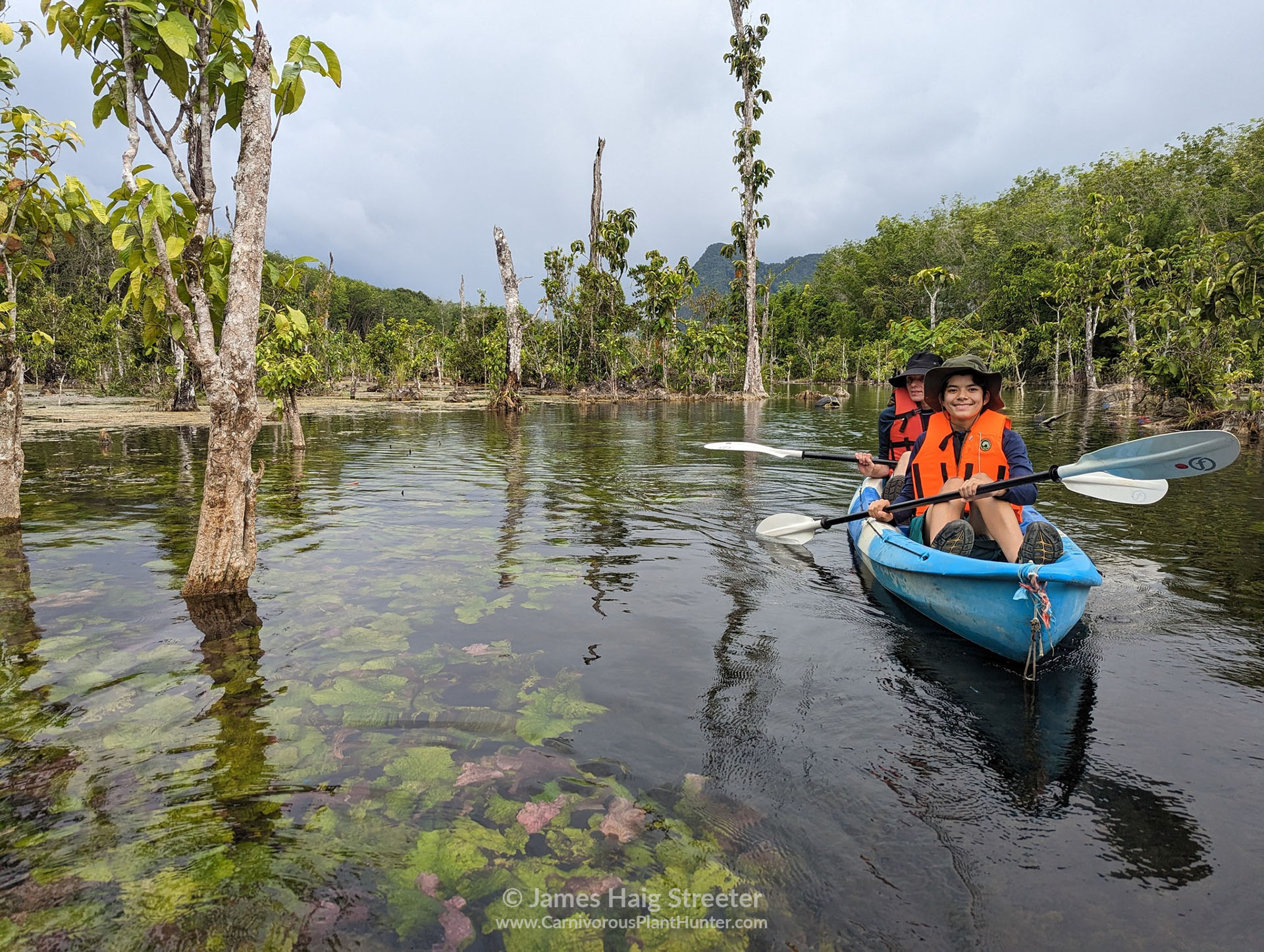
While traveling through the area and enjoying the breathtaking scenery from sea level, I had no expectation of seeing carnivorous plants. But, having never seen a Nepenthes in the wild at the time, I still very much hoped to. Taking a break from the coast, my family decided to go on a kayaking trip on Mirror Lake, just inland from the resort town of Ao Nang. Located in Khao Pra-Bang Khram Wildlife Sanctuary, the lake is fed by a crystal-clear spring that forms an integral part of the karst landscape system.
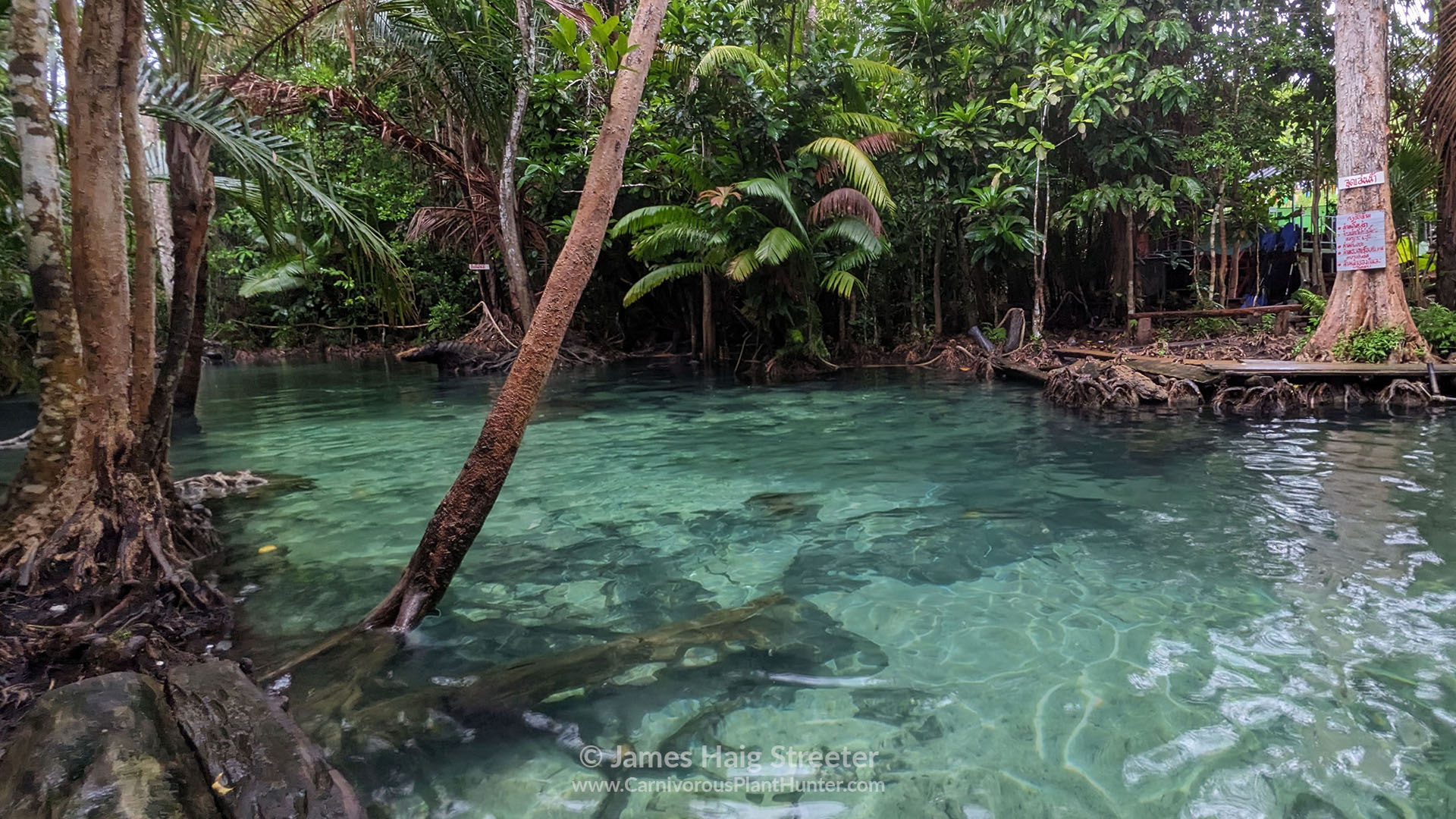
The kayak tour takes visitors to the source of the spring through narrow waterways in a biodiversity-rich peat swamp forest, where you can then swim in the clear, turquoise waters of the Emerald Pool. Fed by an underground limestone spring, the pool has remarkable clarity — yet it’s surrounded by swamp forest, making it a strikingly beautiful and unusual location. Like the sea stacks of Phang Nga Bay, Mirror Lake is part of the same limestone foundation. Rain falling on the nearby karst hills sinks into the porous rock, travels through underground channels, and eventually rises again as clear freshwater springs. In that sense, Mirror Lake is the inland counterpart to the bay’s flooded karst landscapes — a freshwater expression of the same geological system.
“I couldn’t believe it. A Nepenthes growing in the middle of a lake. Was this some kind of new species…”
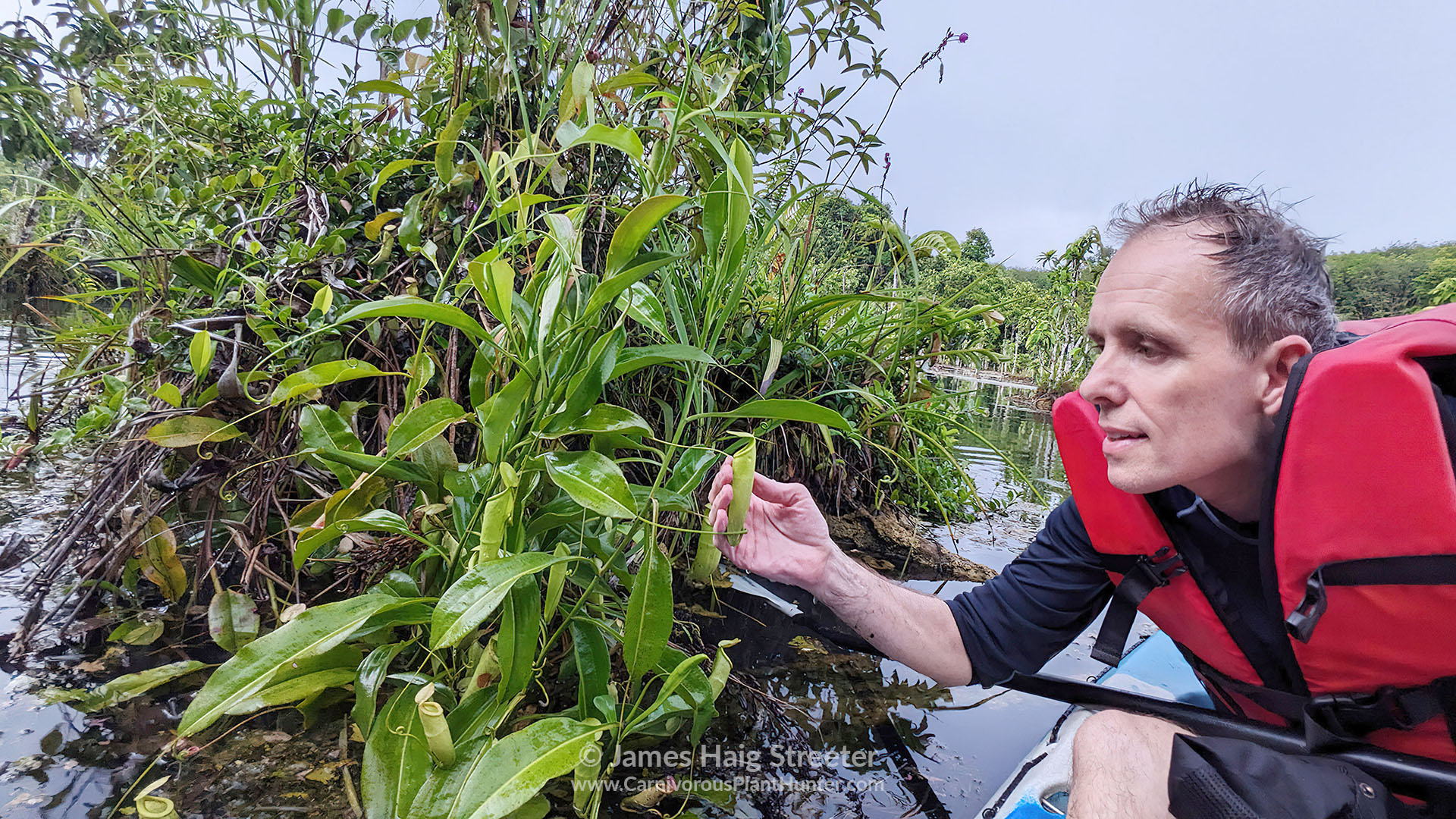
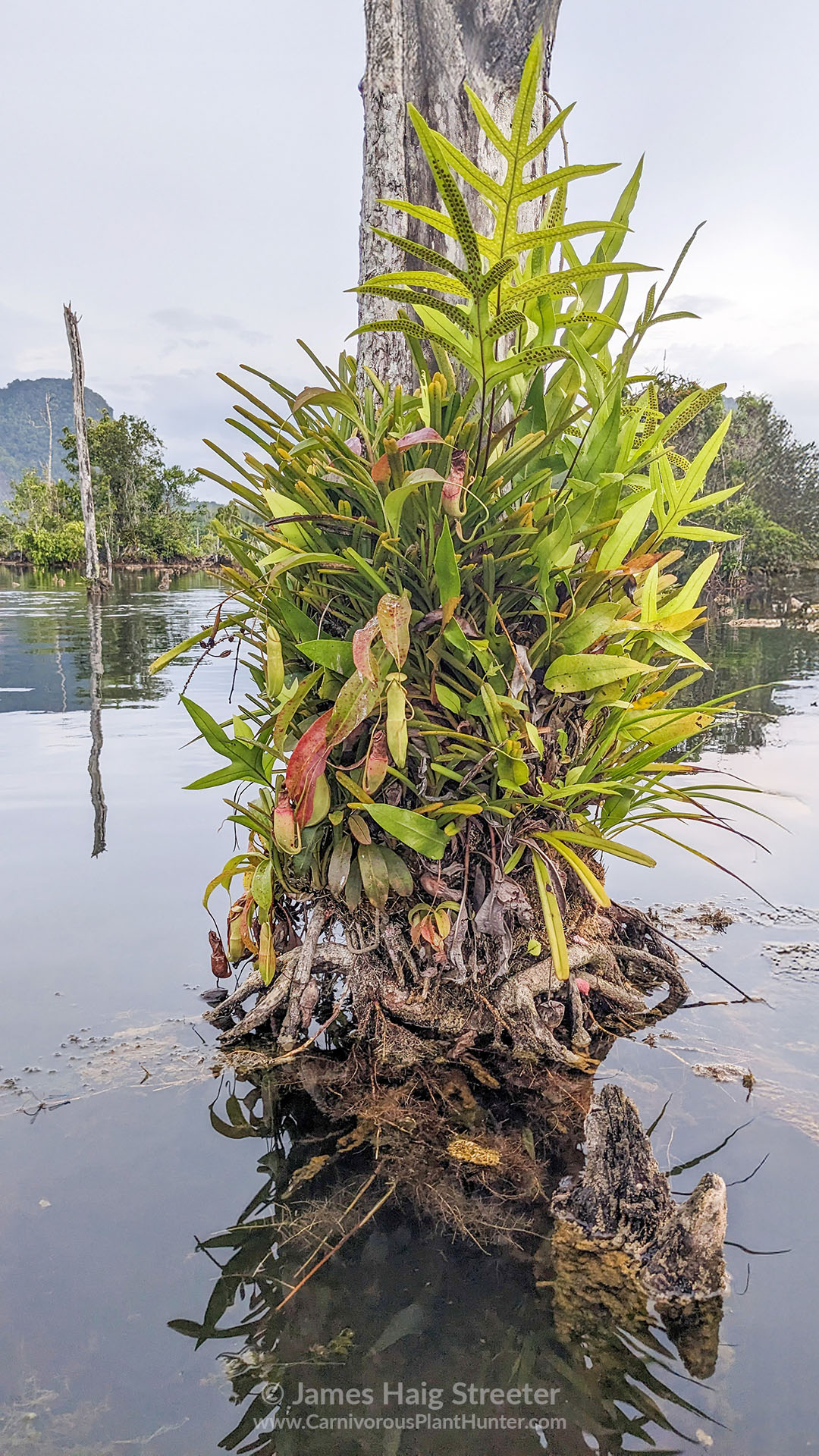
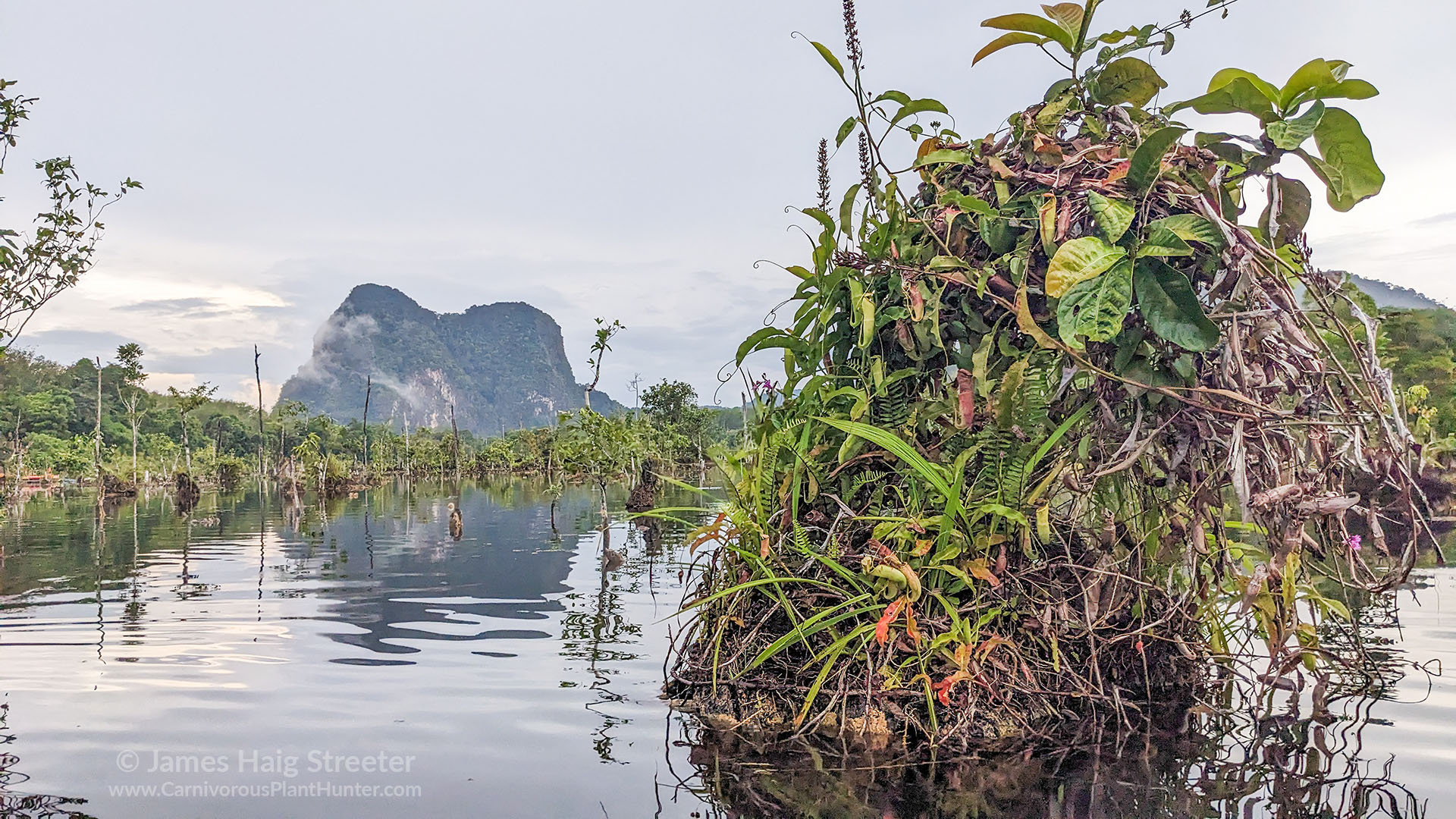
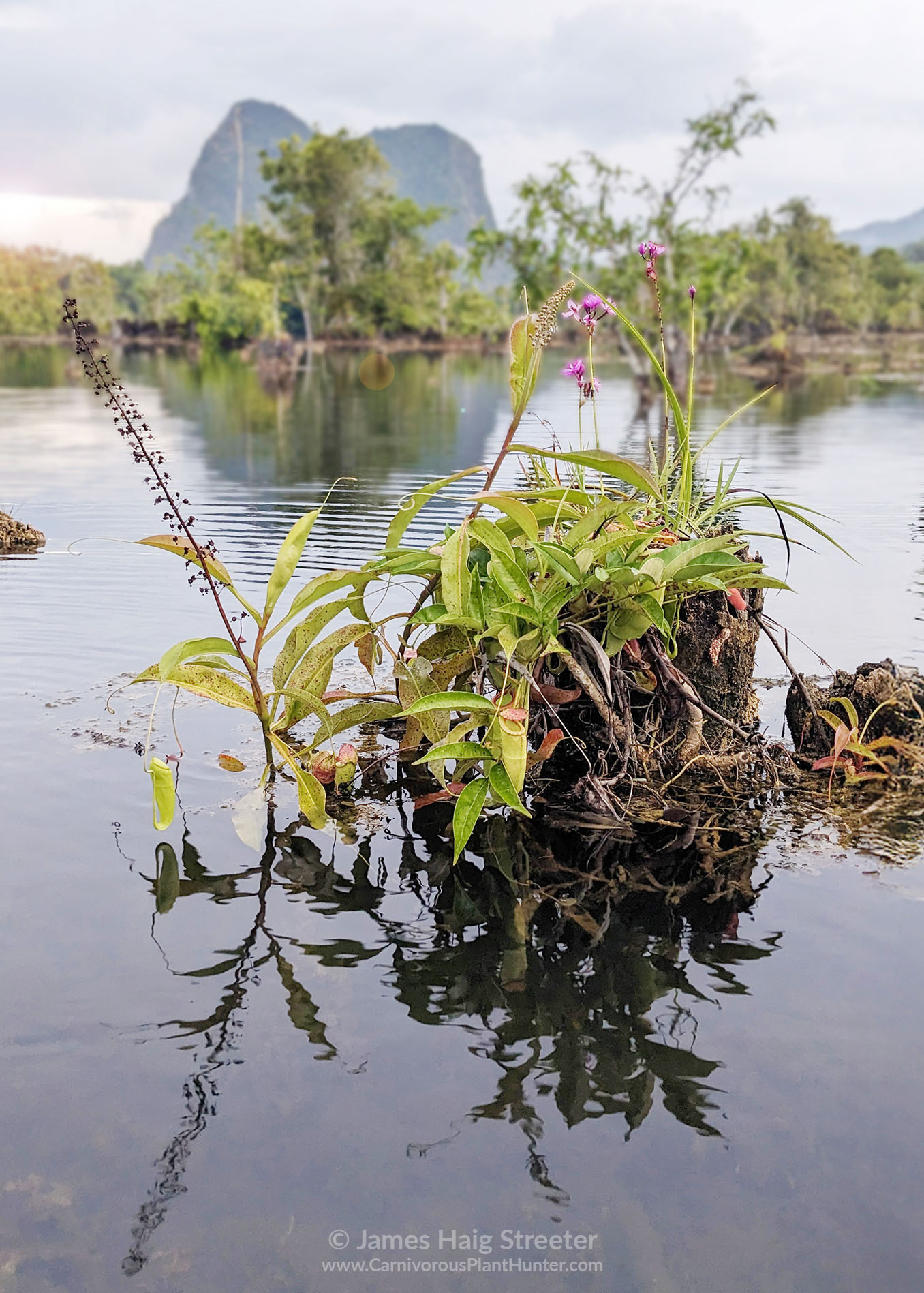
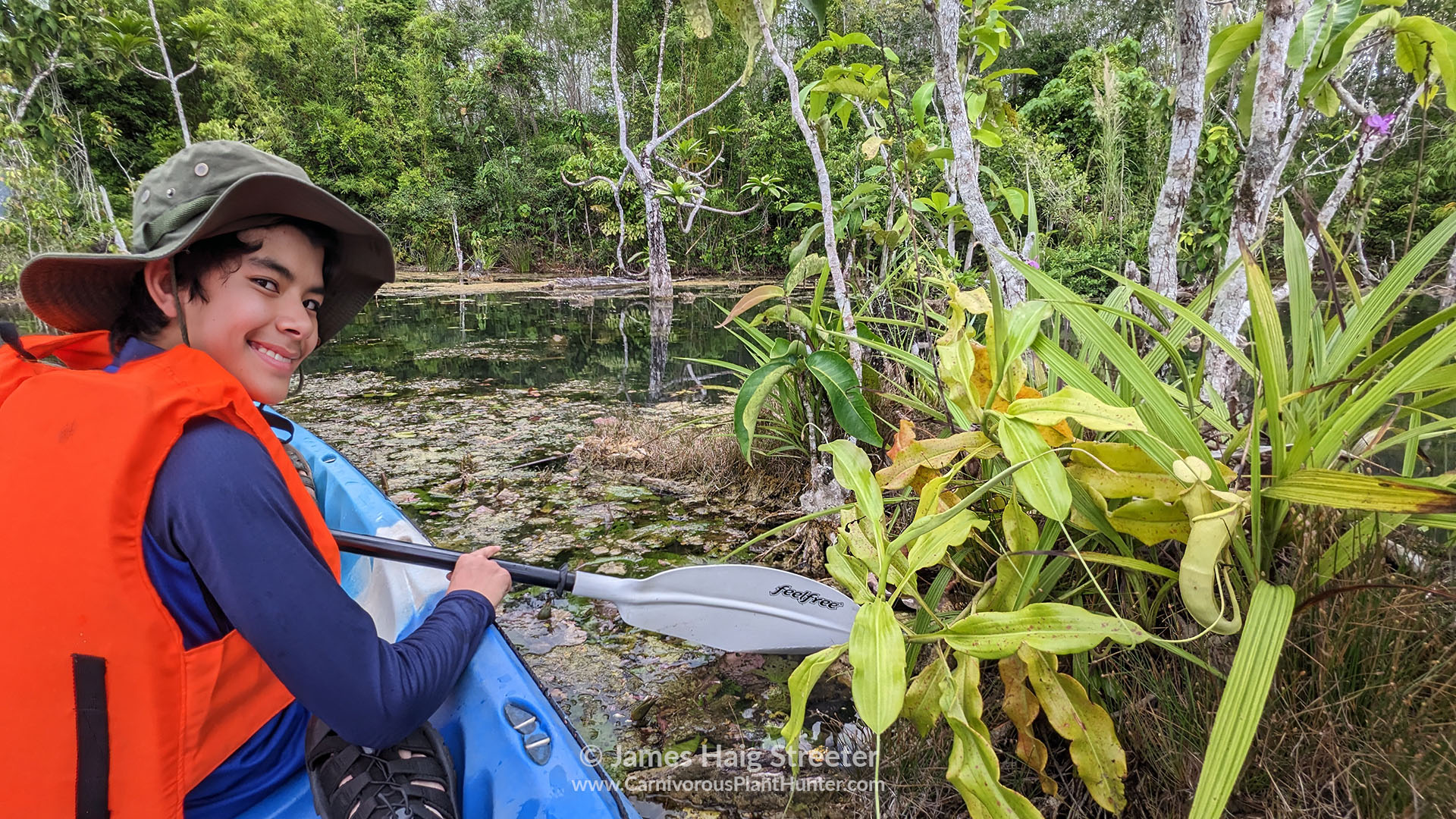
After our swim, we emerged from the forest, back onto Mirror Lake at the end of the tour. As we headed back to the kayak rental dock, we passed a few trees growing out of the lake, some of which had fallen and become covered with epiphytic ferns and orchids. Then something caught my eye — the unmistakable form of a Nepenthes pitcher. Once I had seen one, I started seeing others and soon realized that many of these epiphytic gardens in the middle of the lake included Nepenthes.
I couldn’t believe it. A Nepenthes growing in the middle of a lake. Was this some kind of new species that, unlike others, enjoyed getting its feet wet? It turned out to be Nepenthes mirabilis, sometimes called the Common Swamp Pitcher Plant. Unfortunately, these days in the Krabi area, the name “common” is a little deceptive. While once widespread here, development driven by increased tourism has led to significant habitat loss, reducing its numbers. But here, in the center of Mirror Lake, those pressures were absent.
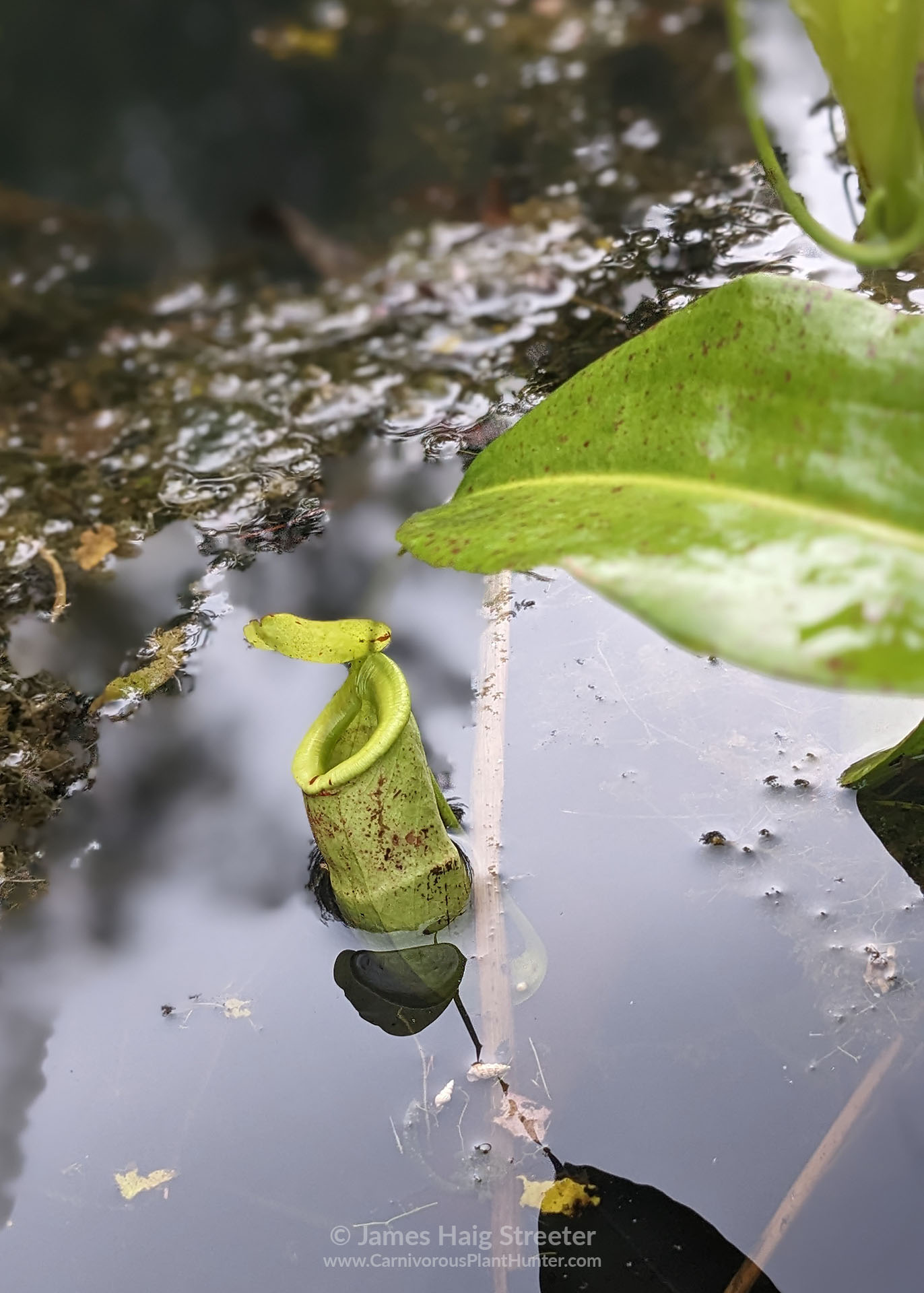
Across the lake, there were many similar islands — like miniature gardens of ferns, orchids, and Nepenthes. While it was hard to see clearly, I assumed these mounds had built up around trees that once stood there, now forming sizable hummocks of greenery, dotted with orchid flowers and Nepenthes seed heads. Trees that were still standing also supported epiphytic growth, including Nepenthes. In some spots, the pitchers were growing so close to the water’s surface that they were partially submerged.
This was a spectacular introduction to seeing my first Nepenthes in the wild. Unfortunately, I hadn’t expected such an amazing sight — and knowing I’d likely be getting wet, I had only brought my water-resistant smartphone with me, not my DSLR. I made do with my Google Pixel 5, originally chosen for its excellent camera quality. Later, I sharpened the images using Topaz Photo AI and enhanced the lighting in Adobe Lightroom, and was pleasantly surprised by the results.
IUCN Conservation Rating: Least Concern
Nepenthes mirabilis was assigned its current Latin name in 1869 by Charles Raffarin, although it may have first been discovered in 1790 by a Portuguese priest called João de Loureiro. The name mirabilis means “wonderful” — and being the first Nepenthes I ever saw in the wild, I can definitely agree.
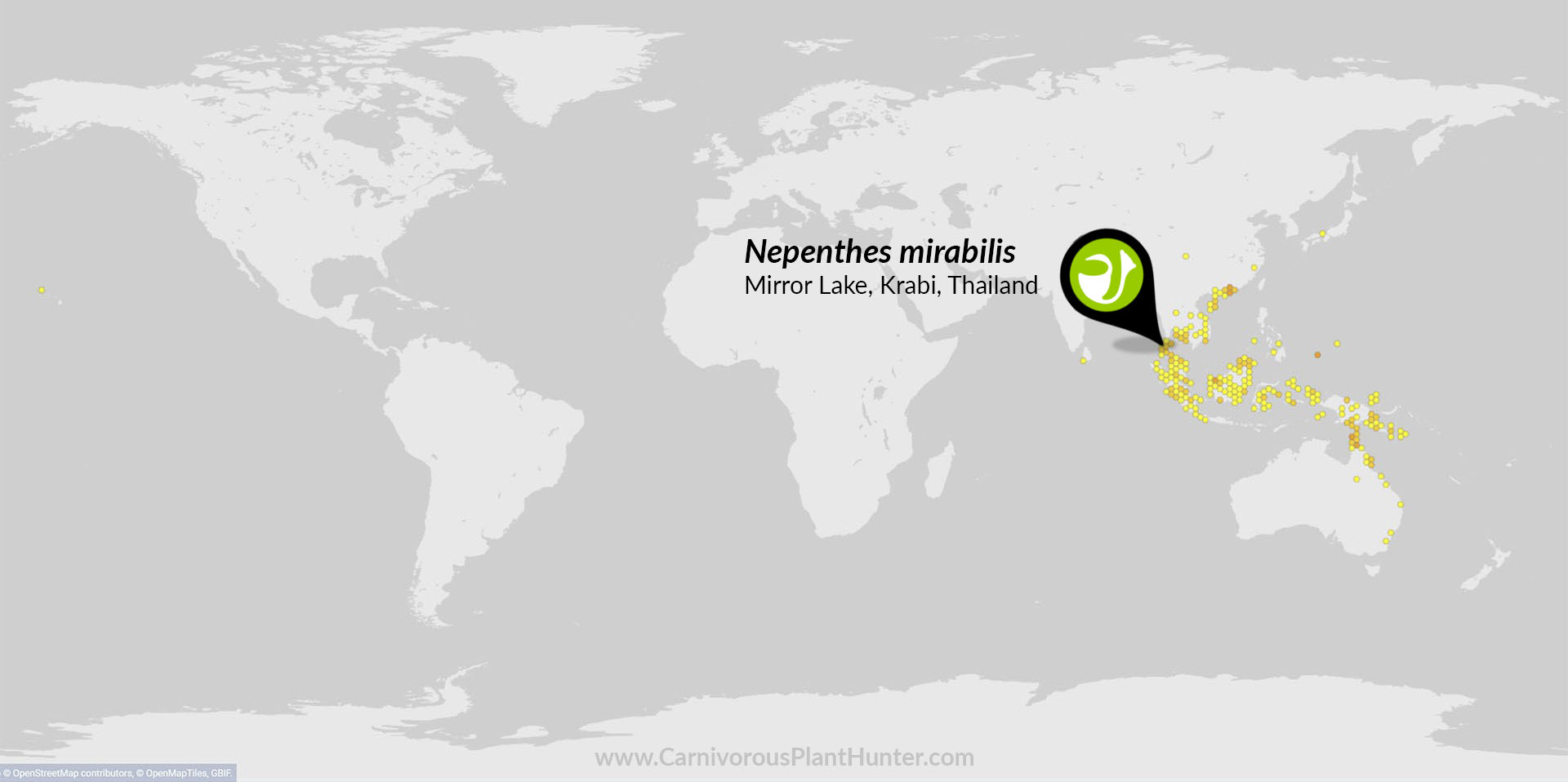
It is the most widespread Nepenthes species, with a range stretching across Southeast Asia — from southern China and Hong Kong, through Vietnam, and as far south as northern Queensland, Australia. It’s a lowland species, typically found in humid, low-lying rainforest below 500 meters, often in coastal areas. However, it has also been found at elevations up to 1,500 meters.
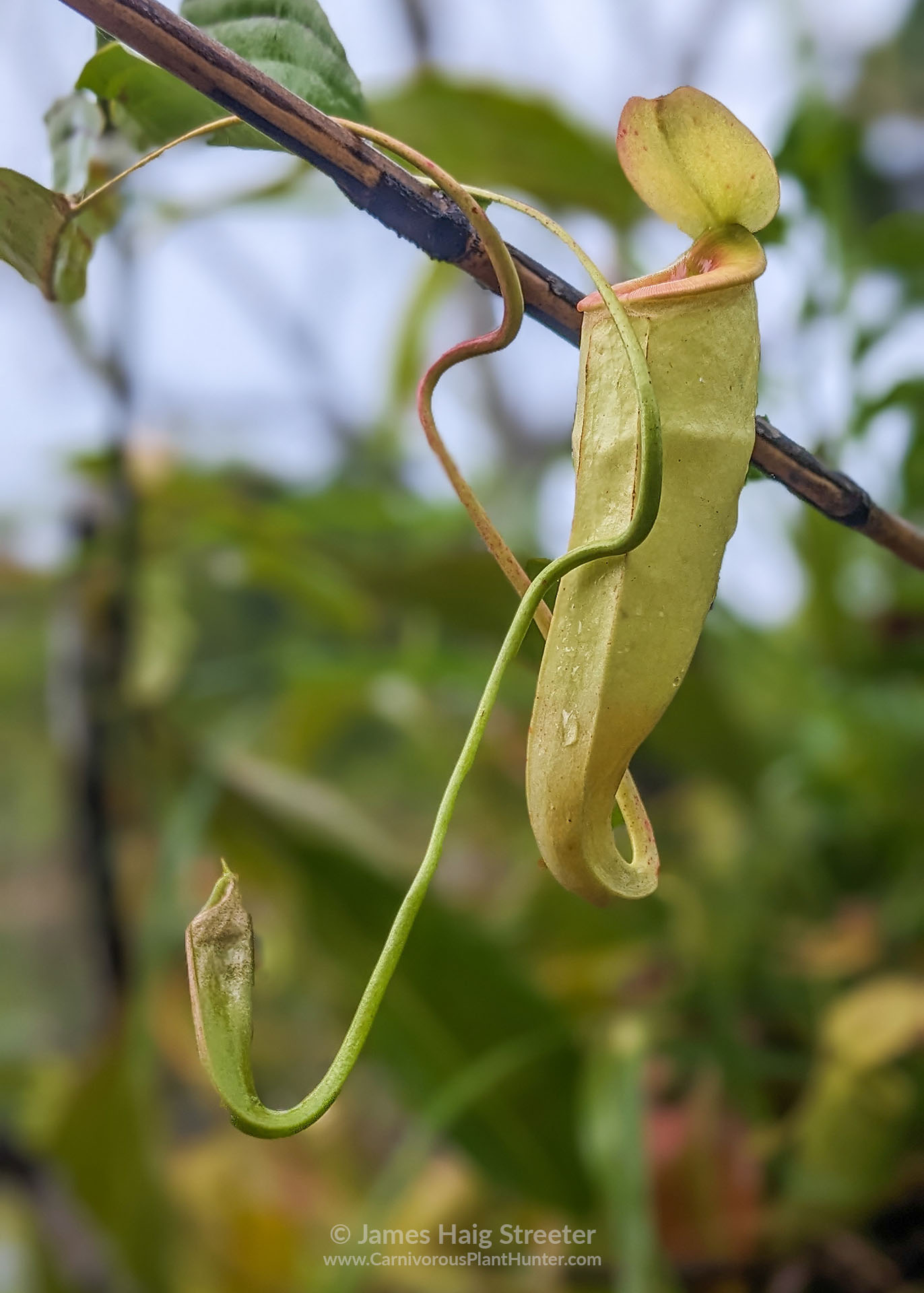
Across its broad distribution, N. mirabilis exhibits a wide range of color forms (polymorphism), with pitchers varying from pale green to deep red. Lower pitchers can grow up to 16cm tall, with upper pitchers reaching up to 24cm. It is also unusual in its tolerance of both acidic and alkaline soils, growing in a variety of habitats — from peat swamp forests to paddy field margins. This broad adaptability likely explains its widespread distribution across such diverse regions.
In cultivation there are several N. mirabilis cultivars available, often called Nepenthes ‘Viking’.
Krabi is served by a local airport with regular flights from Bangkok, taking less than 1.5 hours. It’s also just 35 minutes from Phuket by air. Overland travel into peninsular Malaysia is also possible, though the safety of border crossings can vary — so check local travel advisories before planning your route. That said, I made this journey with my family without any issues.
November to March is the best time to visit Krabi in terms of pleasant weather, low humidity, and calm seas.
November–February: Dry season, average temperatures 24–32°C (75–89°F), little rain. Ideal for beach time, boat tours, hiking, and visiting karst formations. Its also the busiest time with most tourists coming for Christmas, New Year, and Chinese New Year.
March: Still dry, but slightly hotter — excellent if you want fewer crowds but still good weather.
I visited at the end of May, which is the beginning of the Monsoon season. While I did get caught out in the rain a few times, it was still quite manageable.
Map icons show approximate plant locations only, leaving the exact whereabouts to the intrepid explorer to uncover. GPS data from iNaturalist.org is a great starting point to do this.
Discovering Nepenthes mirabilis growing epiphytically on trees in the middle of Mirror Lake is one of the most memorable and magical moments of my travels. It was completely unexpected — and all the more special for that. The contrast of clear turquoise water, swamp forest, and carnivorous plants thriving on their own tiny islands made for a surreal and unforgettable experience.
This species’ ability to colonize such unique microhabitats speaks to its resilience and adaptability. But even widespread plants like N. mirabilis are vulnerable to habitat loss — and places like Mirror Lake highlight just how precious and irreplaceable these wild ecosystems really are.
Looking for your next adventure?
Explore the Plant Map to discover more wild locations, habitats, and species around the world.
James is an award-winning landscape architect turned documenter of wild carnivorous plant habitats. He has spent decades tracking these remarkable species across the globe, guided by research, patience, and the joy of discovering plants in the places nature intended.
A member of the IUCN Carnivorous Plant Specialist Group, James founded the Carnivorous Plant Hunter to help people experience carnivorous plants in the wild, understand the stories behind them, and connect more deeply with the natural world.
What began as a personal project to map wild plant sightings has grown into a platform where exploration, science, and the wild world of carnivorous plants collide.
The free Ultimate Carnivorous Plant Nursery Guide will help you find trusted specialist nurseries in your region, so you can begin with healthy plants, avoid wild-collected material, and support conservation through ethical cultivation.
You’ll also receive the Explorer’s Notebook, giving you early access to new field stories, discoveries, and upcoming Explorer Guides.
Explorer’s Notebook emails are occasional and meaningful. Unsubscribe anytime.

Why Carnivorous Plants Are More Than a Hobby. They’re a Lens on the Natural World

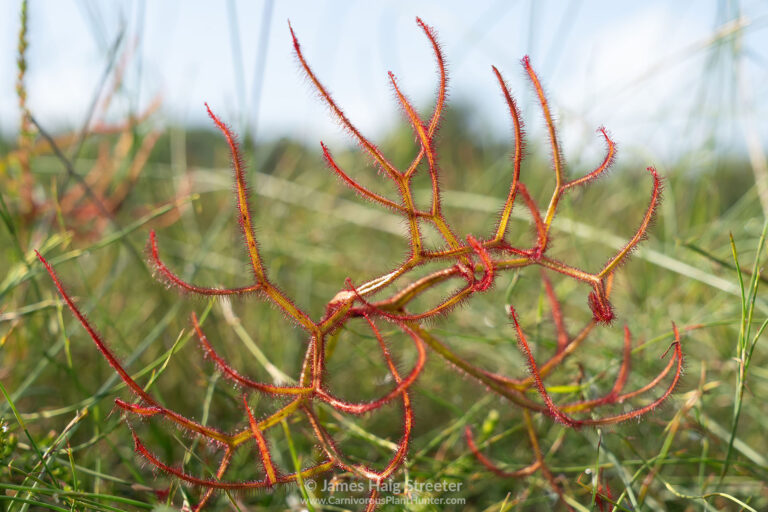
A spectacular giant sundew — and a rare chance to see evolution in action

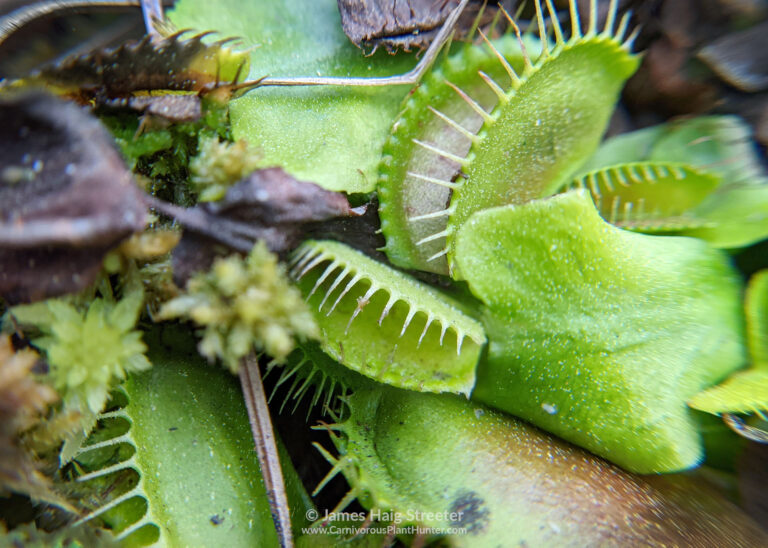
The Green Swamp Preserve. One of the last strongholds of the Venus flytrap — and a mecca for carnivorous plant hunters.
A free guide to buying carnivorous plants safely. Learn where to buy Venus flytraps and pitcher plants, avoid wild-collected plants, and grow them successfully.
And how to avoid the design by committee ‘camel’ syndrome.