Drosera binata var. multifida – Noosa NP, Australia
A spectacular giant sundew — and a rare chance to see evolution in action
Why Carnivorous Plants Are More Than a Hobby. They’re a Lens on the Natural World
Most people first encounter a carnivorous plant as a novelty.
A trap that snaps shut.
A pitcher filled with insects.
A leaf that glistens and slowly curls inward.
The reaction is almost universal: fascination.
But fascination isn’t the whole story.
What really holds our attention is something deeper.
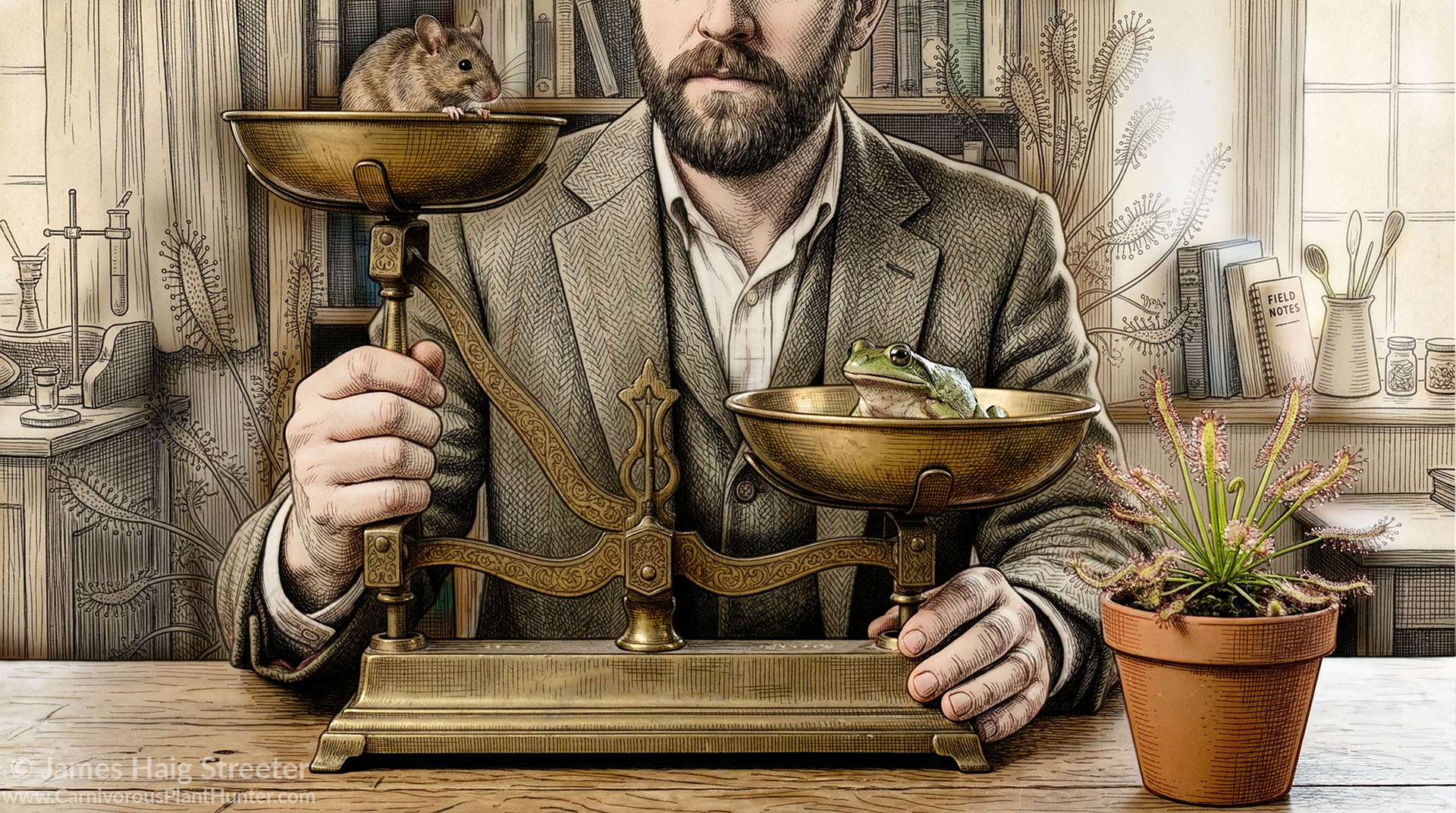
These plants challenge an assumption many of us carry about the natural world: that complexity, sophistication, and ingenuity belong primarily to animals, creatures that resemble us.
Carnivorous plants dismantle that idea.
At first this may feel unsettling. But then something else.
When we look at animals, it’s easy to interpret them through a human lens.
We compare their intelligence to ours.
We project intention onto their behavior.
We rank them — consciously or not — along a scale that places humanity at the top.
Plants don’t invite that comparison.
They don’t think in ways we recognize.
They don’t move with visible agency.
They don’t possess faces, voices, or expressions.
And because they are so unlike us, they free us from comparison.
We are not tempted to measure a sundew against ourselves. It is not a “lesser” version of anything.
It is something else entirely — a radically different expression of life.
And that difference forces us to look again.
Look closely at a carnivorous plant and you’re confronted with ingenuity shaped without foresight.
No planning.
No strategy meetings.
No conscious design.
Just time.
Pressure.
Interrelationships.
Adaptation.
In nutrient-poor soils, evolution didn’t stall.
It found another way.
Leaves became traps.
Sticky glands became feeding mechanisms.
Passive surfaces became precision tools.
Some species deploy tentacles that slowly envelop prey.
Others use trigger hairs that react faster than a snake strike.
Some lure insects with nectar infused with behavior-altering compounds.
Others use light, color, and structure to create subtle optical traps.
These are not crude improvisations.
They are refined responses to real-world constraints.
And when you encounter them on their own terms, something shifts.
If something as fundamentally unlike us as a plant can evolve such precise and sophisticated predatory strategies, it expands our sense of what nature is capable of.
And that expansion matters.
Carnivorous plants are extreme enough to demand attention.
Their adaptations are bold.
Sometimes theatrical.
Always purposeful.
Because they are so unlike us, they resist being reduced to “lesser versions” of ourselves.
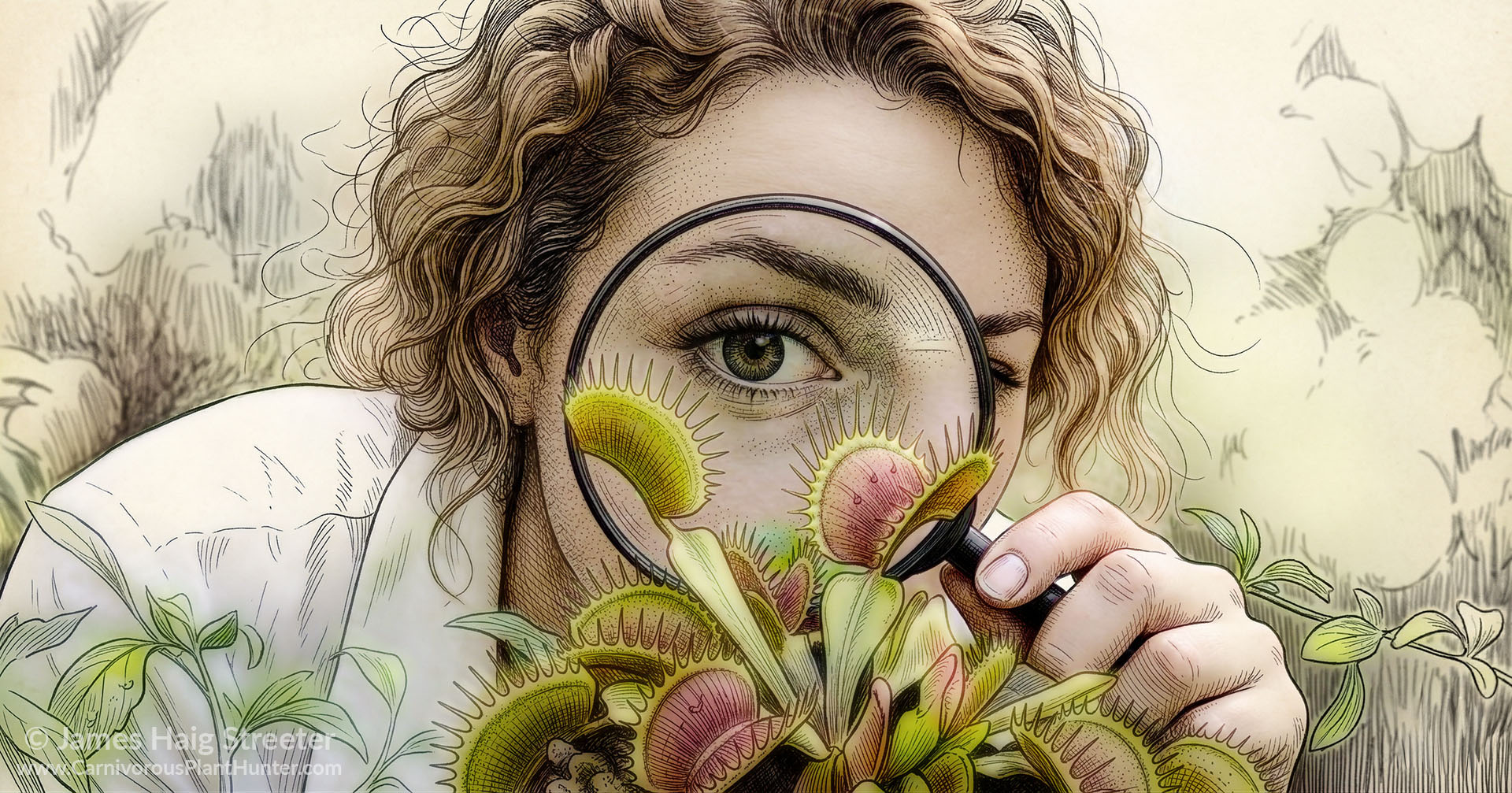
Because they are so unusual, they compel us to look more closely.
And sustained observation changes perception.
You begin to see that sophisticated solutions do not require a brain.
That problem-solving does not require awareness in the way we typically define it.
That beauty and function are not opposites, but partners.
Over time, attention deepens into something steadier:
Awe.
Not the dramatic kind.
But the quiet recognition that life is far more inventive and interconnected than we tend to assume.
And awe, if we let it, does something important.
It creates humility: the realization that something as commonplace as a plant can embody extraordinary solutions to the challenges of survival.
And humility makes connection possible.
Many people begin growing carnivorous plants because they want something unusual.
A remarkable specimen.
A living curiosity.
For me, it began as a young child, seeing a glistening scarlet rosette of a plant in the wild and being told it was a sundew that could eat little flies.
From the initial amazement, what often emerges is a shift in perspective.
Habitats begin to matter as much as specimens.
Interrelationships become as intriguing as isolated traits.
Protection becomes a natural extension of understanding.
You may find yourself wondering not just how a plant grows, but where.
Not just what it does, but why that strategy evolved in that particular habitat. You realize that landscape explains form.
These insights expand. You start noticing that the bold adaptations of carnivorous plants can be found in subtler ways right across the living world: how plants and animals of all kinds interact with one another, or how environments shape the form of a leaf.
Gradually, the background transforms.
Nature stops being scenery.
It becomes a dynamic system — one in which every organism is a response to real pressures in real places.
Not above us.
Not beneath us.
But alongside us — within the same unfolding process.
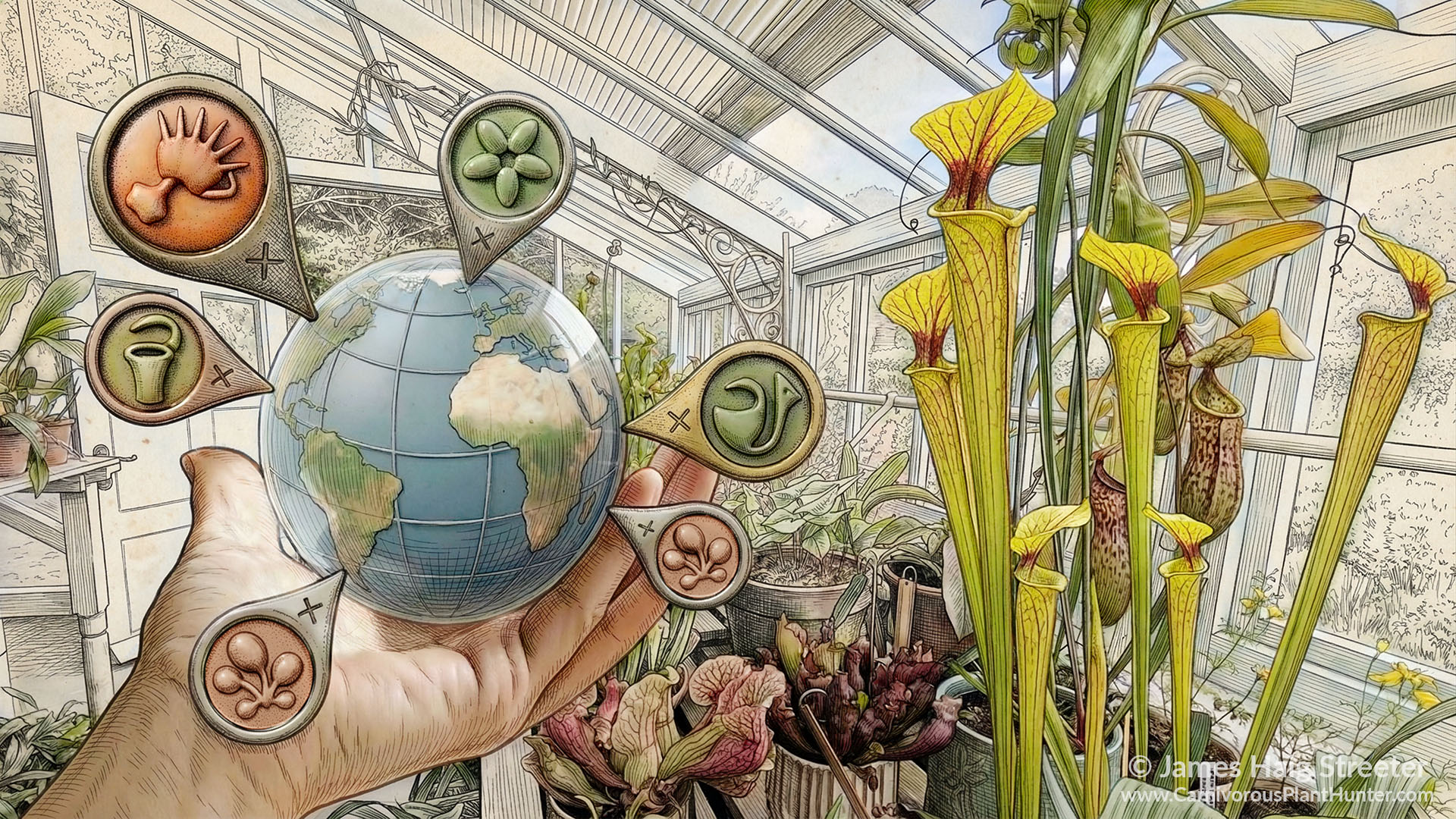
The Carnivorous Plant Hunter began as a way to document field sightings and map habitats.
But it exists for a deeper reason.
Carnivorous plants are not just curiosities.
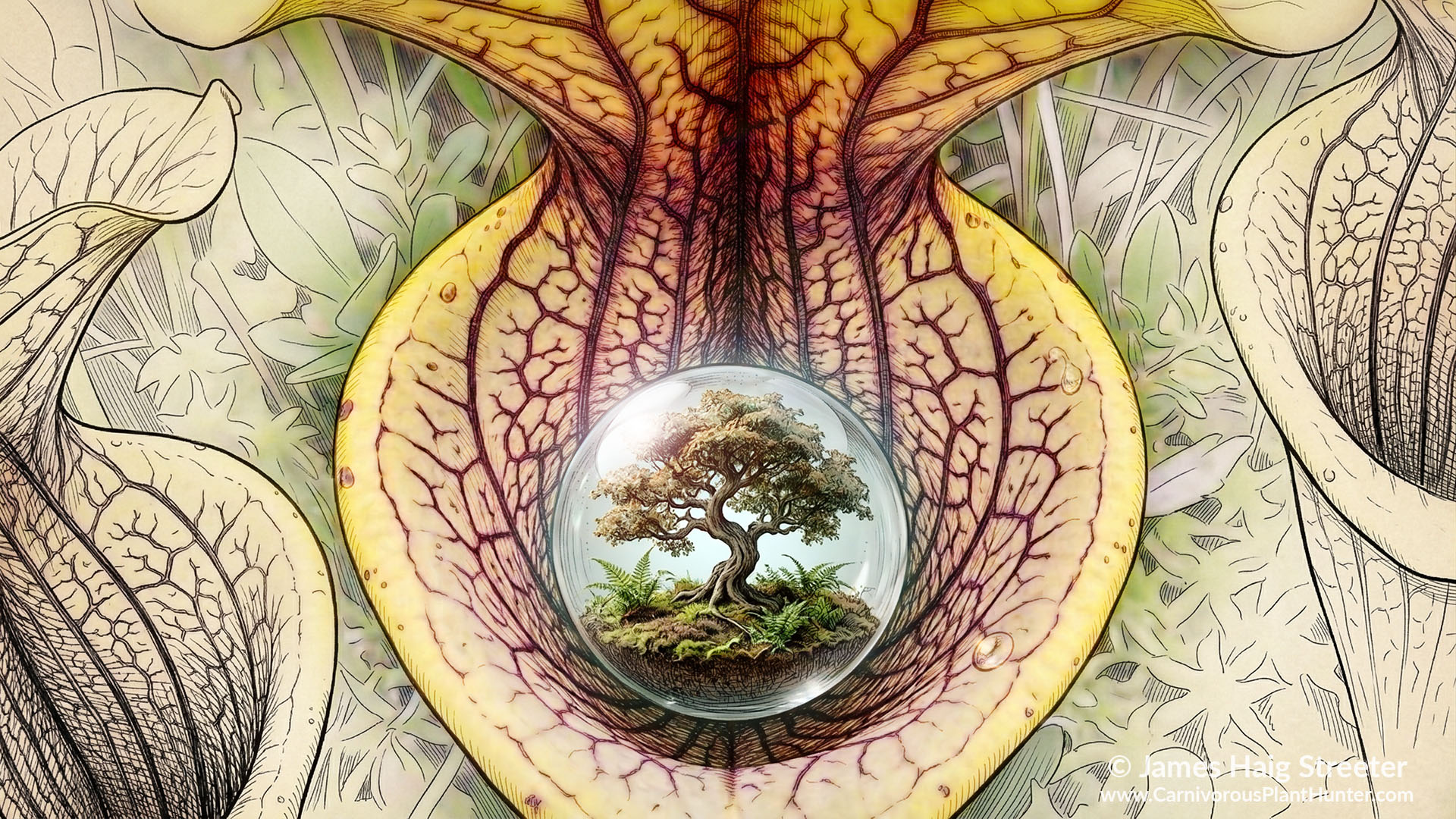
They are lenses.
Through them, we can see how environmental pressure shapes form.
How constraint fuels innovation.
How deeply interconnected life truly is.
Field guides, nursery lists, habitat notes, and maps are tools.
The real reward is perspective.
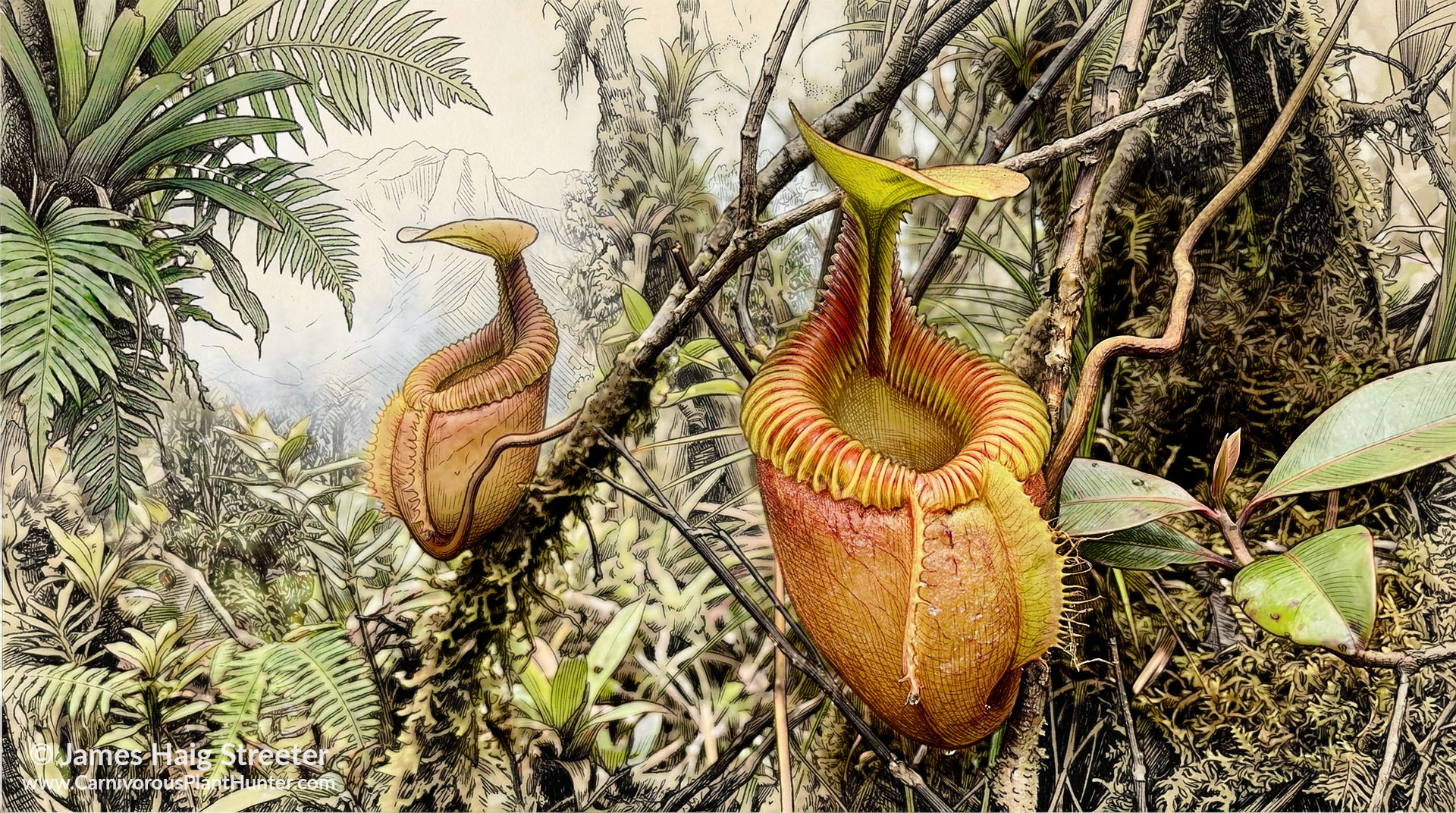
Because once you’ve stood in a marshland and watched a Venus flytrap growing exactly where it belongs, or seen a highland Nepenthes clinging to a mist-covered ridge, it becomes much harder to see nature as backdrop.
It becomes something you belong to.
A Carnivorous Plant Hunter is not defined by how many rare species they own, or how far they’ve travelled to see plants in the wild.
They’re defined by how they pay attention.
They grow responsibly.
They remain curious about place, not just specimens.
They look beyond the pot toward the landscape.
And they understand something simple but powerful:
These plants are not trophies.
They are teachers.
Where to Go Next
If this way of seeing resonates with you, there are two natural next steps:
Explore the Plant Map and Explorer Guides
Discover how and where specific species grow in the wild, what shaped them, and what they reveal about the ecosystems they inhabit.
Join the Explorer’s Notebook
Receive field stories, behind-the-scenes insights, habitat discoveries, and reflections that deepen this perspective — and sharpen the way you look at the natural world.
Carnivorous plants may be the entry point.
But what they ultimately offer is something far more enduring:
A clearer way of seeing.
And once that shift happens, it becomes difficult to look at the natural world the same way again.
James is an award-winning landscape architect turned documenter of wild carnivorous plant habitats. He has spent decades tracking these remarkable species across the globe, guided by research, patience, and the joy of discovering plants in the places nature intended.
A member of the IUCN Carnivorous Plant Specialist Group, James founded the Carnivorous Plant Hunter to help people experience carnivorous plants in the wild, understand the stories behind them, and connect more deeply with the natural world.
What began as a personal project to map wild plant sightings has grown into a platform where exploration, science, and the wild world of carnivorous plants collide.
Join the Explorer’s Notebook for new stories from the wild, creative insights, field discoveries, and early access to upcoming projects — including future guides and evolution-focused features.
You’ll also receive The Ultimate Carnivorous Plant Nursery Guide as a welcome gift.
Explorer’s Notebook emails are occasional and meaningful. Unsubscribe anytime.

A spectacular giant sundew — and a rare chance to see evolution in action

The Green Swamp Preserve. One of the last strongholds of the Venus flytrap — and a mecca for carnivorous plant hunters.
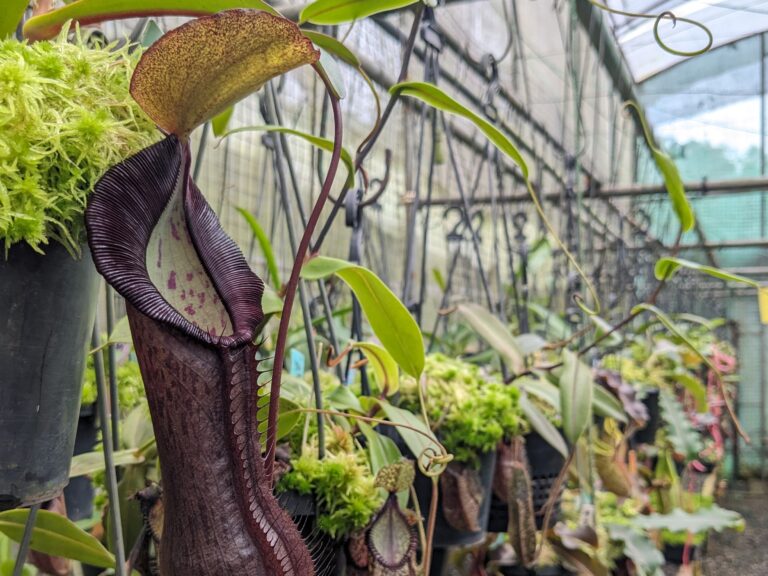
A free guide to buying carnivorous plants safely. Learn where to buy Venus flytraps and pitcher plants, avoid wild-collected plants, and grow them successfully.
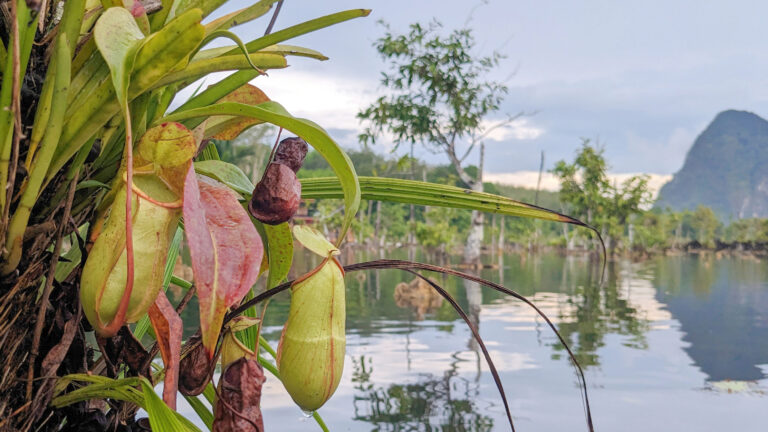
I found my first wild Nepenthes in the last place I expected — growing epiphytically in the middle of a lake.
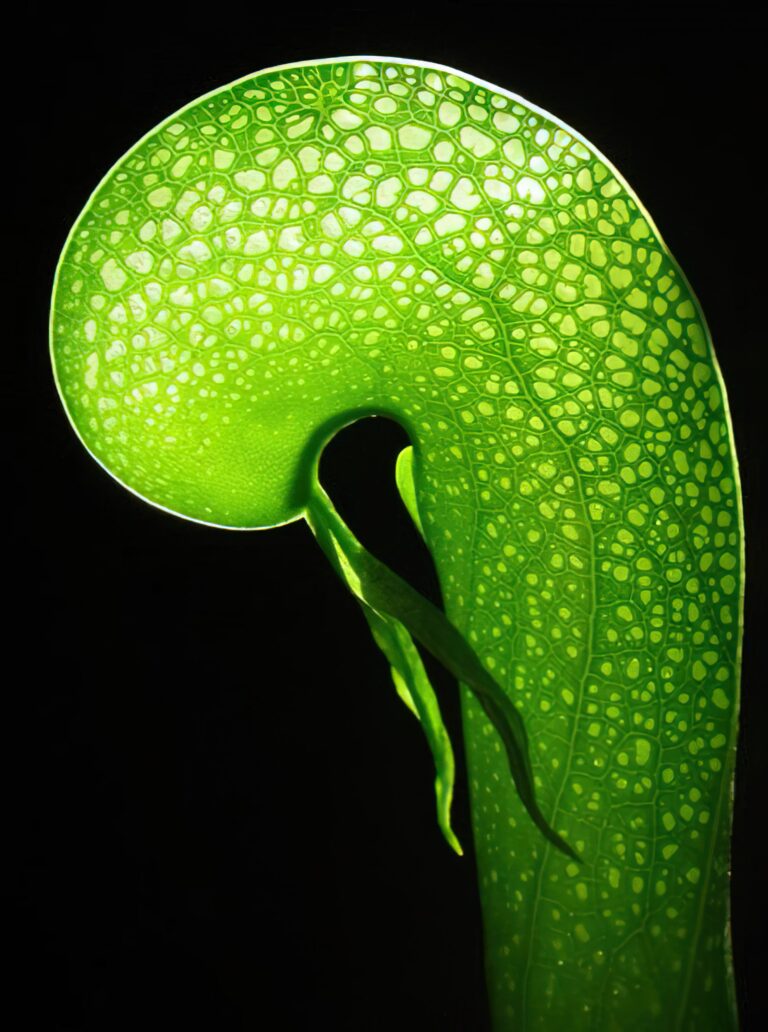
And how to avoid the design by committee ‘camel’ syndrome.