Explorer Guide

Venus Flytap (Dionaea muscipula)

Green Swamp Preserve, North Carolina, USA

One of the last strongholds of the Venus flytrap — and a mecca for carnivorous plant hunters

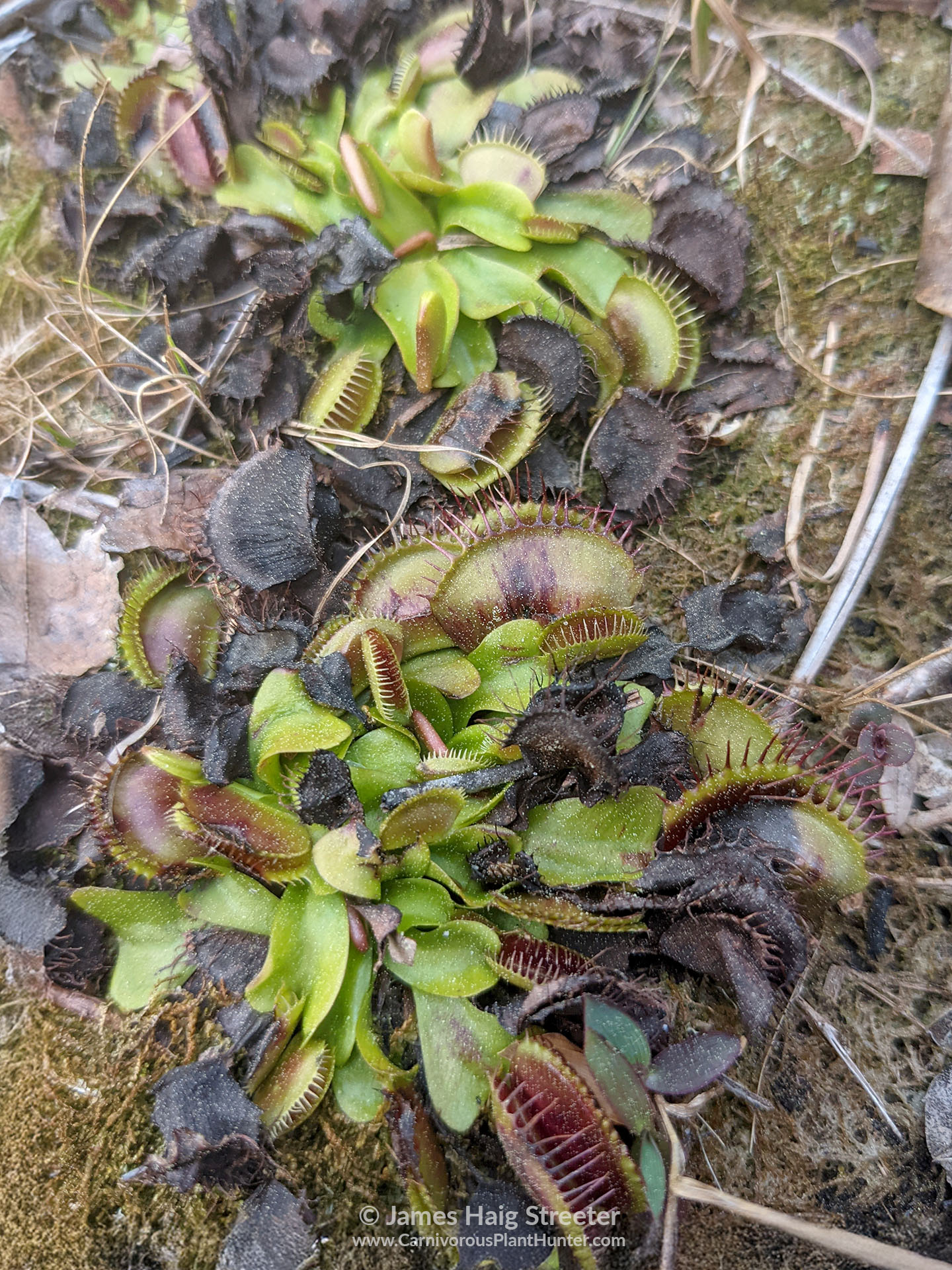
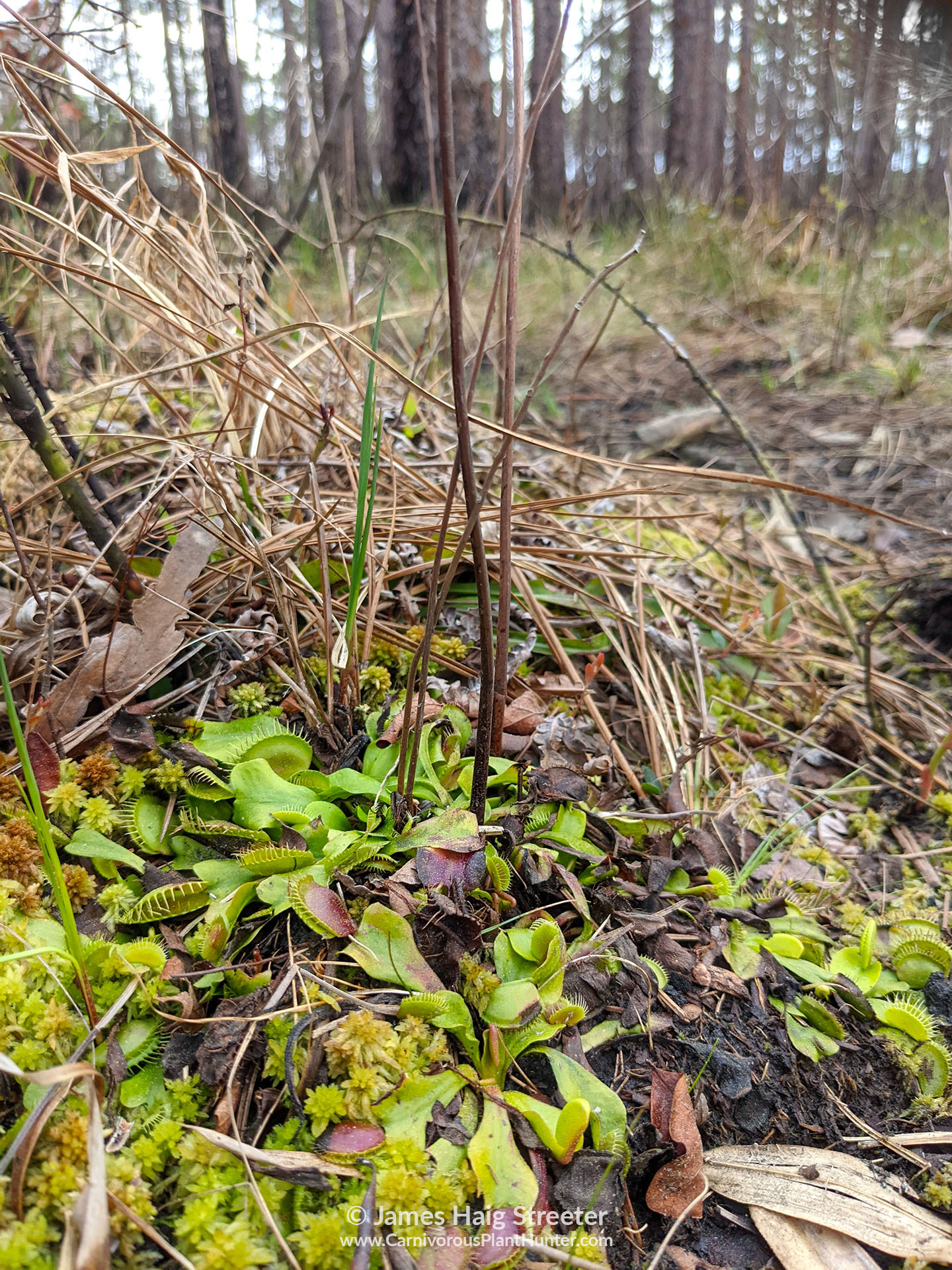
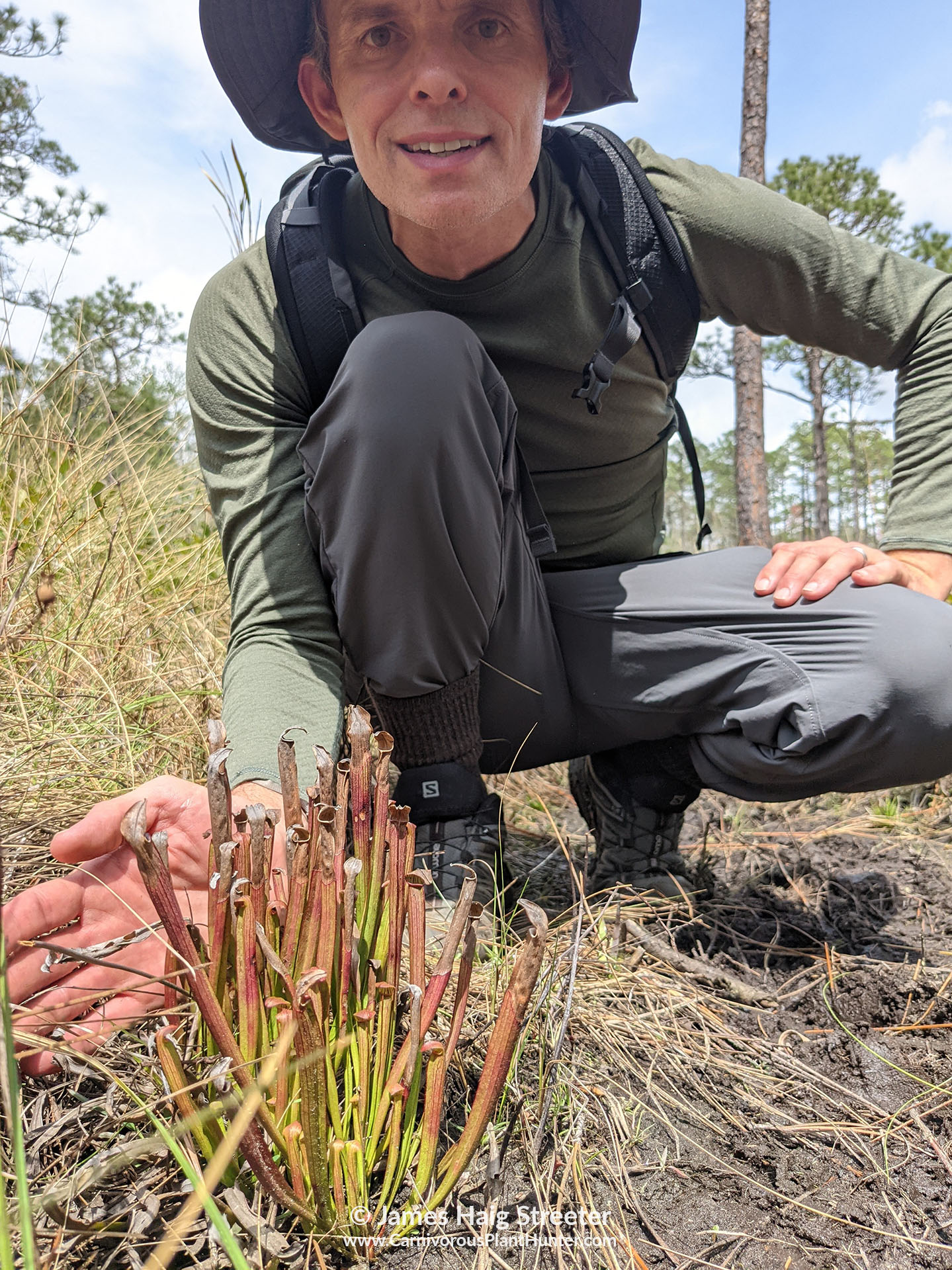
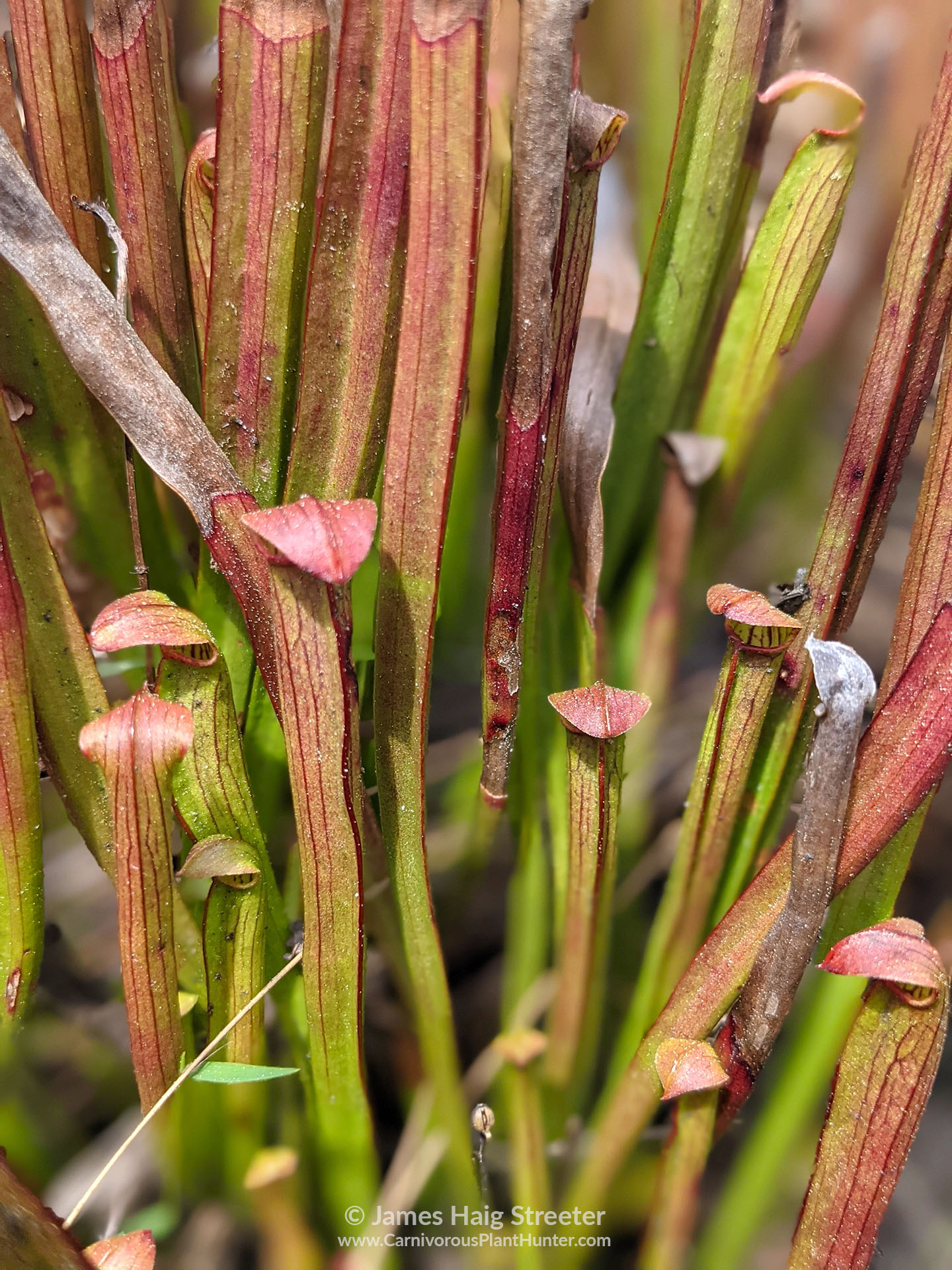
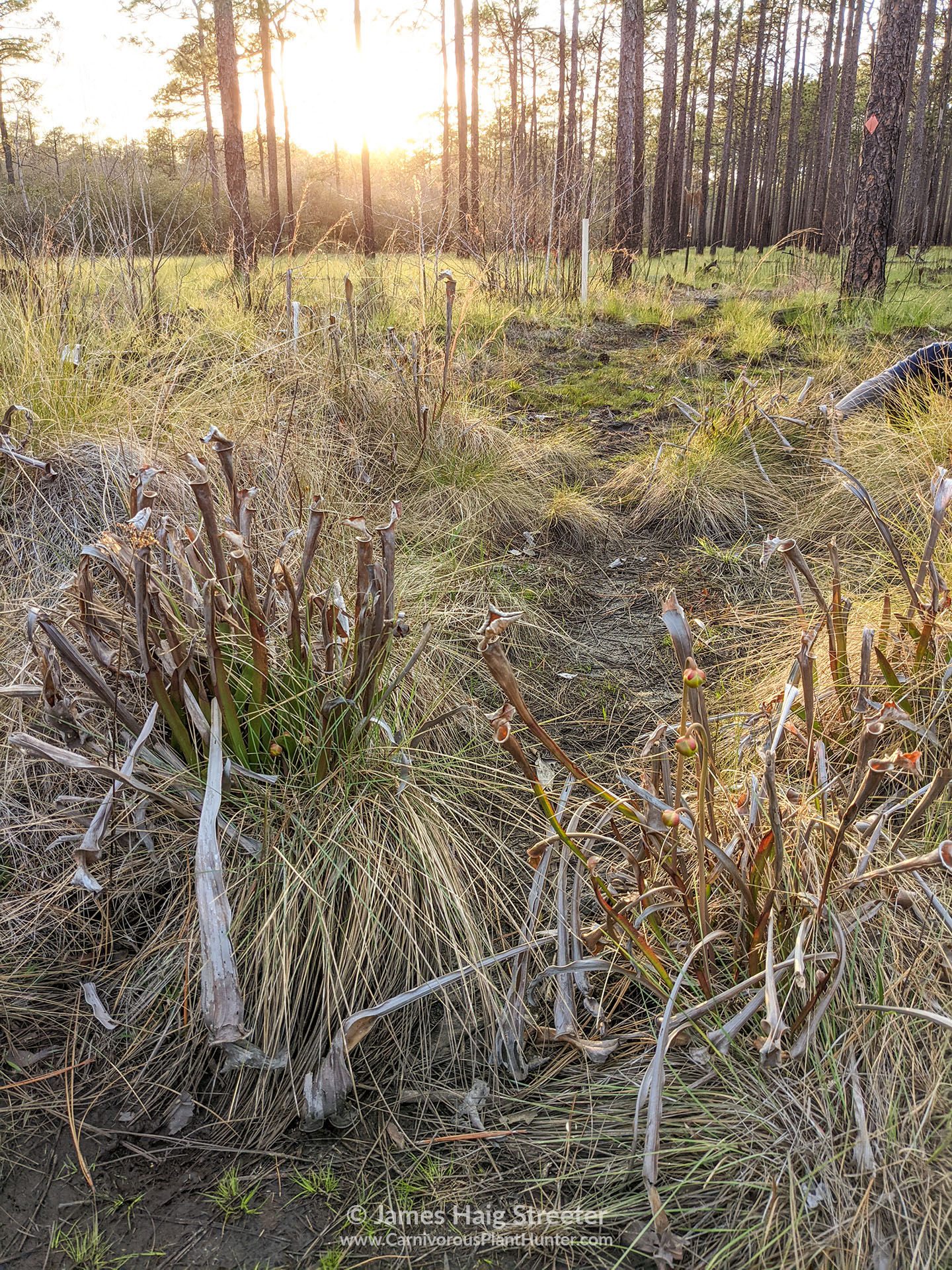
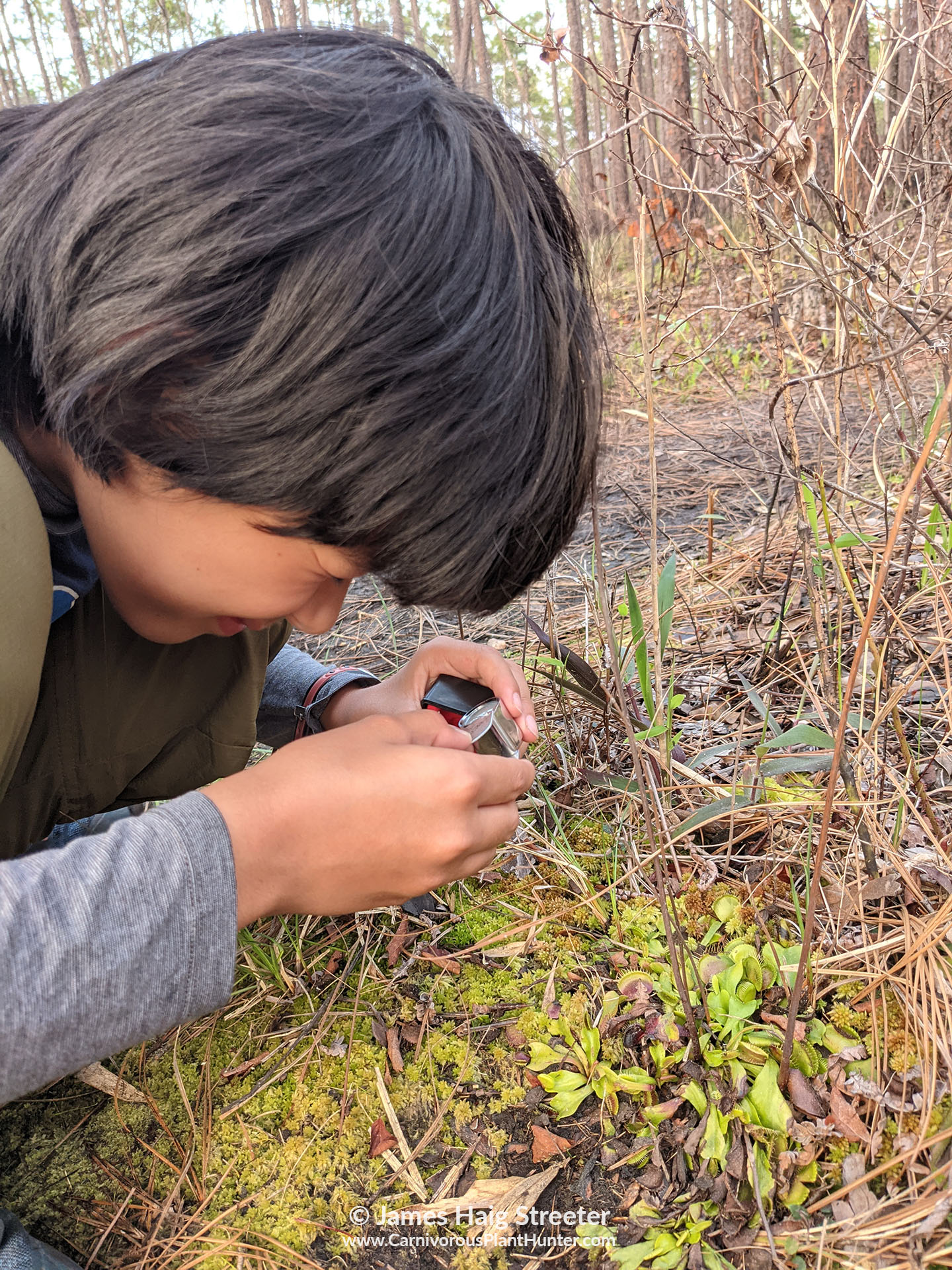
Venus flytraps, Green Swamp Preserve - winter traps // Photo: James Haig Streeter

There are few plants that have captured the popular imagination as strongly as Dionaea muscipula, the Venus flytrap. It can be found for sale in big-box garden centers and supermarkets around the world, and has even starred in cult films like Little Shop of Horrors. One might imagine that its wild habitat would be equally dramatic, but at first sight North Carolina’s Green Swamp Preserve is not especially striking.

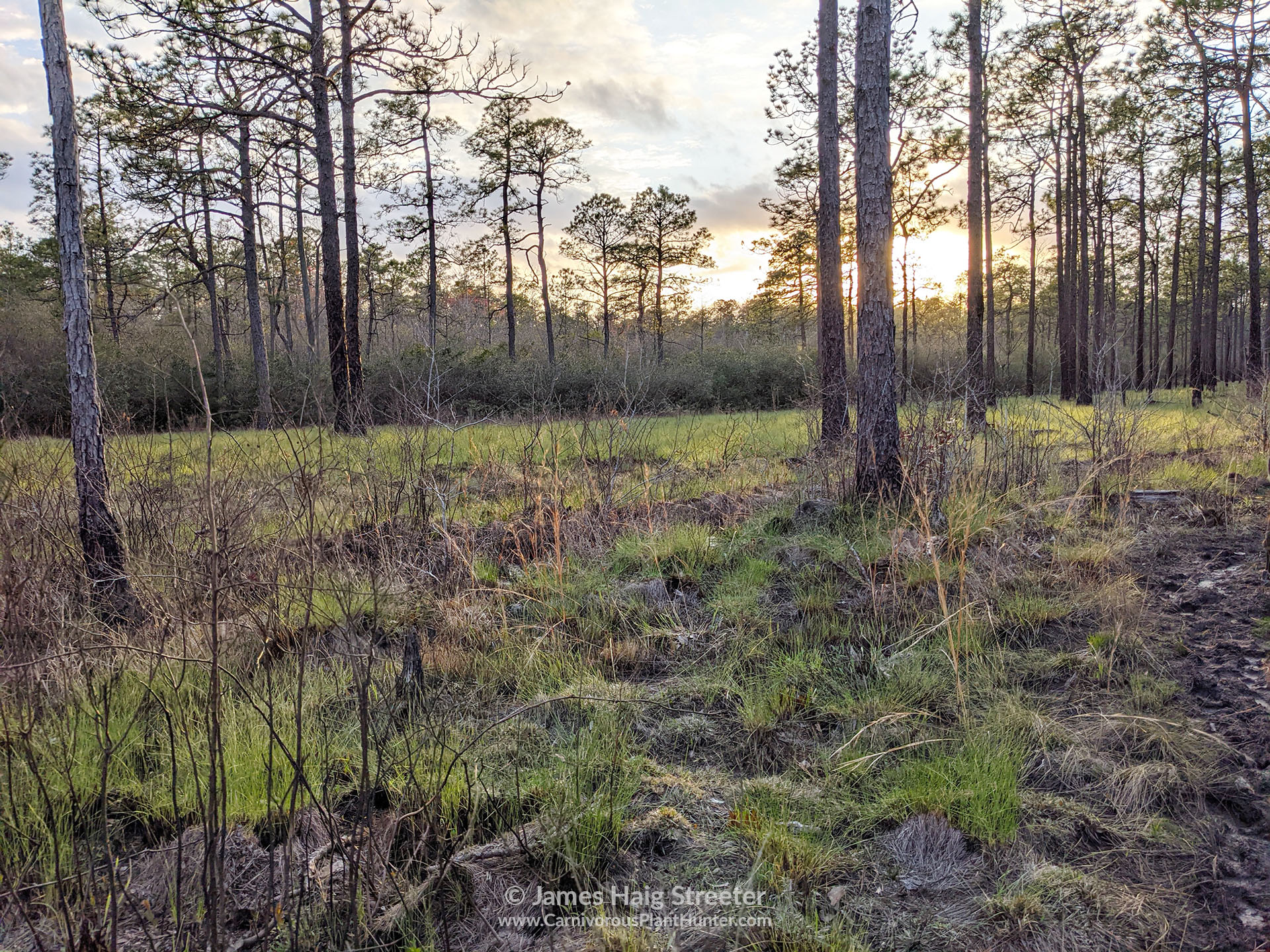
Typical flytrap habitat - Green Swamp Preserve, North Carolina // Photo: James Haig Streeter

This longleaf pine habitat, with its mosaic of open grassland and woodland, is one of the few places left where the Venus flytrap can still be found in the wild. Over the years, poaching and habitat destruction have dramatically reduced its range.

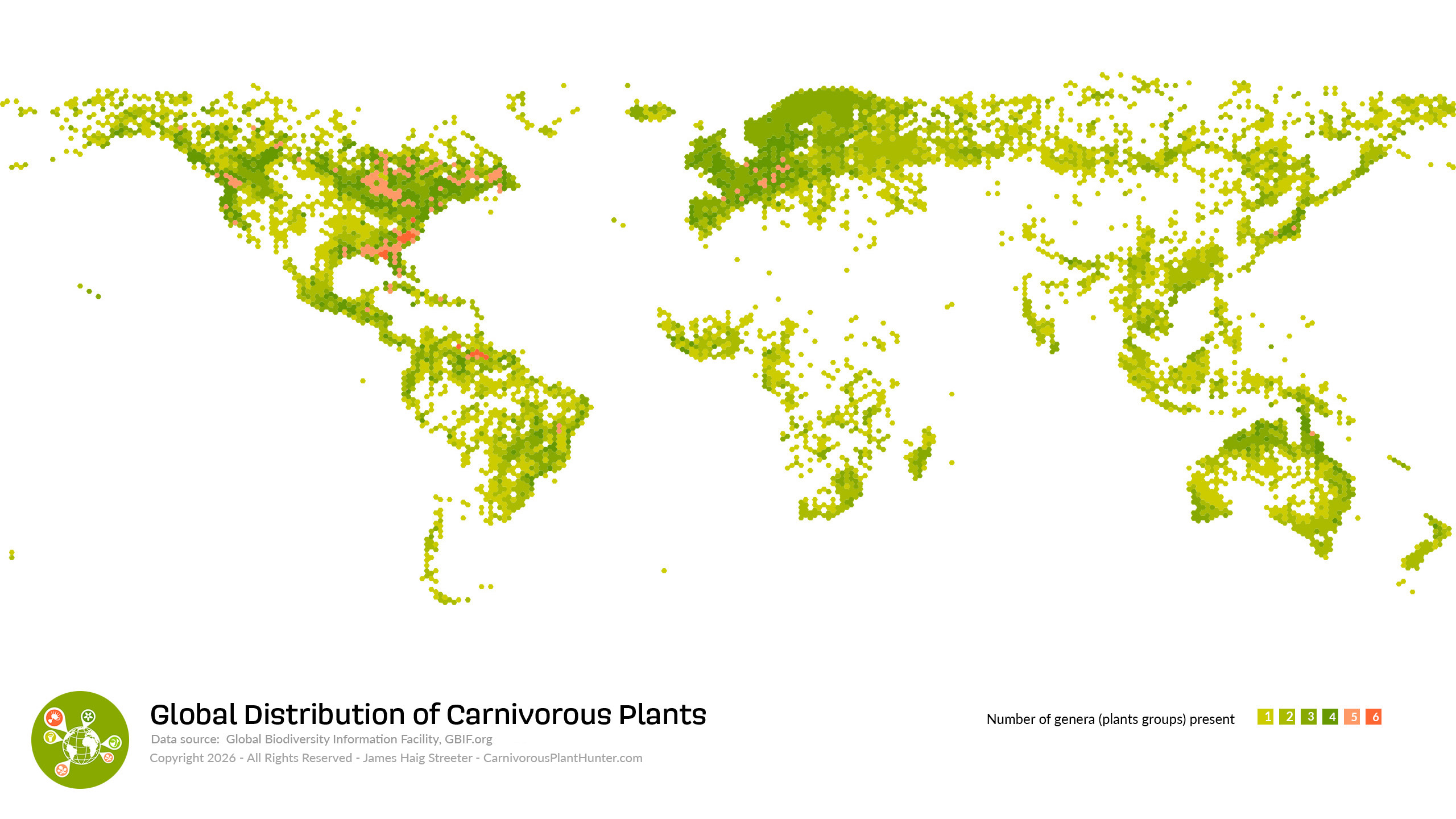
First impressions, however, can be deceptive. In many ways, Green Swamp Preserve really is a little shop of horrors, supporting one of the highest concentrations of carnivorous plant genera in the world: six in total, and while 14 species is often cited as the number living within the preserve, the total is 18 when including all aquatic and pocosin bog species. Few other areas can claim such diversity. Among them are Florida’s Liberty County, where it’s thought flytraps were deliberately introduced, and the tepui region of South America.

Global Distribution of Carnivorous Plant Genera.  Generated by overlaying GBIF.org plant genera distribution maps.  Showing that Dionaea muscipula is located in one of the most genera rich locations on the planet.

Green Swamp Preserve is therefore something of a mecca for the dedicated carnivorous plant hunter, not only as one of the last remaining in-situ homes of the iconic Venus flytrap, but as a rare opportunity to encounter so many other species in one location. I made this pilgrimage as part of a much larger trip around the United States with my family in an RV motorhome. Unfortunately, my timing was not ideal. I arrived at the end of March, catching the end of the flytrap’s winter dormancy, though I was rewarded with some other carnivorous surprises.

The preserve is a 17,424-acre (7,050-ha) area managed by The Nature Conservancy and designated a National Natural Landmark. It is home not only to carnivorous plants, but also to many orchids, black bears, and alligators. This longleaf pine savanna ecosystem is characterized by pine woodland interspersed with open grassland. As in many grassland ecosystems, fire is a crucial natural force, maintaining the open understory of the savanna landscape. At Green Swamp Preserve, this is managed through controlled burns, with different zones burned in different years.

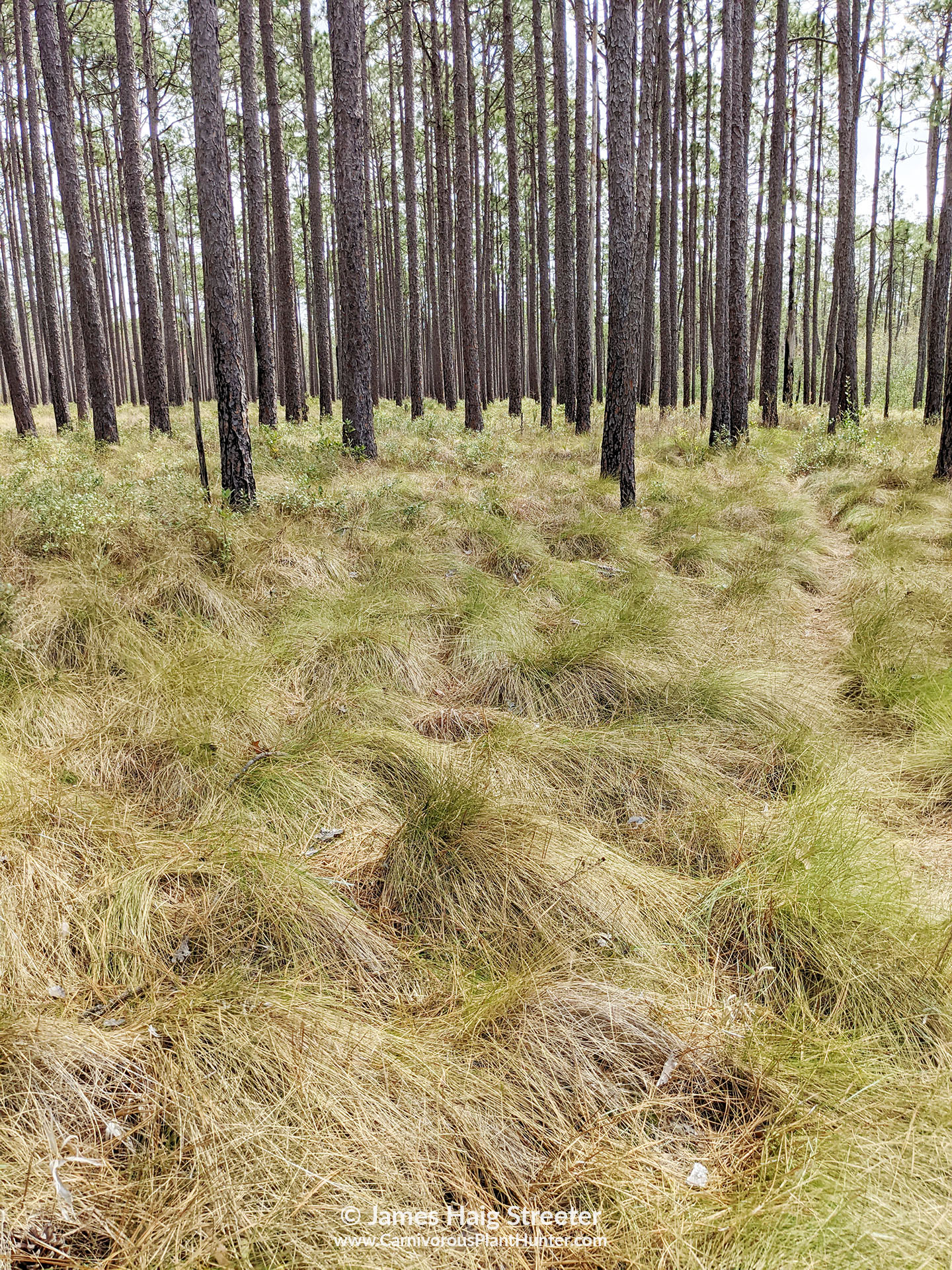
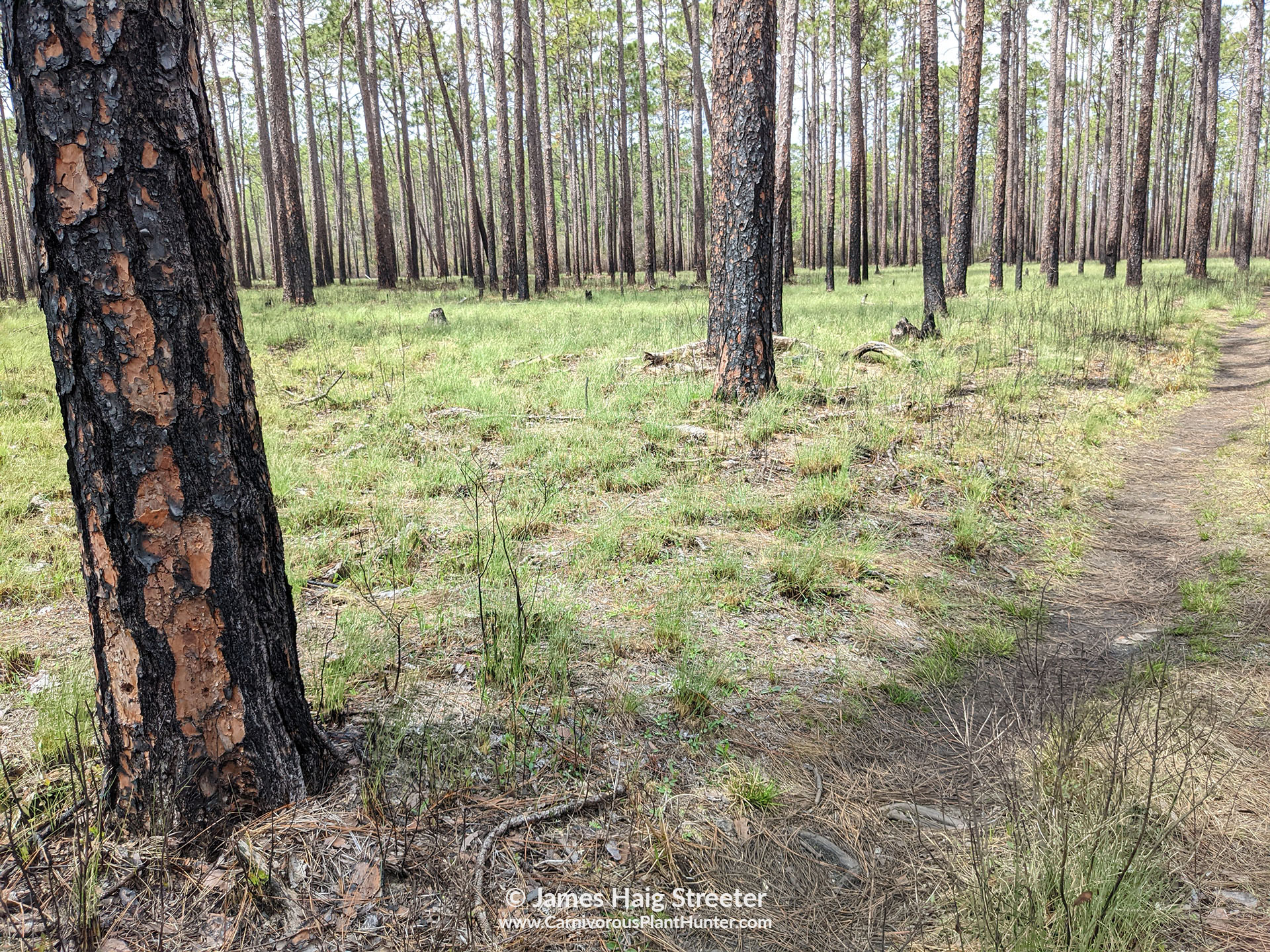
Left image: Tall savannah grasses if left unburnt.  Right images: Short grasses after a managed burn, encouraging low-growing species, including flytraps.

It may seem counterintuitive to intentionally set fire to a landscape full of rare plants, but this management is essential for low-growing species like Venus flytraps, which would otherwise be overtaken by taller vegetation. Managing a landscape’s biodiversity through fire is, in fact, an ancient technique used by many Indigenous peoples to improve hunting opportunities, from Yosemite Valley’s Native Americans to Australia’s First Nations peoples. Here, however, it is used to benefit a very different kind of hunter.

“It may seem counterintuitive to intentionally set fire to a landscape full of rare plants, but this management is essential…”

When I visited, the area with the highest density of carnivorous plant genera was a zone that had been burned the previous year. This had given many species time to grow back, while the surrounding grasses were still relatively short. In contrast, areas that had not been burned for several years were covered in dense clumps of wiregrass (Aristida stricta), making it much harder for smaller species to be found, with only the larger Sarracenia remaining visible.

Venus flytraps in winter dormancy, peppered with ash from a nearby controlled burn // Photo: James Haig Streeter

I must admit that when I first realized my travel plans would bring me to this hallowed place during flytrap dormancy, I was a little disappointed. Naturally, I wanted to see how large the traps might grow in the place where these iconic predators had evolved to thrive. Yet seeing their smaller winter leaves brought home the importance of seasonal cycles. While watching a flytrap at home on the kitchen windowsill as its large summer traps die back in autumn can seem alarming, seeing them here in a similar state, just as nature intended, was oddly reassuring.

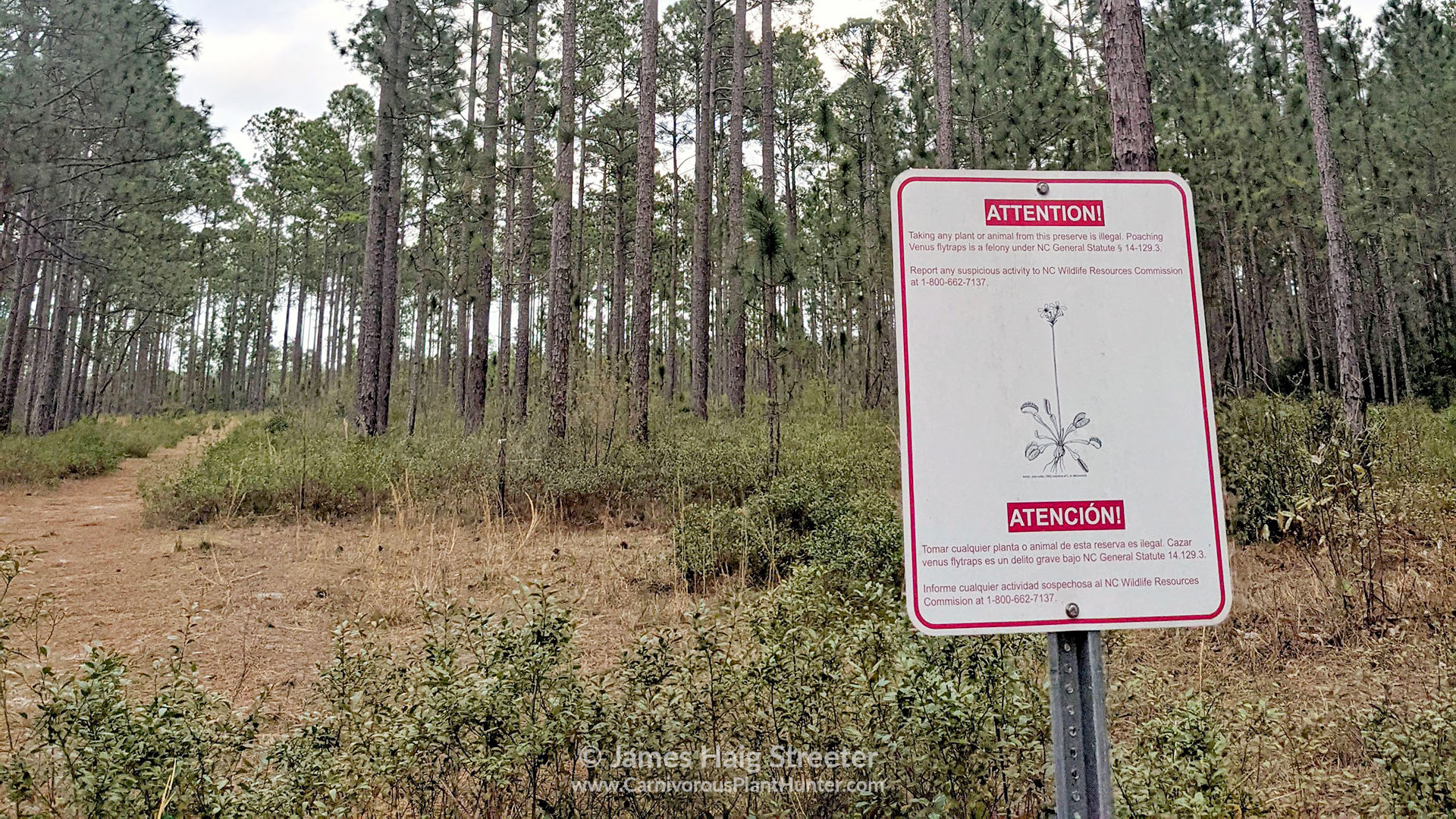
There was something else reassuring too. One might imagine that for such a rare and iconic plant, its location would be a closely guarded secret, or protected in some visible way. But that was not the case. The Green Swamp Preserve’s own website proudly features the species. The only reminder was a sign in the parking lot informing visitors that it is a federal offense to collect them from the wild.

Parking lot warning sign, Green Swamp Preserve // Photo: James Haig Streeter

Then again, why would anyone want to? Thanks to modern horticultural techniques such as micropropagation, Venus flytraps have been mass-produced to the point that many large garden centers around the world now sell them. Then there are the multitude of cultivars available, many of which look far more dramatic than the wild type. This is a prime example of how conservation and ethical cultivation can work hand in hand, allowing growers to enjoy the plants they love while helping to protect precious wild populations.

Other Carnivorous Inhabitants

View a complete list of all carnivorous plant species found at the Green Swamp Preserve…

#

Genus

Species

Found

Savannah Grassland Habitat:

1

Dionaea

Dionaea muscipula (Venus flytrap)

yes

2

Drosera

Drosera brevifolia (Dwarf sundew)

yes

3

Drosera capillaris (Pink sundew)

no

4

Drosera filiformis (Thread-leaf sundew)

no

5

Drosera intermedia (Spoonleaf sundew)

yes

6

Pinguicula

Pinguicula caerulea (Blue Butterwort)

yes

7

Pinguicula lutea (Yellow Butterwort)

yes

8

Pinguicula pumila (Small Butterwort)

yes

9

Sarracenia

Sarracenia flava (Yellow Pitcher)

yes

10

Sarracenia minor (Hooded Pitcher)

no

11

Sarracenia purpurea (Purple Pitcher)

yes

12

Sarracenia rubra (Sweet Pitcher)

yes

13

Utricularia

Utricularia subulata (Zigzag bladderwort)

yes

Swamp and Aquatic Habitats:  (Note – I did not explore these areas.)

14

Triantha

Triantha racemosa (False Asphodel)

n/a

15

Utricularia

Utricularia cornuta (Horned bladderwort)

n/a

16

Utricularia inflata

n/a

17

Utricularia purpurea

n/a

18

Utricularia striata

n/a

Savannah Grassland Habitat:

Dionaea

1

Dionaea muscipula (Venus flytrap)

Drosera

2

Drosera brevifolia (Dwarf sundew)

3

Drosera capillaris (Pink sundew)

4

Drosera filiformis (Thread-leaf sundew)

5

Drosera intermedia (Spoonleaf sundew)

Pinguicula 

6

Pinguicula caerulea (Blue Butterwort)

7

Pinguicula lutea (Yellow Butterwort)

8

Pinguicula pumila (Small Butterwort)

Sarracenia

9

Sarracenia flava (Yellow Pitcher)

10

Sarracenia minor (Hooded Pitcher)

11

Sarracenia purpurea (Purple Pitcher)

12

Sarracenia rubra (Sweet Pitcher)

Utricularia 

13

Utricularia subulata (Zigzag bladderwort)

Swamp and Aquatic Habitats:  (Note – I did not explore these areas.)

Triantha 

14

Triantha racemosa (False Asphodel)

Utricularia

15

Utricularia cornuta (Horned bladderwort)

16

Utricularia inflata

17

Utricularia purpurea

18

Utricularia striata

Pinguicula (Butterworts)

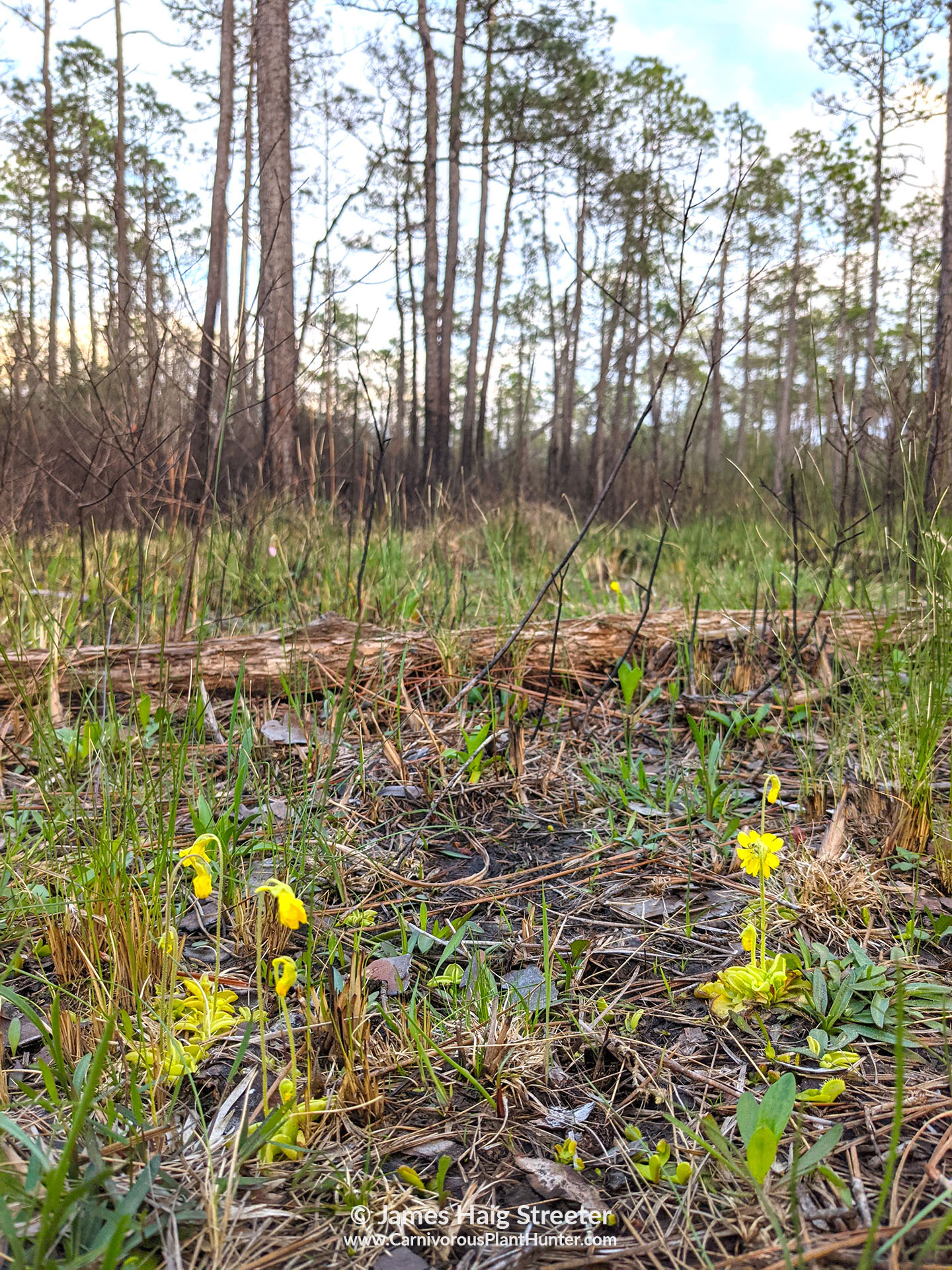
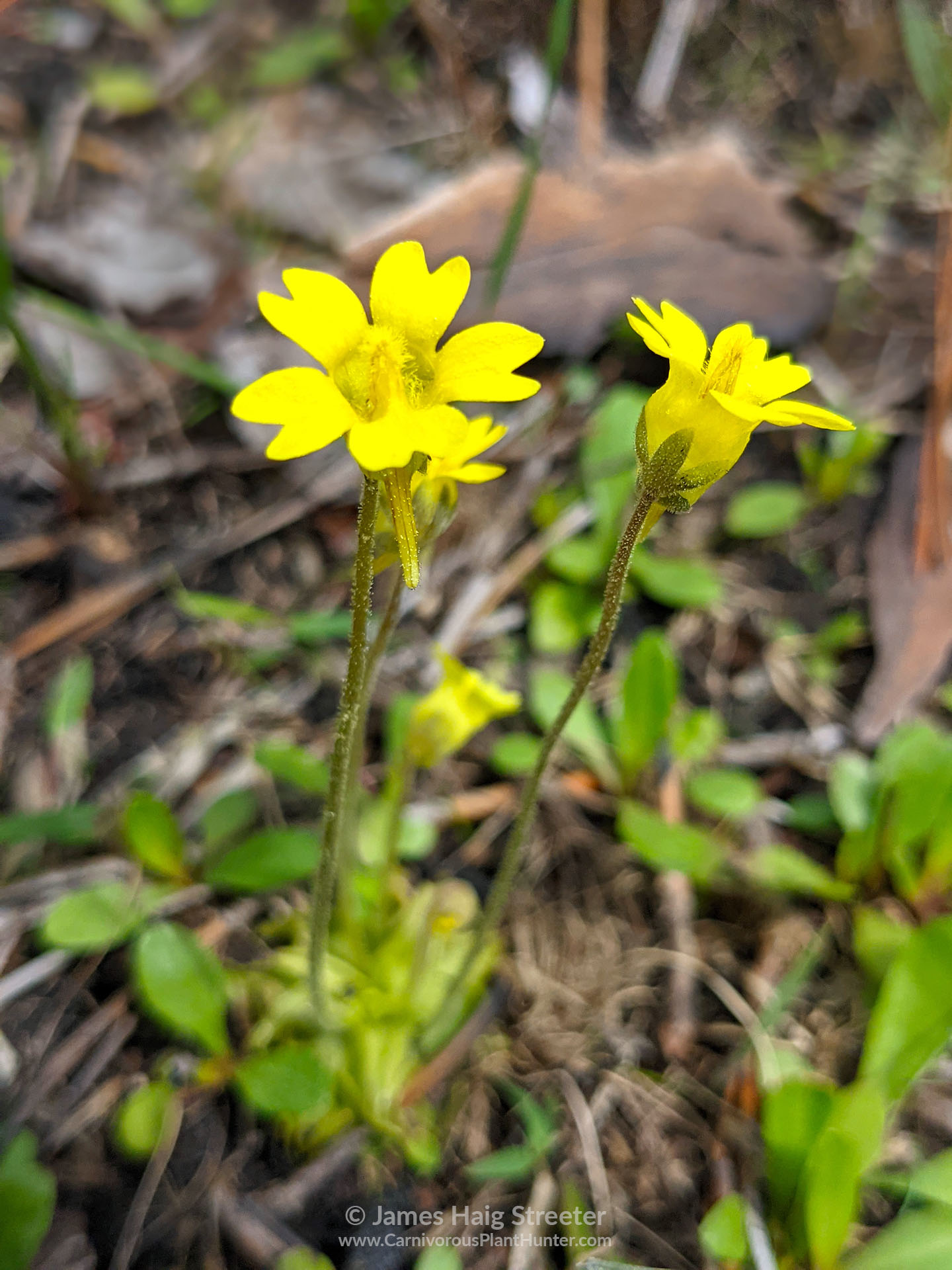
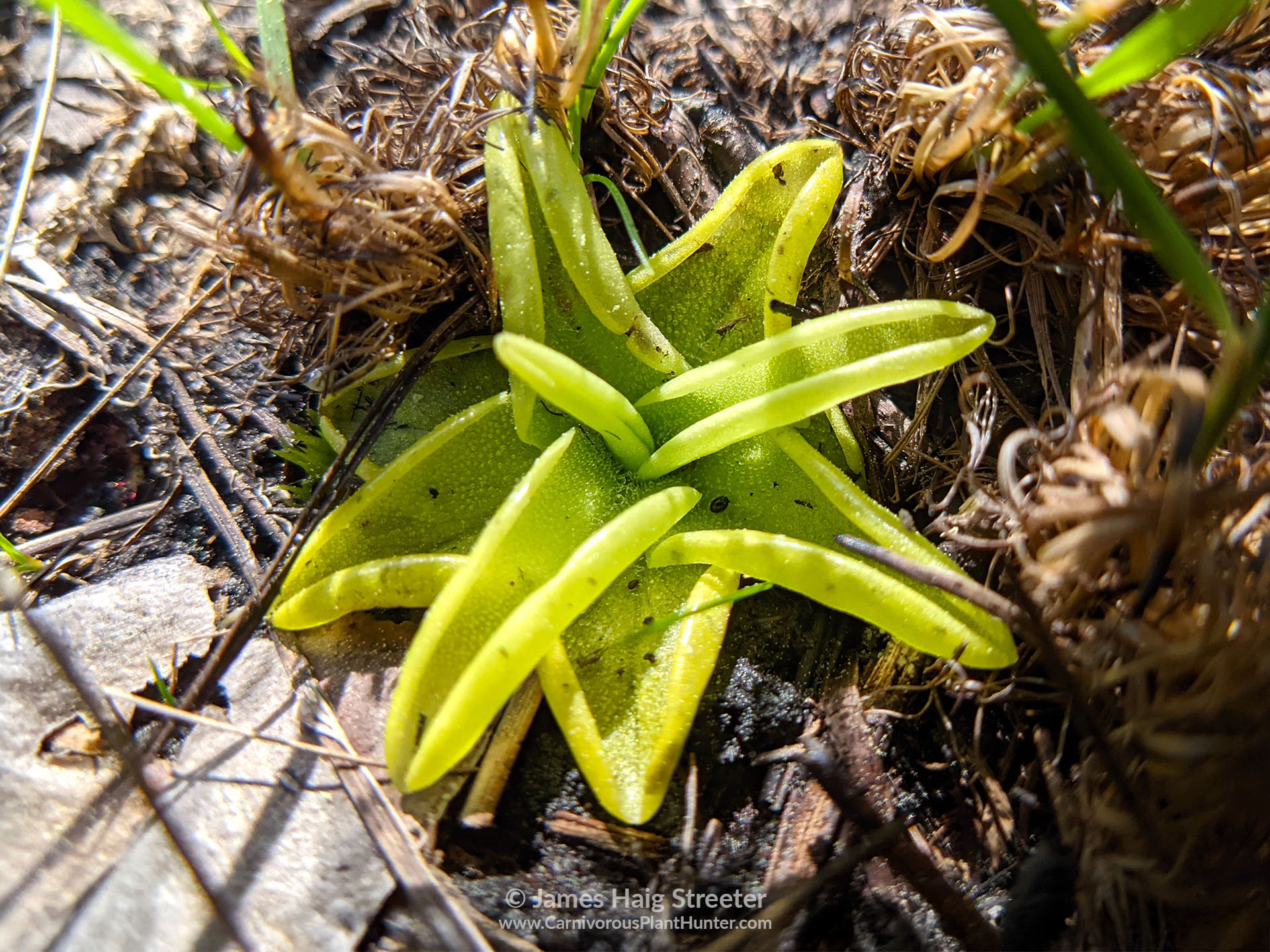
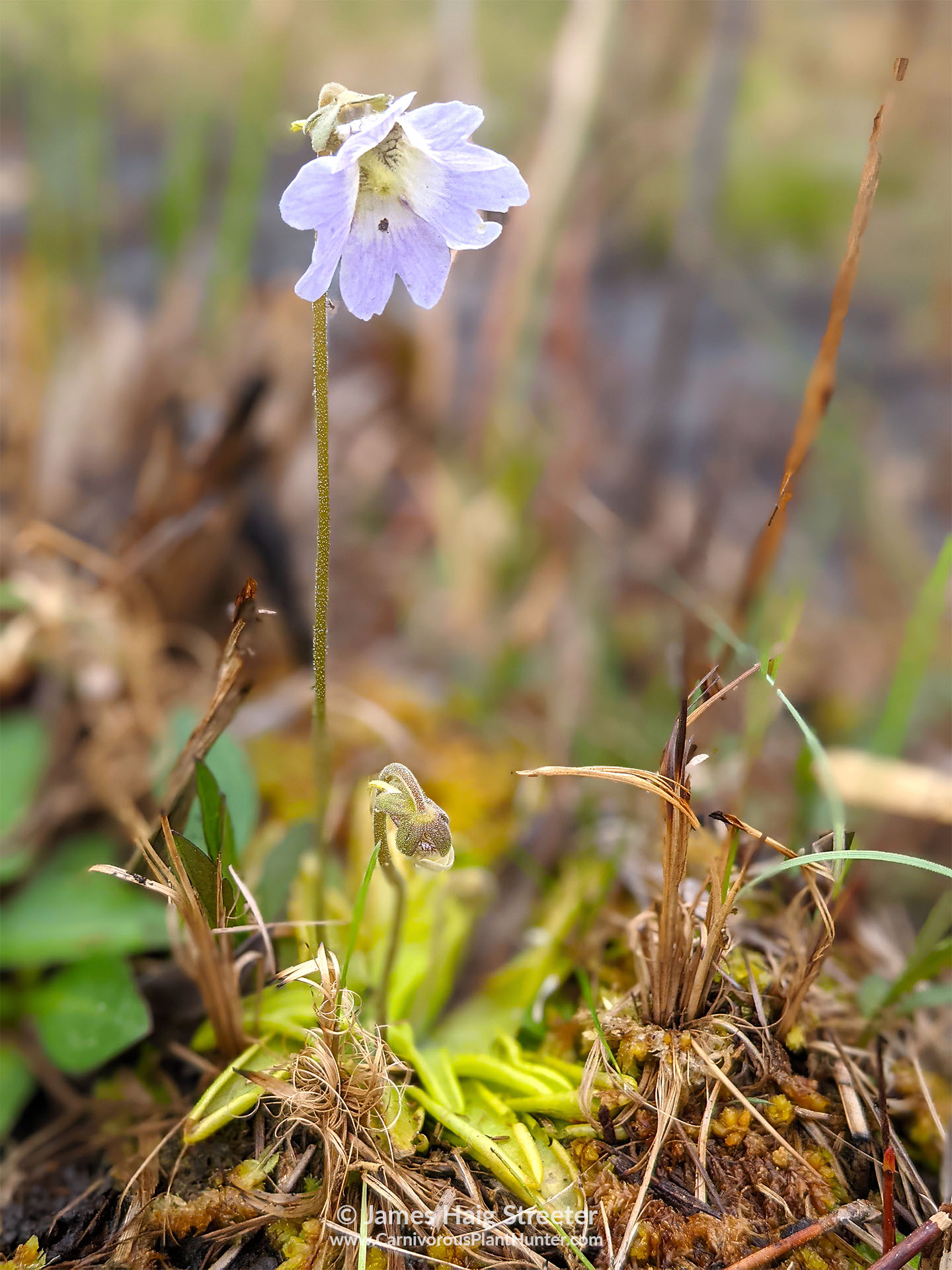
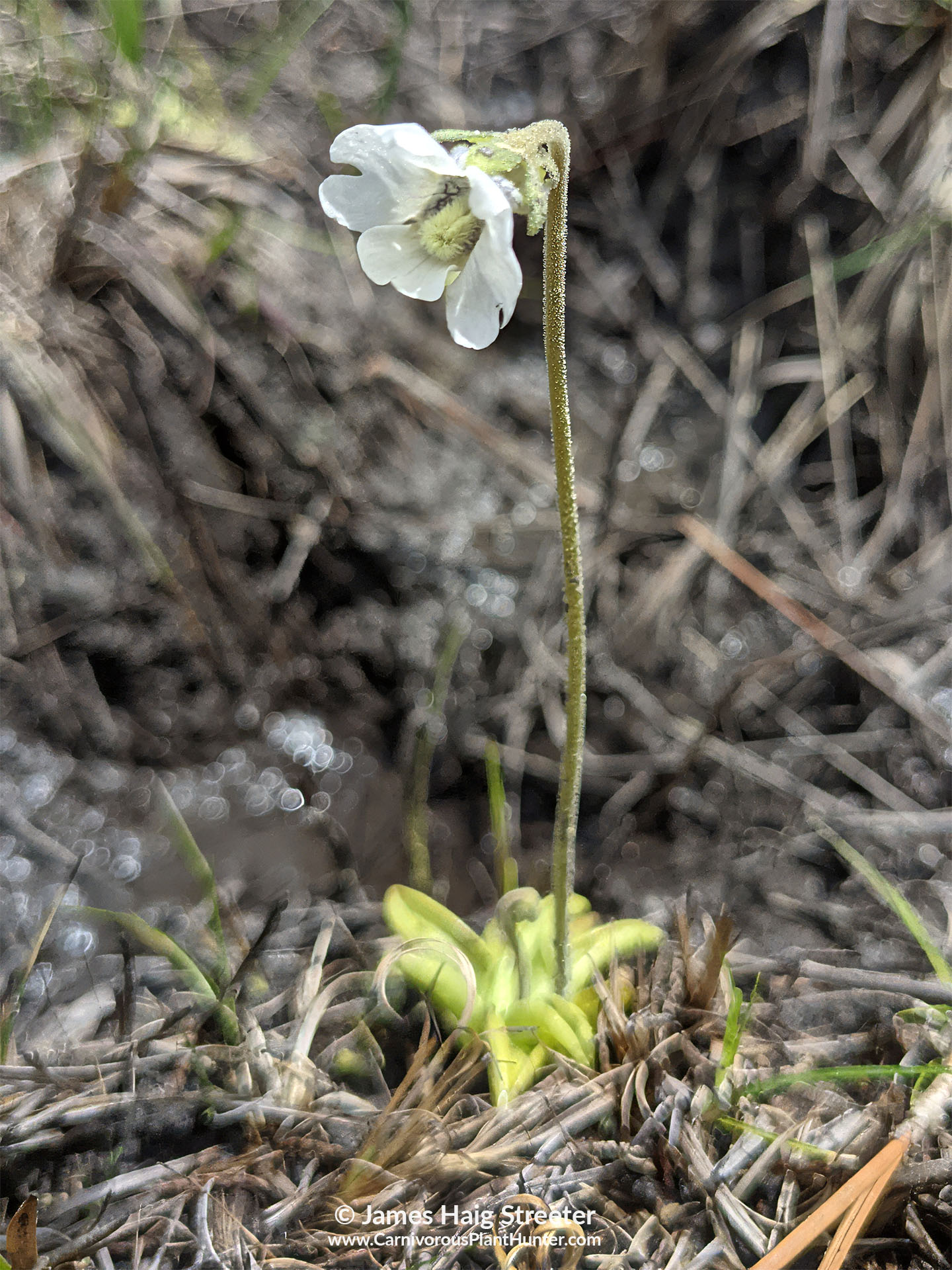
Visiting at the end of March also brought an unexpected reward. Many Pinguicula (butterworts) and Utricularia (terrestrial bladderworts) were in full flower. Being small in stature, these also benefit from controlled burns, and seemed to be thriving without the competition of blanketing grasses. The reduced grass cover also made them easier to spot, and I was able to find all three butterwort species that grow here.

Pinguicula typically have purple flowers, but Pinguicula lutea, with its primrose-yellow blooms, was a particularly striking find, its flypaper-like leaves covered with tiny insects. It was growing alongside its close relative, P. caerulea, which has similarly shaped flowers, but in a pale violet with a white center and darker purple veining. The smallest butterwort I found was P. pumila, with much smaller leaves and delicate white flowers. All of these species are insect-pollinated, creating an interesting paradox in their carnivorous lives, solved by bearing their flowers on long stems, or scapes, high above their sticky leaves.

Utricularia (Bladderworts)

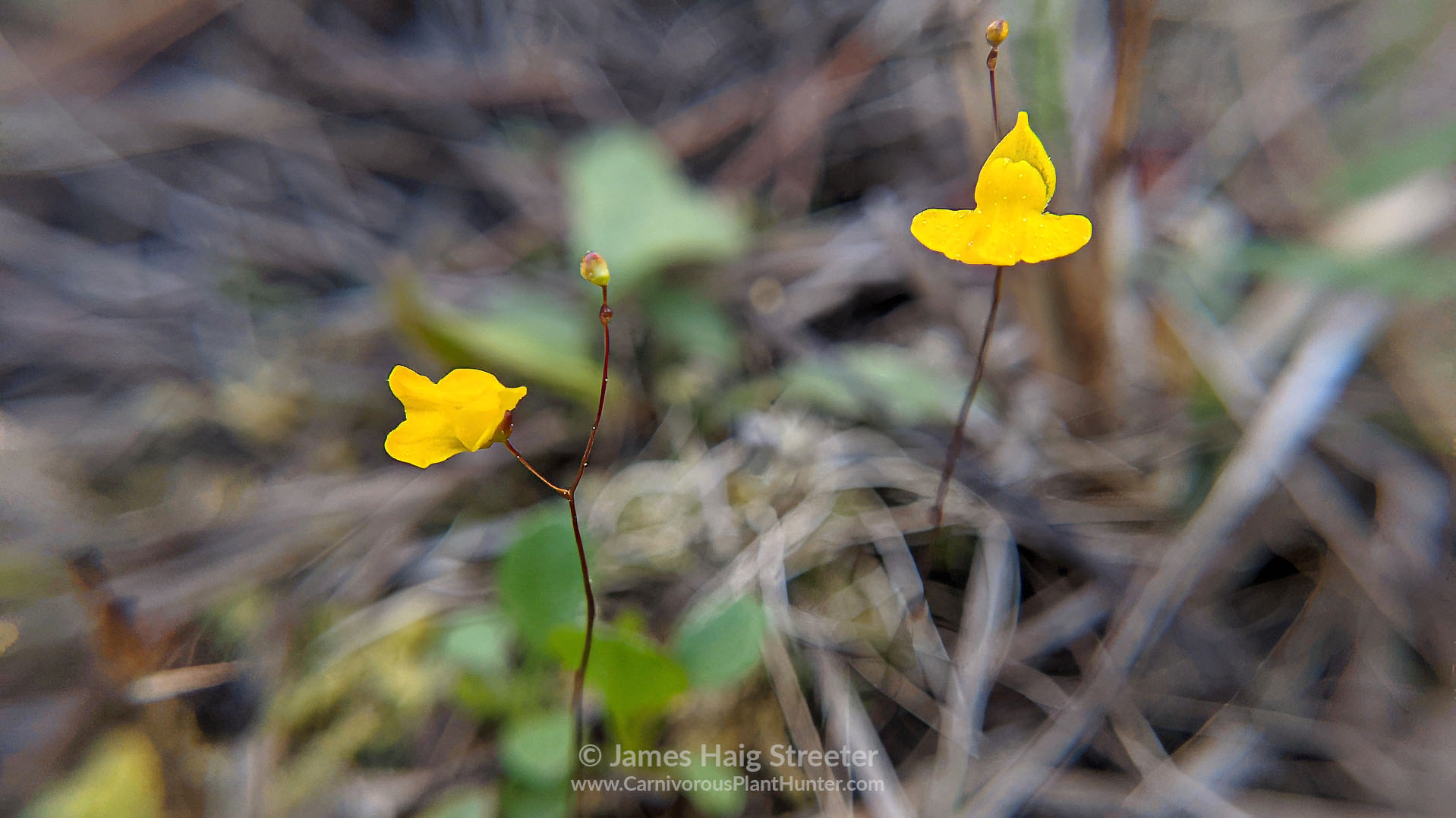
Growing in a similar location was Utricularia subulata, a terrestrial bladderwort. Its small sulfur-yellow flowers, similar in tone to those of its aquatic relatives, were carried on curious zig-zagging stems, giving rise to its common name, the Zigzag Bladderwort. While I did not venture too far off the main paths within the dominant savanna habitat, several aquatic bladderworts can also be found in the wetter evergreen swamp areas of the preserve, called the pocosin. In addition to the alligators and venomous cottonmouth snakes, other carnivores present include Utricularia purpurea, U. striata, and U. inflata. The margins of these marshy areas are also home to the terrestrial Utricularia cornuta, together with Triantha racemosa (Coastal False Asphodel), a species only recently recognized as carnivorous.

Utricularia subulata, Green Swamp Preserve // Photo: James Haig Streeter

Sarracenia (Pitcher Plants)

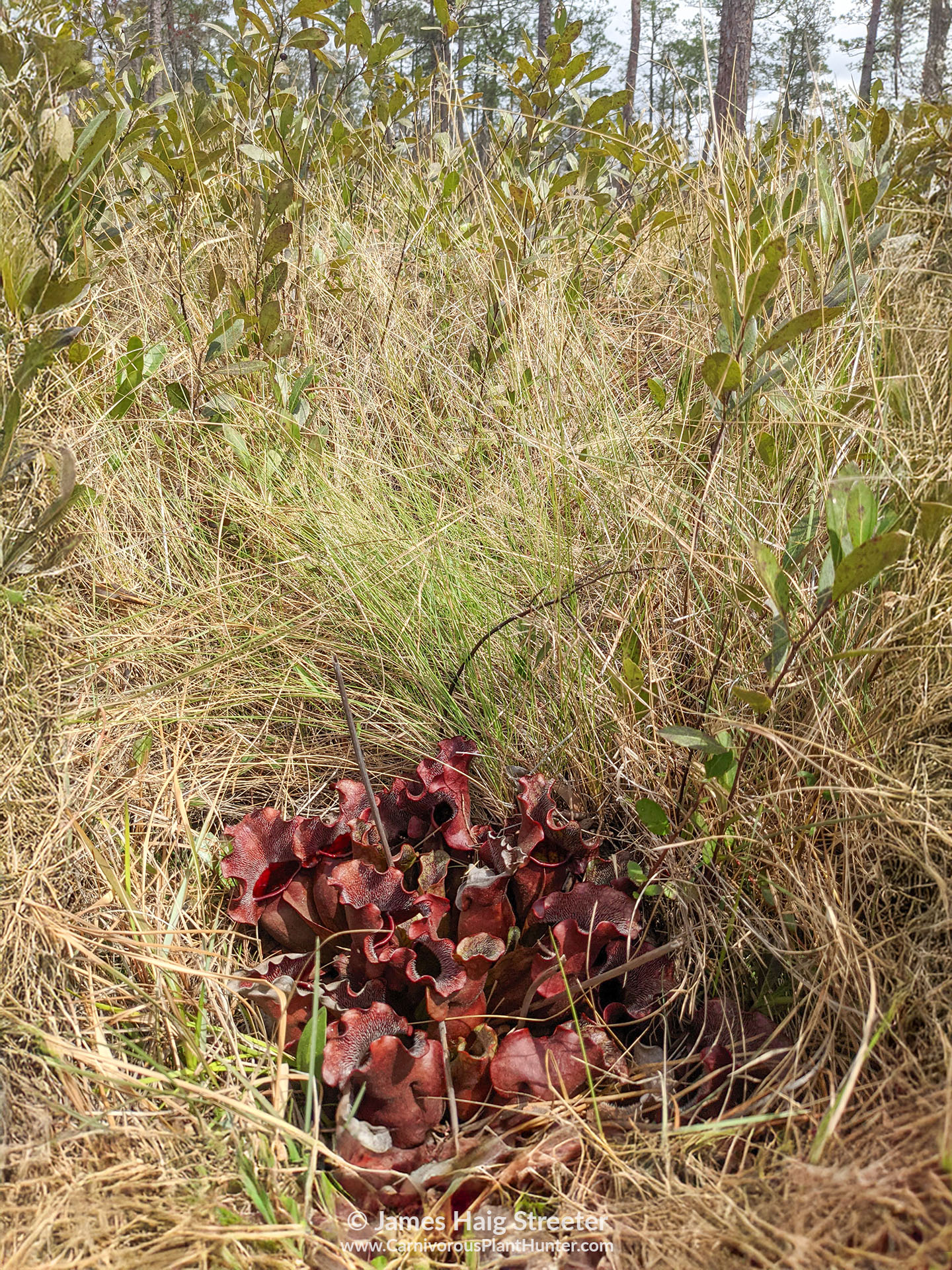
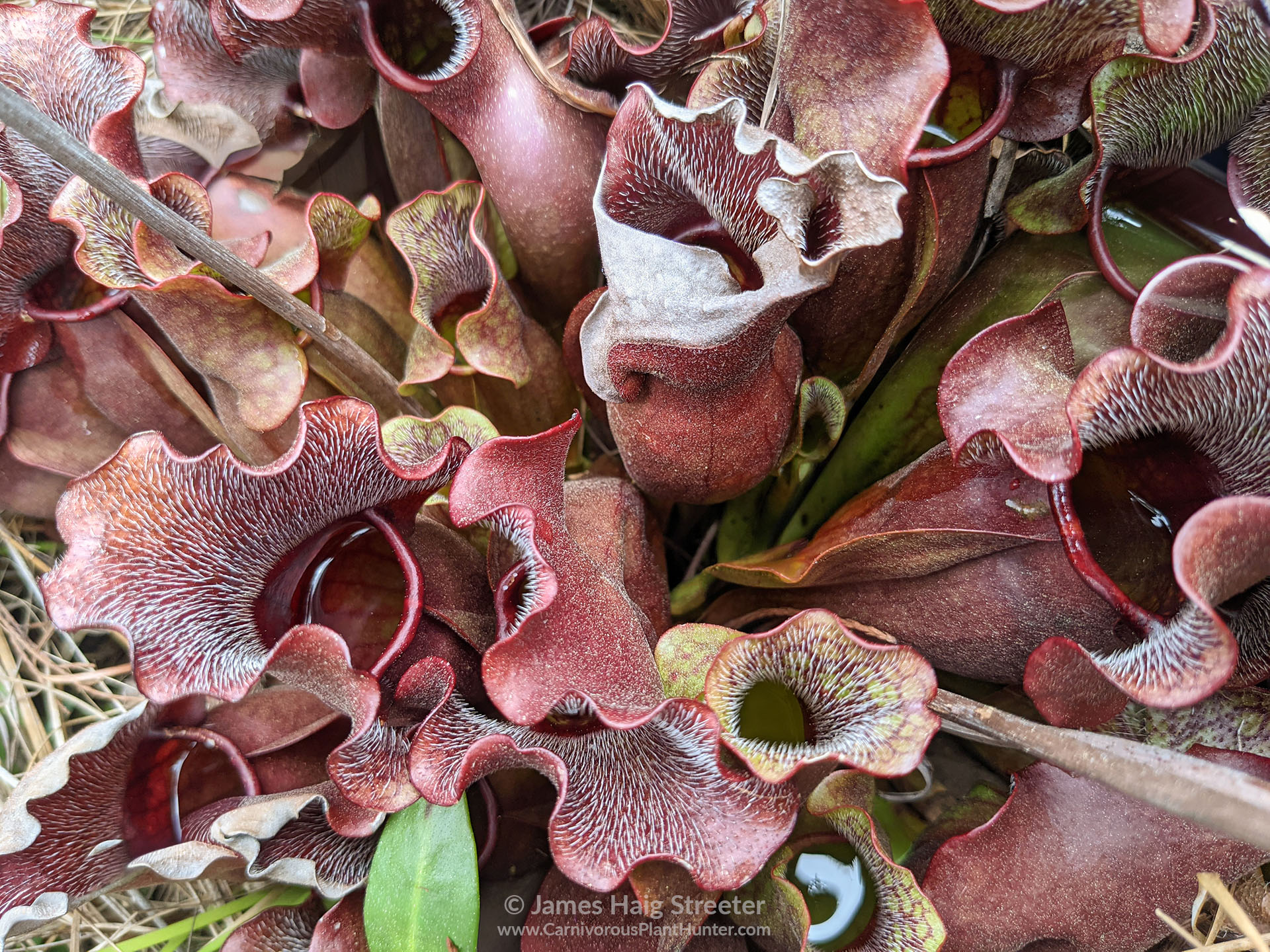
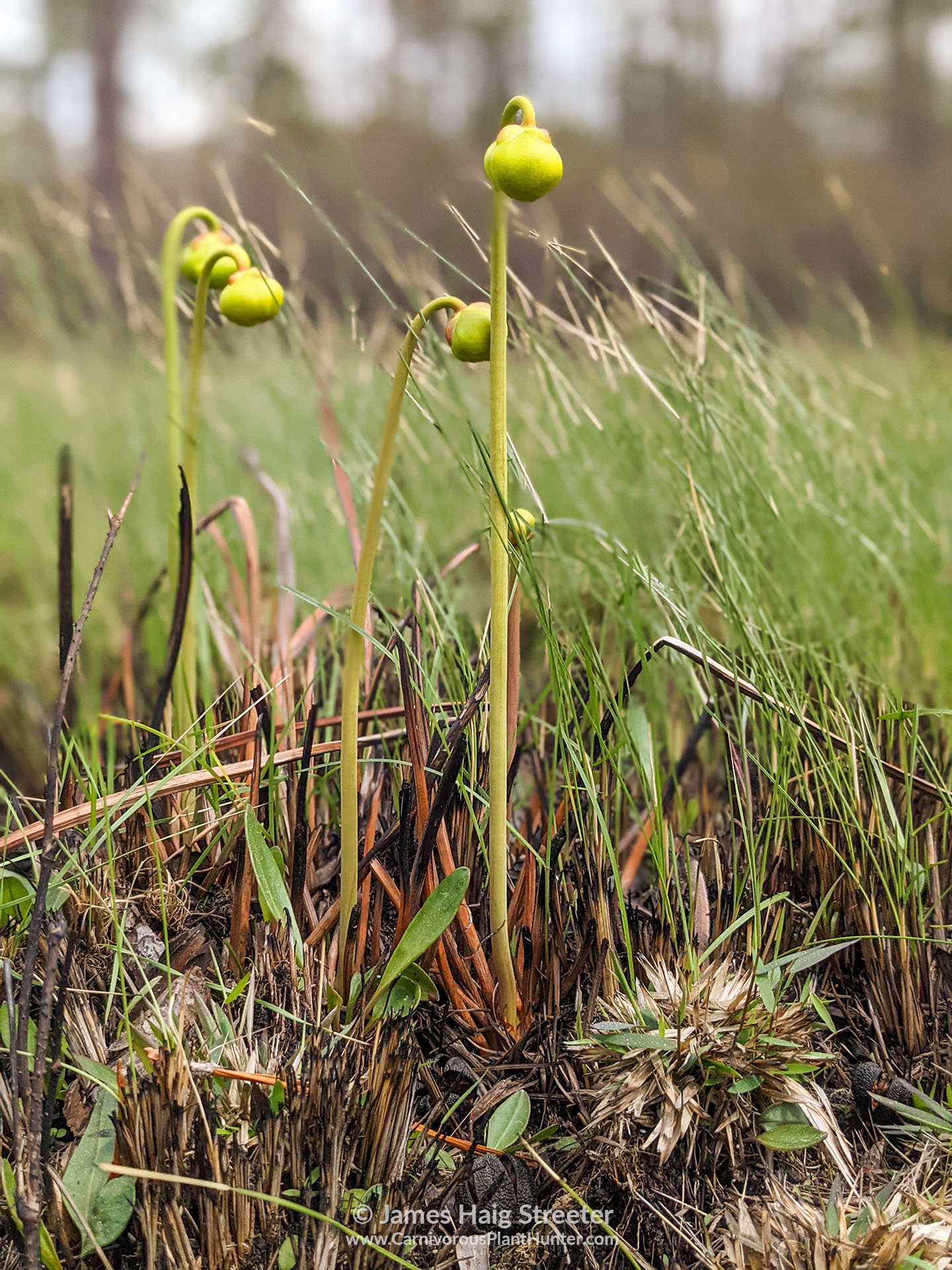
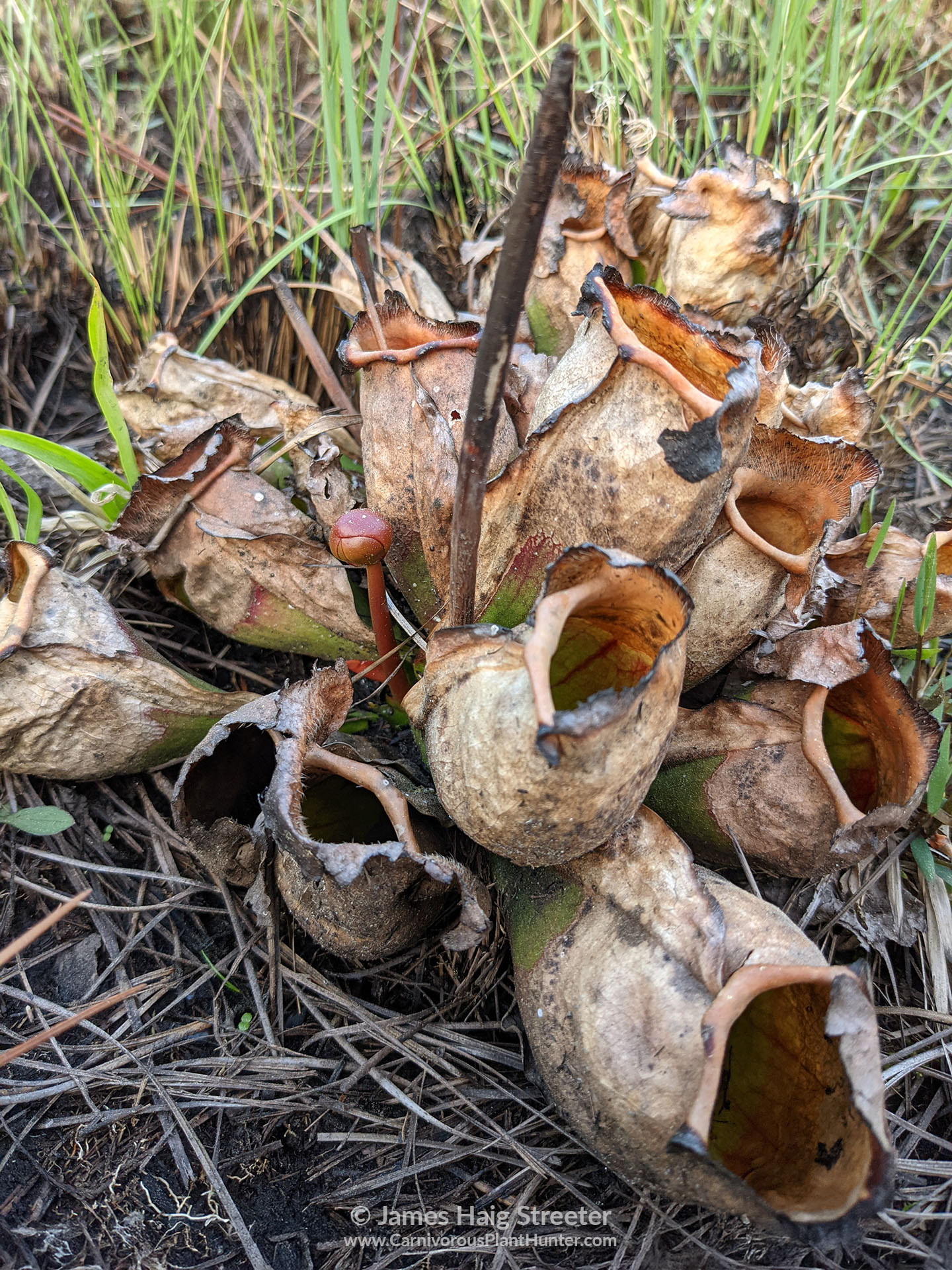
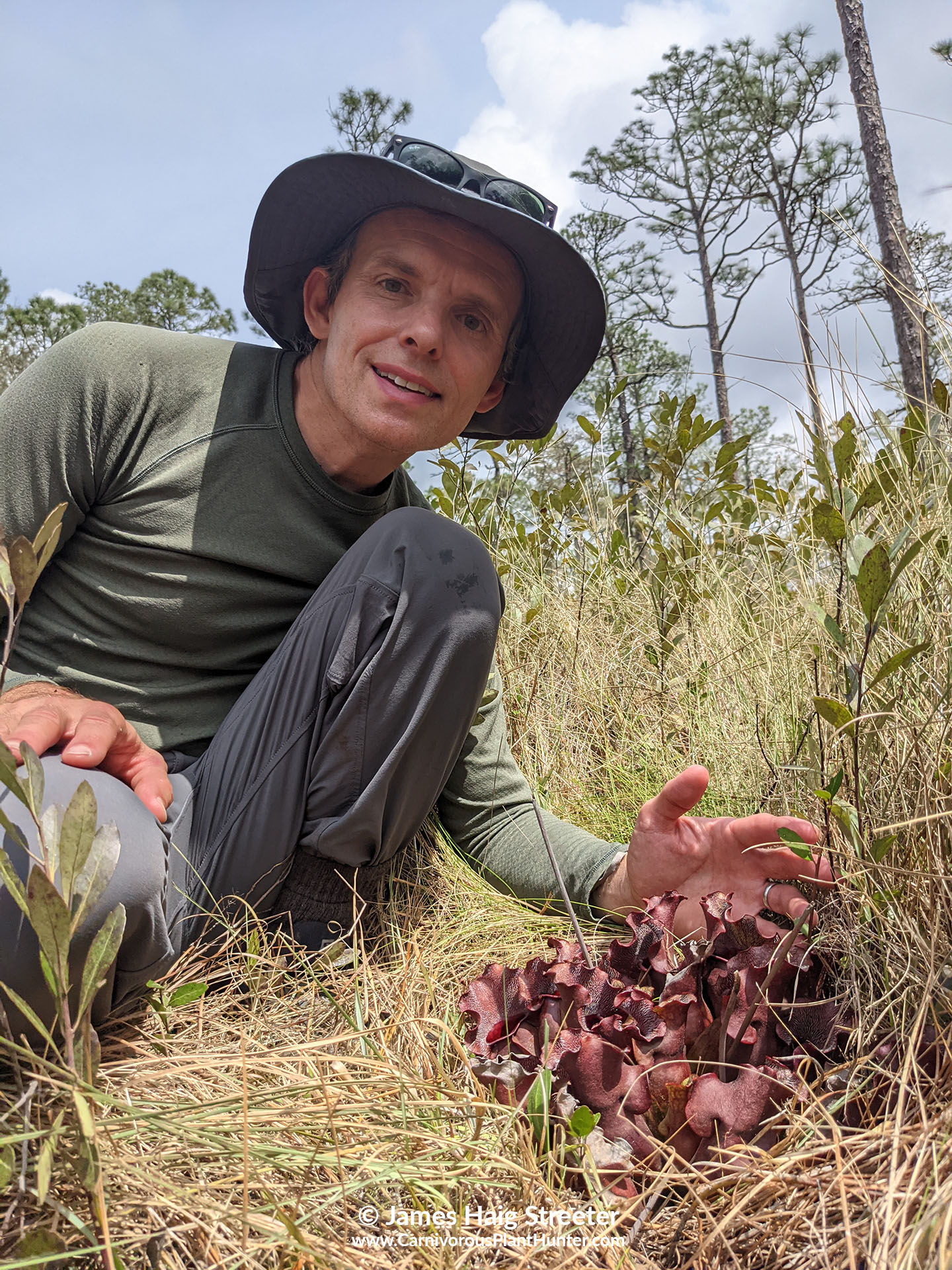
Like the Venus flytraps, these were still mostly at the end of their winter dormancy. Sarracenia flava and S. purpurea were already producing flower buds, many emerging from plants with charred pitchers left by the controlled burns. In areas that had not been burned, there were a few large Sarracenia purpurea var. venosa growing among the sawgrass. The sculptural frilled form of the hoods of this particular variety of Purple Pitcher Plant made a striking contrast against the dry grasses.

Then there was Sarracenia rubra, the Sweet Pitcher Plant, so named because it is the only pitcher plant with scented flowers. It was a rarer find, and unusual too in its diminutive stature.

The one species present that I was unable to find was Sarracenia minor, the Hooded Pitcher Plant. The preserve is also home to several remarkable forms of Sarracenia flava with deep red coloration, including S. flava var. cuprea and S. flava var. atropurpurea, together with S. × catesbaei, a natural hybrid between S. flava and S. purpurea. Unfortunately, I was a little too early in the season to hunt these down properly, with the best time to enjoy the new pitchers typically being from late April. By late summer, many pitchers are already beginning to look worn. Yet not seeing these on this trip has provided a reason to return a little later in the season, not that an excuse is really needed for returning to such a place.

Drosera (Sundews)

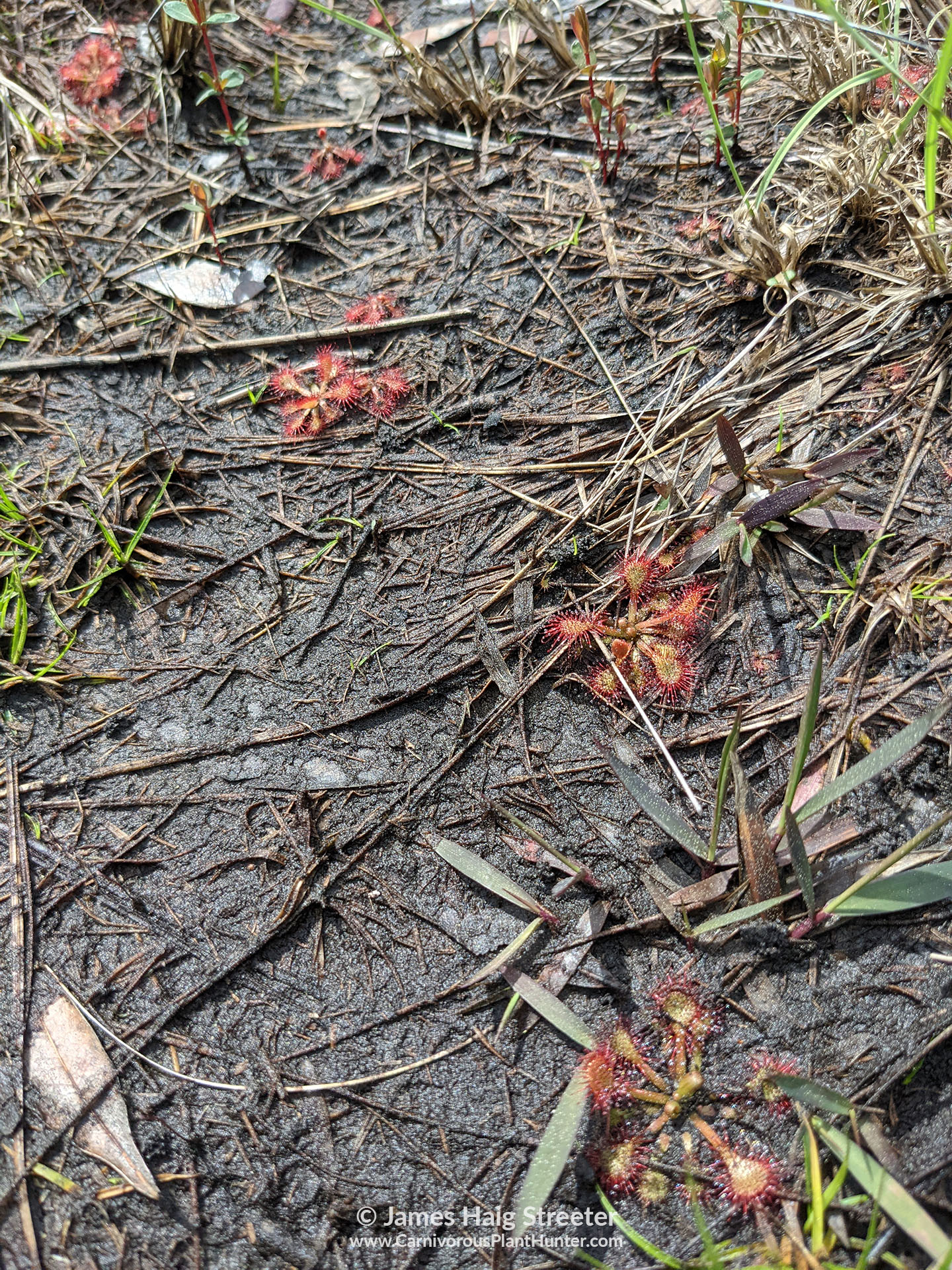
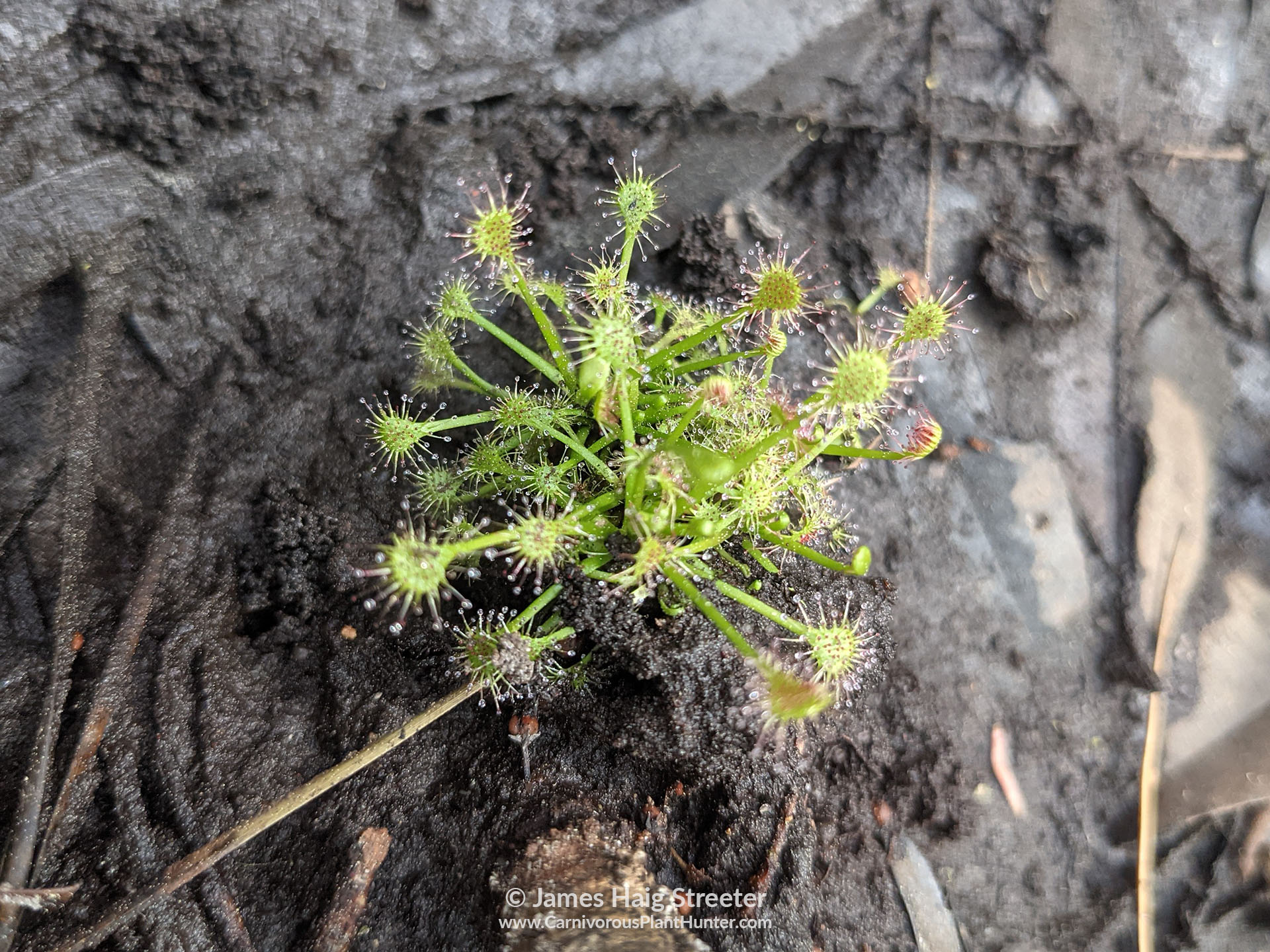
Four species are found here, and I was able to track down two: Drosera brevifolia, the Dwarf Sundew and the smallest sundew species found in the United States, and Drosera intermedia. The two that eluded me were Drosera capillaris and the tall D. filiformis, the largest sundew found in the United States.

While seeing North America’s largest sundew would have been a fine discovery, I had recently seen it in Florida. I was, however, particularly excited to find Drosera intermedia, not because it was new to me, but for almost the opposite reason. This was, in fact, one of the two species I first saw in the wild as a young child growing up in southern England, and one of the plants that first introduced me to carnivorous plants. Seeing it here, on the other side of the Atlantic, was therefore quite a revelation, speaking volumes about the persistence of life and its ability to colonize similar habitats across widely separated parts of the world.

About Dionaea muscipula (Venus flytraps)

IUCN Conservation Rating:  Vulnerable

The Venus flytrap is the sole member of the genus Dionaea, although it has a close relative in its aquatic cousin Aldrovanda (the waterwheel plant). First discoved around 1759 by Arthur Dobbs, a wealthy plantation owner and governor of North Carolina, there is no record that he thought it might be carnivorous. He did, however, recognize that it could catch insects, referring to it as the “Fly Trap Sensitive.” Specimens were later sent to Europe, and in 1768 the plant was given its current name by John Ellis, who speculated that it might indeed be carnivorous. Evidence for this, however, was not firmly established until Darwin published Insectivorous Plants in 1875, in which he described it as “one of the most wonderful plants in the world.”

Today, the Venus flytrap remains one of the most recognizable species in the botanical world, yet its wild range is surprisingly restricted.

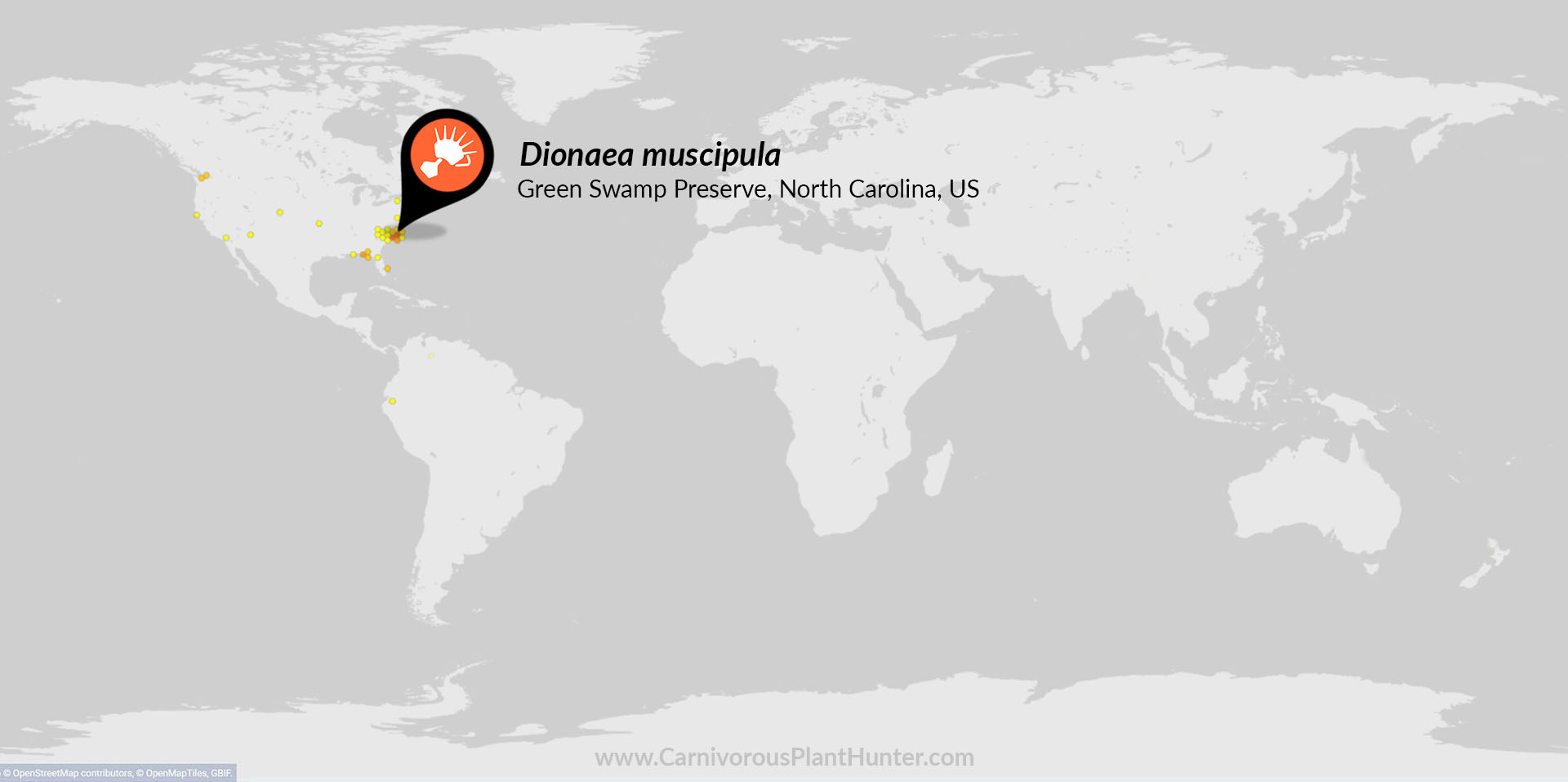
Dionaea muscipula - Global Distribution Map // Source: GBIF.org

The plant is endemic to the Atlantic coastal plains of southeastern North Carolina and a small bordering area of South Carolina, within roughly a 90-mile (145-kilometer) radius of Wilmington. There are naturalized populations in other parts of the United States, including Florida and California, but these are believed to have been deliberately introduced.

The Hidden Meaning of Dionaea muscipula

The genus name Dionaea, meaning “daughter of Dione,” references Aphrodite — the Greek goddess of love, known to the Romans as Venus. The species name muscipula is a Latin homonym, meaning both “flytrap” (from musca, fly) and “mousetrap” (from mus, mouse), and this ambiguity appears to have been entirely deliberate. Ellis himself acknowledged both translations, writing that Dionaea muscipula could be rendered as either “Venus’s flytrap” or “Venus’s mousetrap,” though he publicly preferred the former.

This was no accident. Eighteenth-century botanists sometimes encoded thinly veiled sexual metaphors into Latin names — an insider joke that only the classically educated could decode. Venus carried strong female anatomical connotations in the botanical world of the 1700s, and with the flytrap’s vivid red interior, suggestive form, and sweet nectar secretions luring unsuspecting prey, the reference is hard to miss. That the plant was known in private correspondence among botanists as “Tipitiwitchet,” a contemporary slang term for female genitalia, leaves little doubt about the intended joke. And calling Venus’s trap a “mousetrap” — seduction leading to capture — was the punchline.

This tradition was not without controversy. Linnaeus, the founder of modern taxonomy, caused genuine scandal with his broader use of sexual metaphor in plant classification, with critics accusing him of dragging botany into vulgarity. Ellis’s own public explanation was that Dionaea referred to the beauty of the white flowers — which, being rather nondescript, is a little hard to believe.

Perhaps the most fitting footnote to this story is that, despite the Venus flytrap’s iconic status in popular culture, the real meaning behind its name remains largely unknown outside specialist circles. An insider joke that has remained exactly that for over 250 years, just as Ellis intended.

Plan Your Trip

Travel

The Green Swamp Preserve is located about 40 minutes west of Wilmington, North Carolina. Wilmington International Airport (ILM) is located just 30 miles from the preserve. There is a parking lot off NC-211 (Green Swamp Rd NW).

When to Visit

  • Late March – Late April: This is when I visited and is a great time to see Pinguicula in flower.
  • Late April – Late Summer: The best time to see Venus flytraps at their best, together with Sarracenias.

Items to Consider

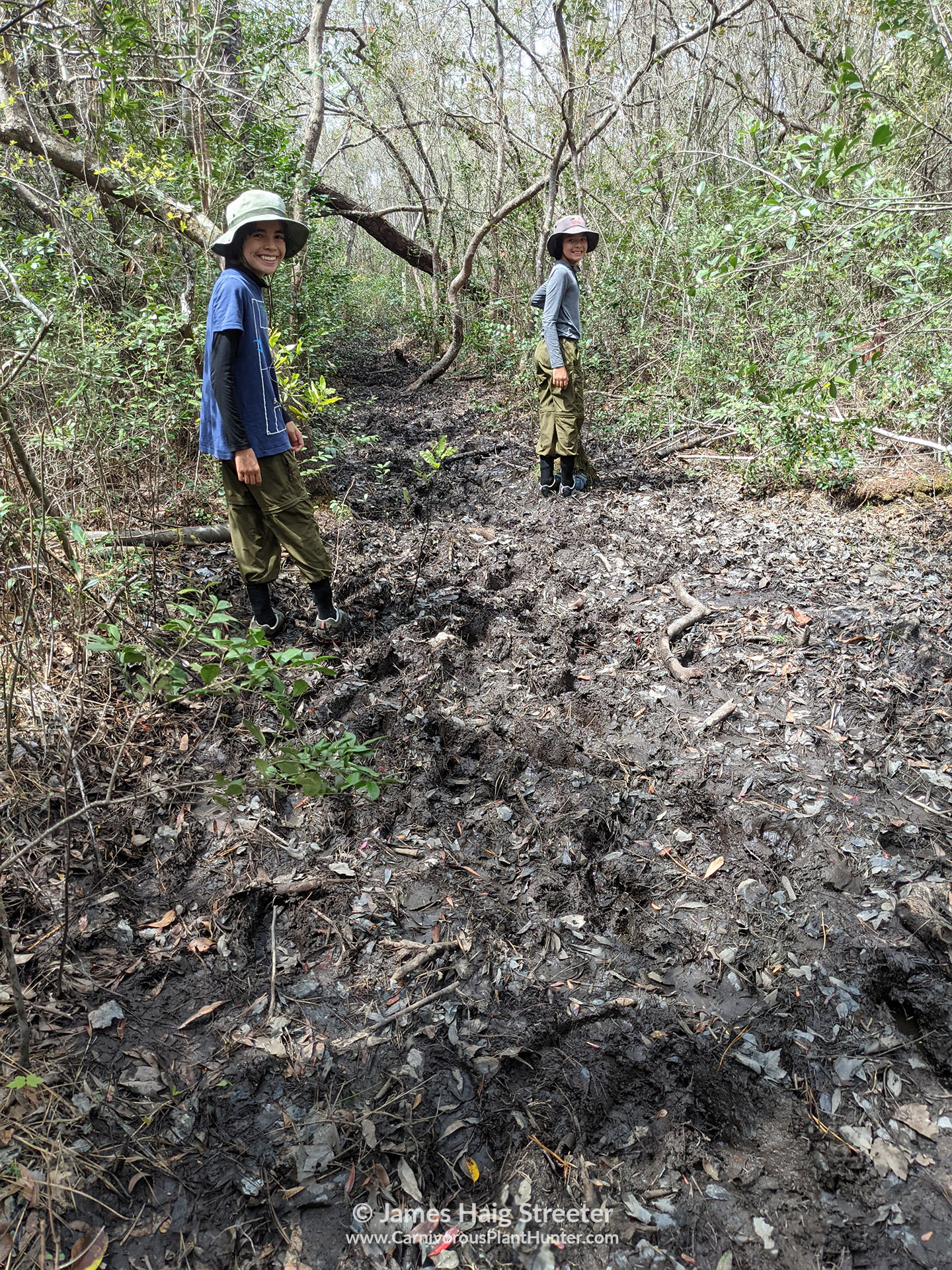
  • Footwear: While the savanna landscape is not too wet, some paths cut through areas of pocosin bog, which can be very muddy. These marginal wetland areas are also the habitat of venomous cottonmouth snakes. Wearing sturdy ankle-covering boots is therefore advisable on both counts.
  • Biting insects: It may be an obvious point, but a mecca for insectivorous plants clearly has many insects. However, many are biting, so adequate protection is advisable against mosquitoes, midges, and mites found in the long grass.

Map icons show approximate plant locations only, leaving the exact whereabouts to the intrepid explorer to uncover. GPS data from iNaturalist.org is a great starting point to do this.

In Summary

Green Swamp Preserve lived up to all expectations as a mecca for any aspiring carnivorous plant hunter, and while I did not find all the savanna-living carnivores, it was incredible to find 10 species belonging to 5 genera in the comparatively small area I explored. Yet what made the visit so memorable was not simply the opportunity to see the Venus flytrap in one of its last true strongholds. It was the way the landscape itself revealed the deeper ecological patterns that make such places possible.

Arriving at the end of dormancy meant I did not see the flytraps at their most dramatic. But that turned out to be part of the lesson. Seeing them in their smaller winter form brought home the importance of seasonal cycles, and made it easier to appreciate the preserve as something larger than a stage for a single famous species. It became possible to notice other things more clearly: the role of fire in maintaining biodiversity, the way smaller species take advantage of reduced competition after a burn, and the quiet abundance of a system that only fully reveals itself when you look beyond first impressions.

That, perhaps, is part of what makes Green Swamp so important. It is not just one of the last places where the Venus flytrap survives in the wild. It is a living example of how an entire ecosystem works: shaped by fire, seasonality, water, and open space, and supporting an extraordinary concentration of carnivorous life as a result.

It was also a pleasure to share the experience with my family, my children not at all dissuaded by the quagmire of mud separating the parking lot from many of the plants. But in truth, I was the one behaving more like the excited child, moving through a landscape that seemed modest at first, yet revealed itself to be one of the richest and most remarkable carnivorous plant habitats I have ever seen.

Looking for your next adventure?

Explore the Plant Map to discover more wild locations, habitats, and species around the world.

Share..

Follow..

About the Author

James is an award-winning landscape architect turned documenter of wild carnivorous plant habitats. He has spent decades tracking these remarkable species across the globe, guided by research, patience, and the joy of discovering plants in the places nature intended.

A member of the IUCN Carnivorous Plant Specialist Group, James founded the Carnivorous Plant Hunter to help people experience carnivorous plants in the wild, understand the stories behind them, and connect more deeply with the natural world.

What began as a personal project to map wild plant sightings has grown into a platform where exploration, science, and the wild world of carnivorous plants collide.

References

  • Green Swamp Preserve – The Nature Conservancy’s Green Swamp Preserve website
  • McPherson, S. & Schnell, D. (2012) Field Guide to the Carnivorous Plants of the United States and Canada, Redfern

Want to grow what you’ve just discovered?

The free Ultimate Carnivorous Plant Nursery Guide will help you find trusted specialist nurseries in your region, so you can begin with healthy plants, avoid wild-collected material, and support conservation through ethical cultivation.

You’ll also receive the Explorer’s Notebook, giving you early access to new field stories, discoveries, and upcoming Explorer Guides.

Explorer’s Notebook emails are occasional and meaningful. Unsubscribe anytime.

Recommended Next Articles...