Plants That Change How You See
Why carnivorous plants are more than curiosities — and how their traps reveal habitat, evolution, adaptation, and the natural world more clearly.

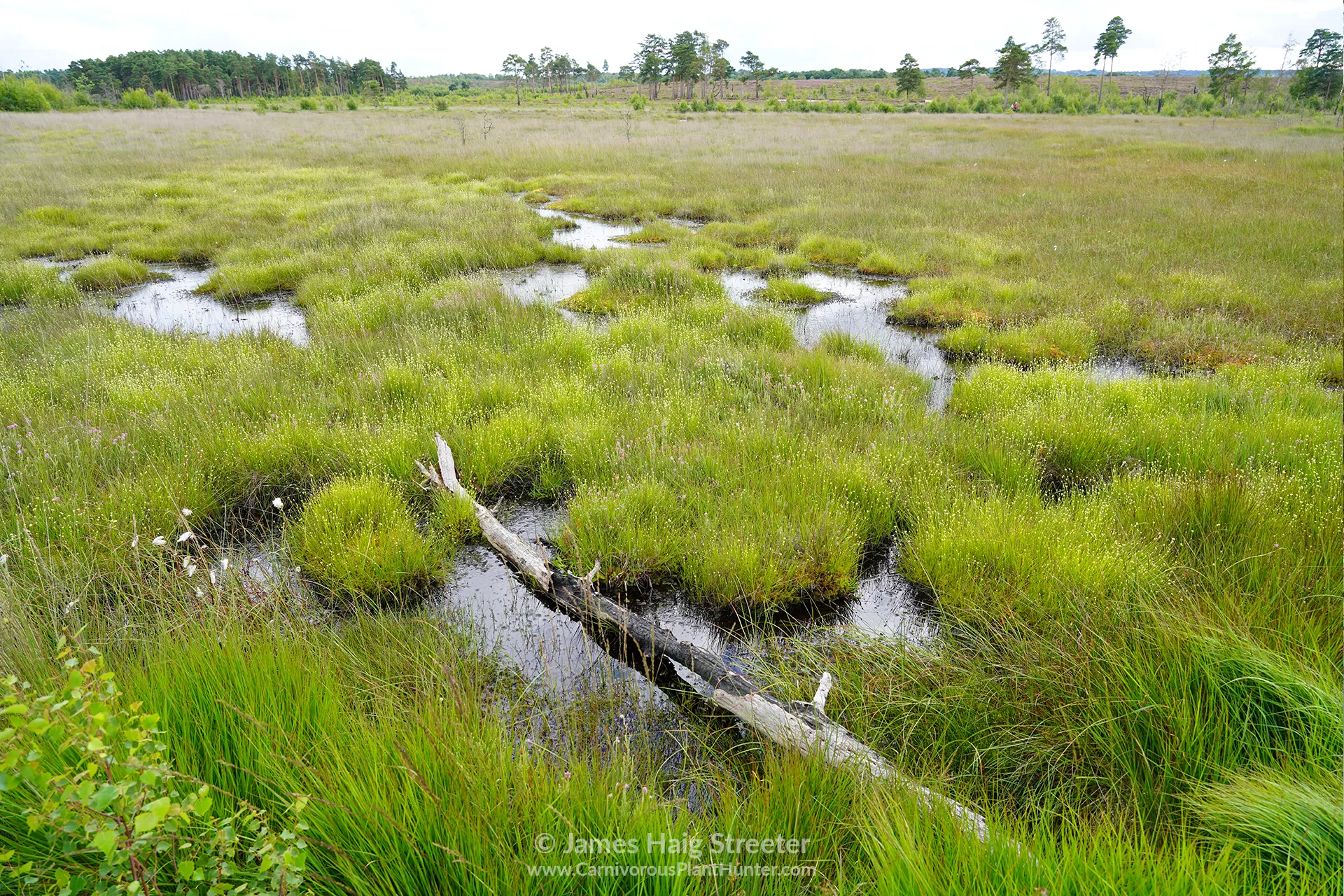
Thursley Common National Nature Reserve, Surrey, UK
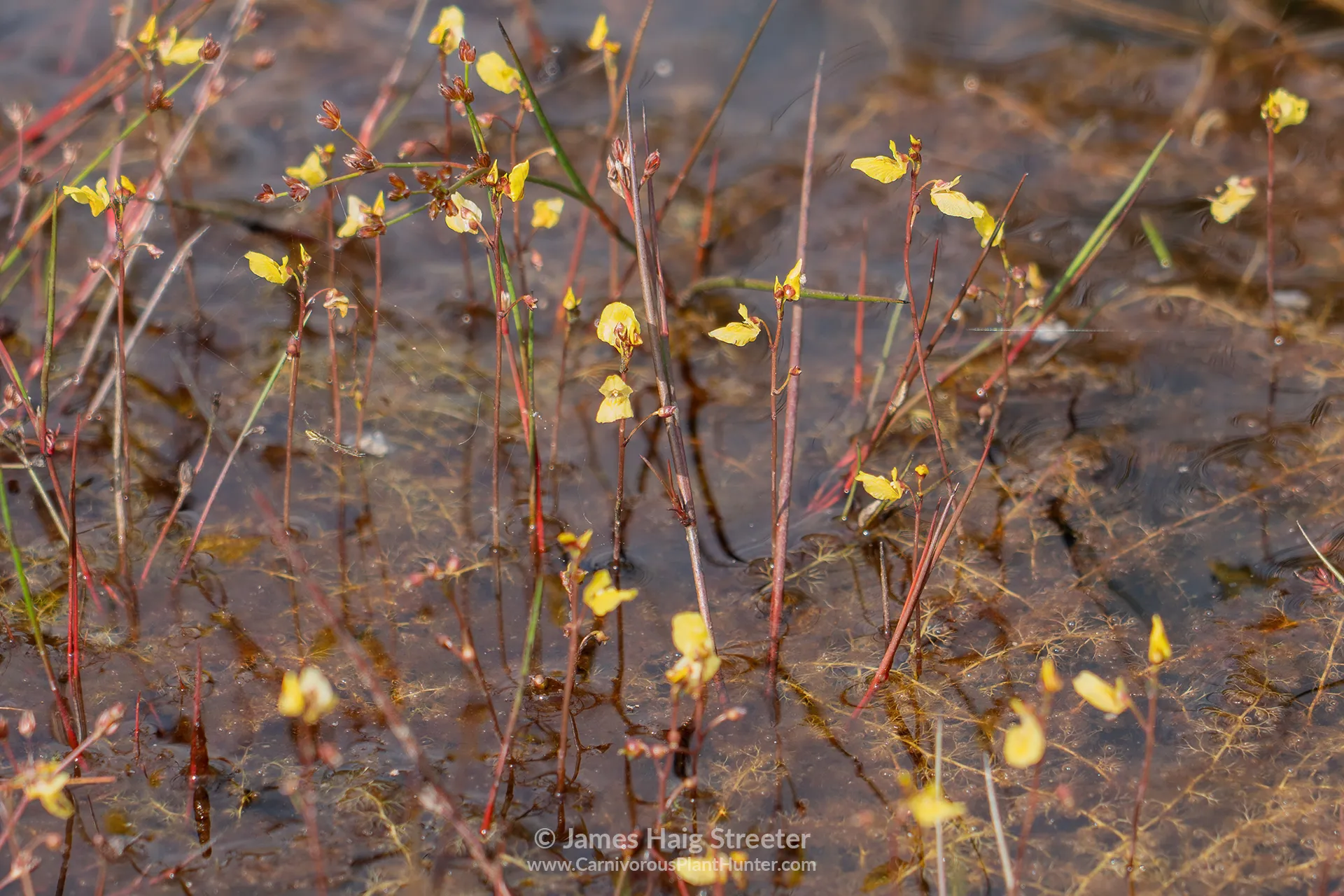
At Thursley Common, dragonfly nymphs share their submerged food web with a bladderwort whose vacuum-powered traps fire faster than the feeding strike of any known freshwater hunter.
Thursley Common is not in an exotic or remote part of the world. It lies in southwest Surrey, not far from London, beside the small historic English village of Thursley, with its old cottages, narrow lanes, pub, and church whose history reaches back nearly a thousand years. I know Thursley well. My father, a botanist and ecologist, retired to the village, and visits to see him often take me out onto the surrounding common.
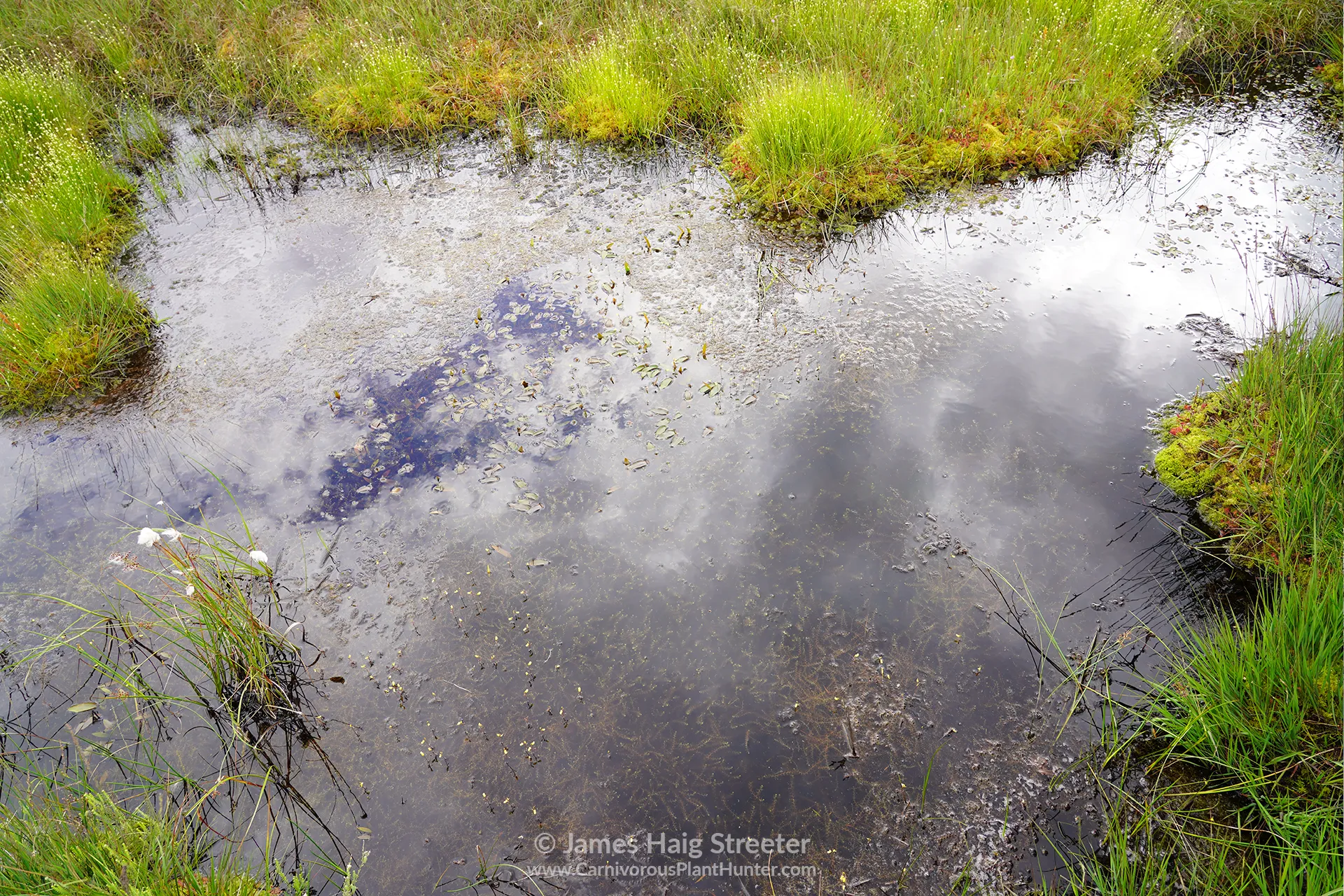
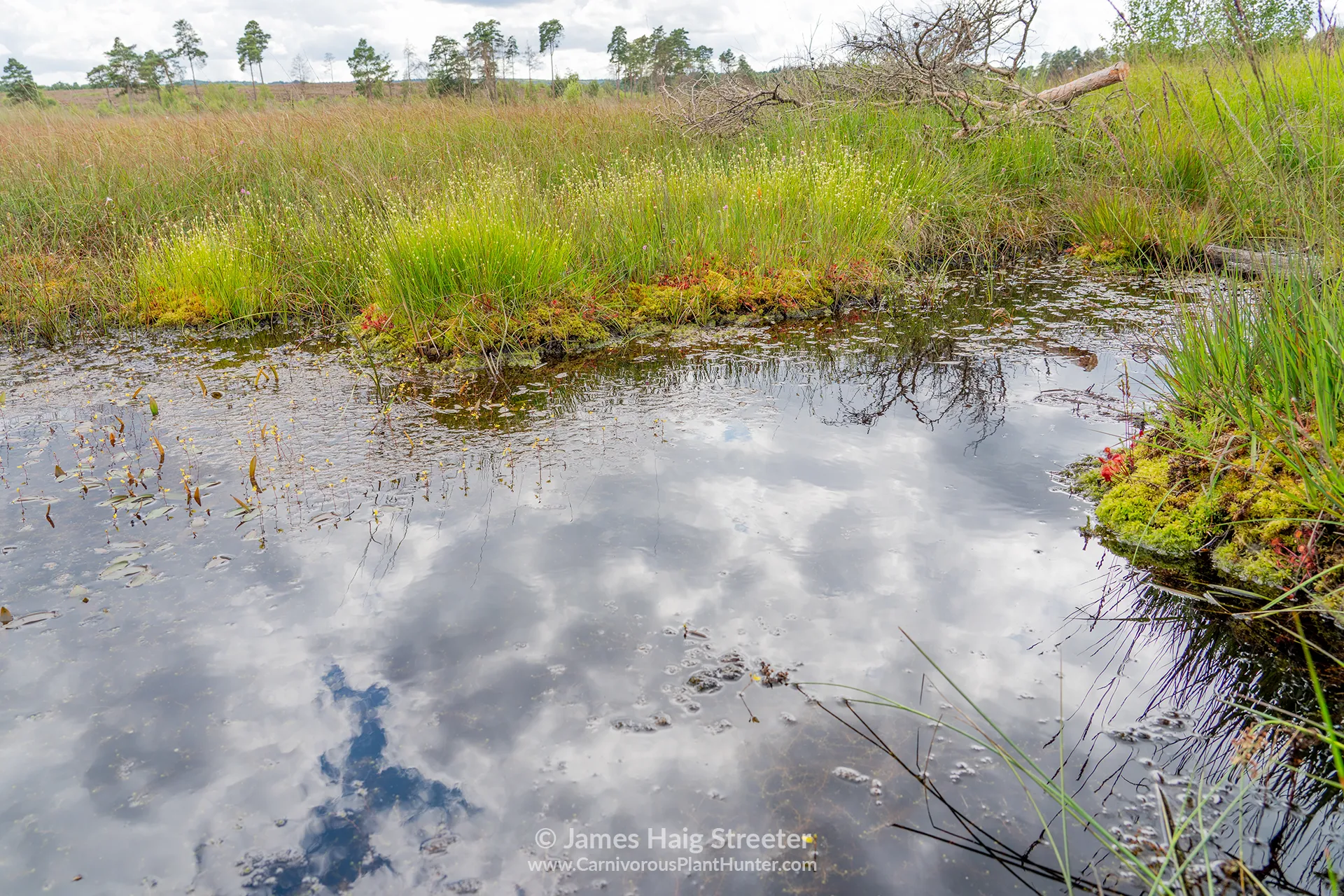
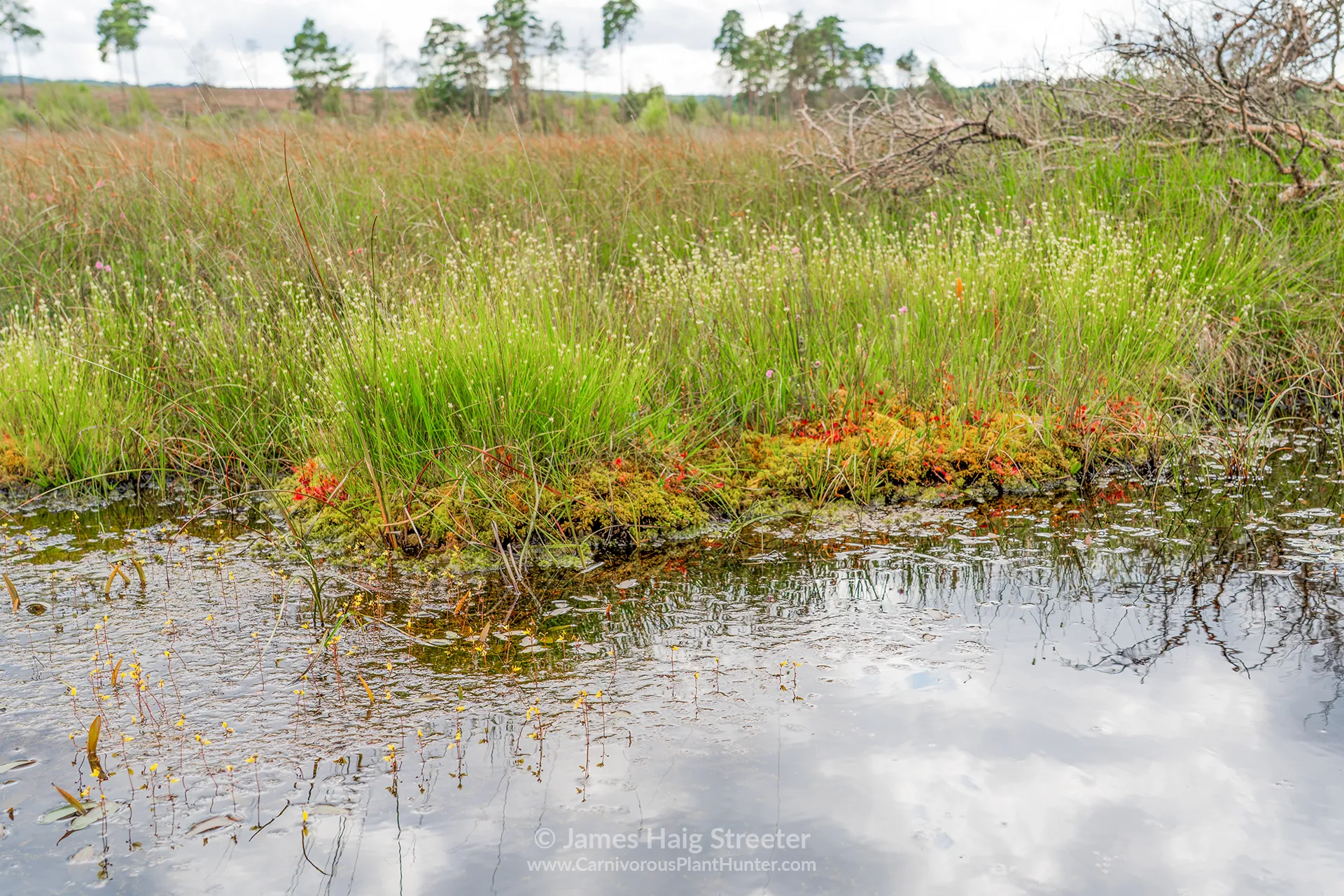
Beyond the village, the landscape opens onto one of the largest surviving fragments of lowland heathland in Surrey. Sandy paths pass through heather and scattered pines, while a long boardwalk crosses sphagnum bogs, wet heath, shallow ponds, and acidic pools. Around their margins grow two species of sundew, while beneath the water, lesser bladderwort threads through the pools, its tiny carnivorous suction traps hidden from view. The setting feels tranquil, particularly when viewed against the traditional familiarity of the village nearby. Yet during the warmer months, these pools become the setting for some of the most intense hunting in the British countryside.
Thursley is one of the best places in the country to see dragonflies and damselflies. Twenty-six species have been recorded around its pools, and the reserve has been officially recognized by the British Dragonfly Society as one of several national Dragonfly Hotspots. On a warm summer day, they can be seen patrolling above the water, hovering briefly before accelerating away, chasing rivals, intercepting smaller insects, or settling on the surrounding vegetation. These hunters have refined their predatory skills over more than 300 million years of evolution, and watching them patrol the ponds, it is easy to imagine that they dominate this wetland. But at Thursley Common, they do not have it entirely their own way.
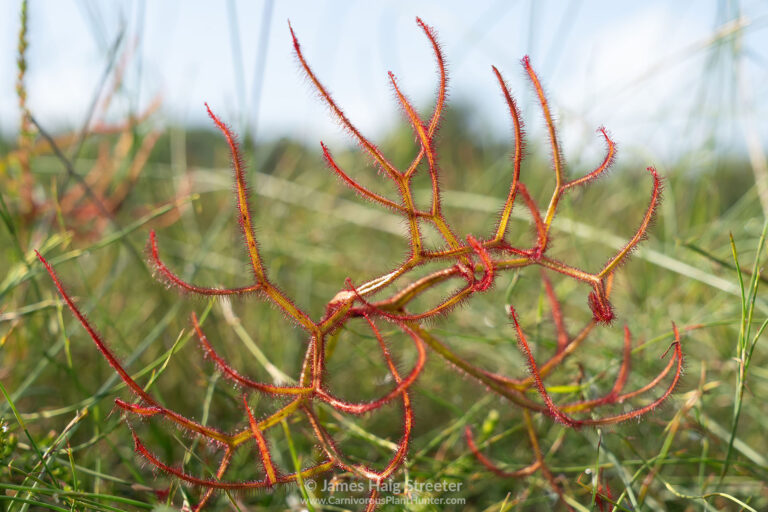
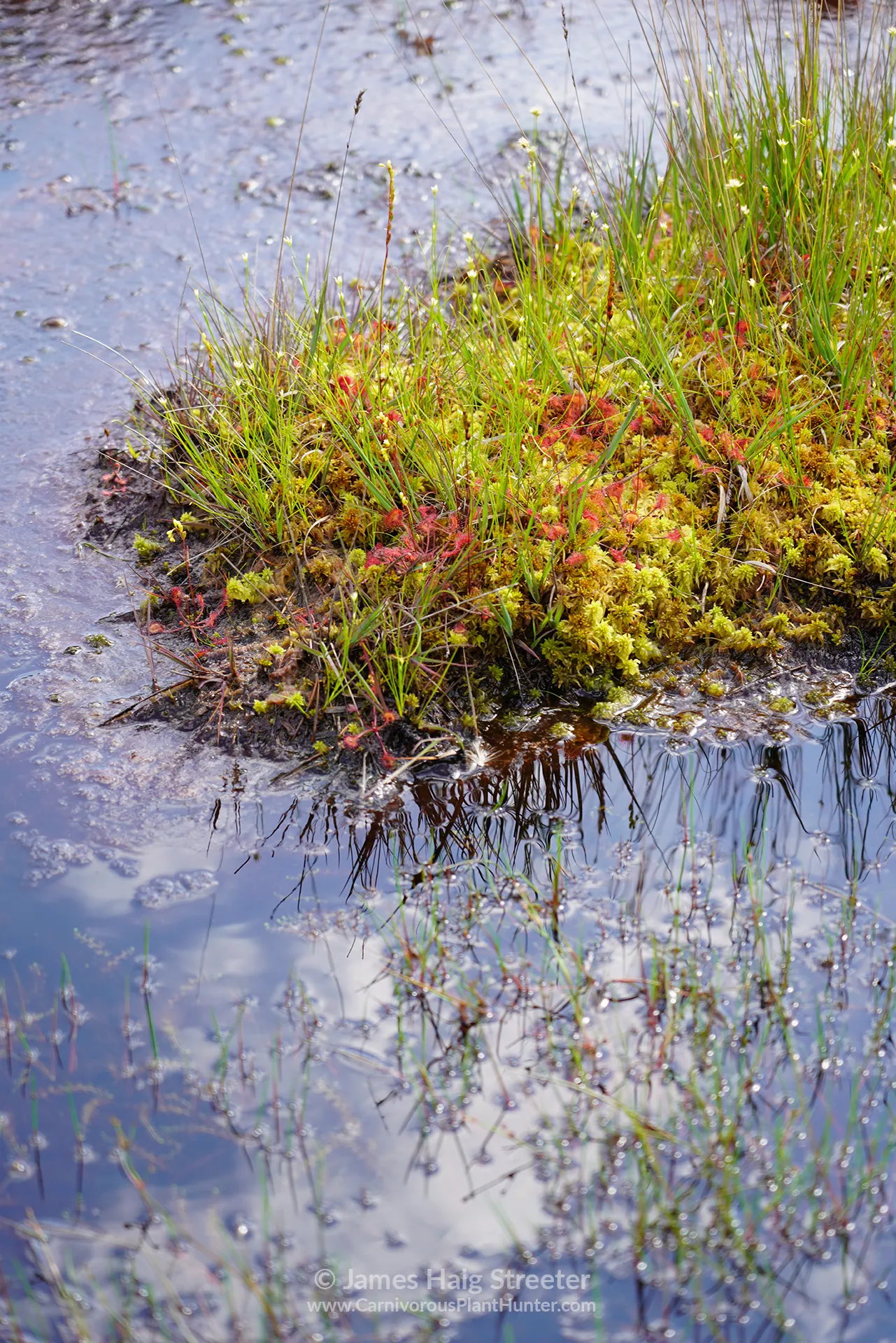
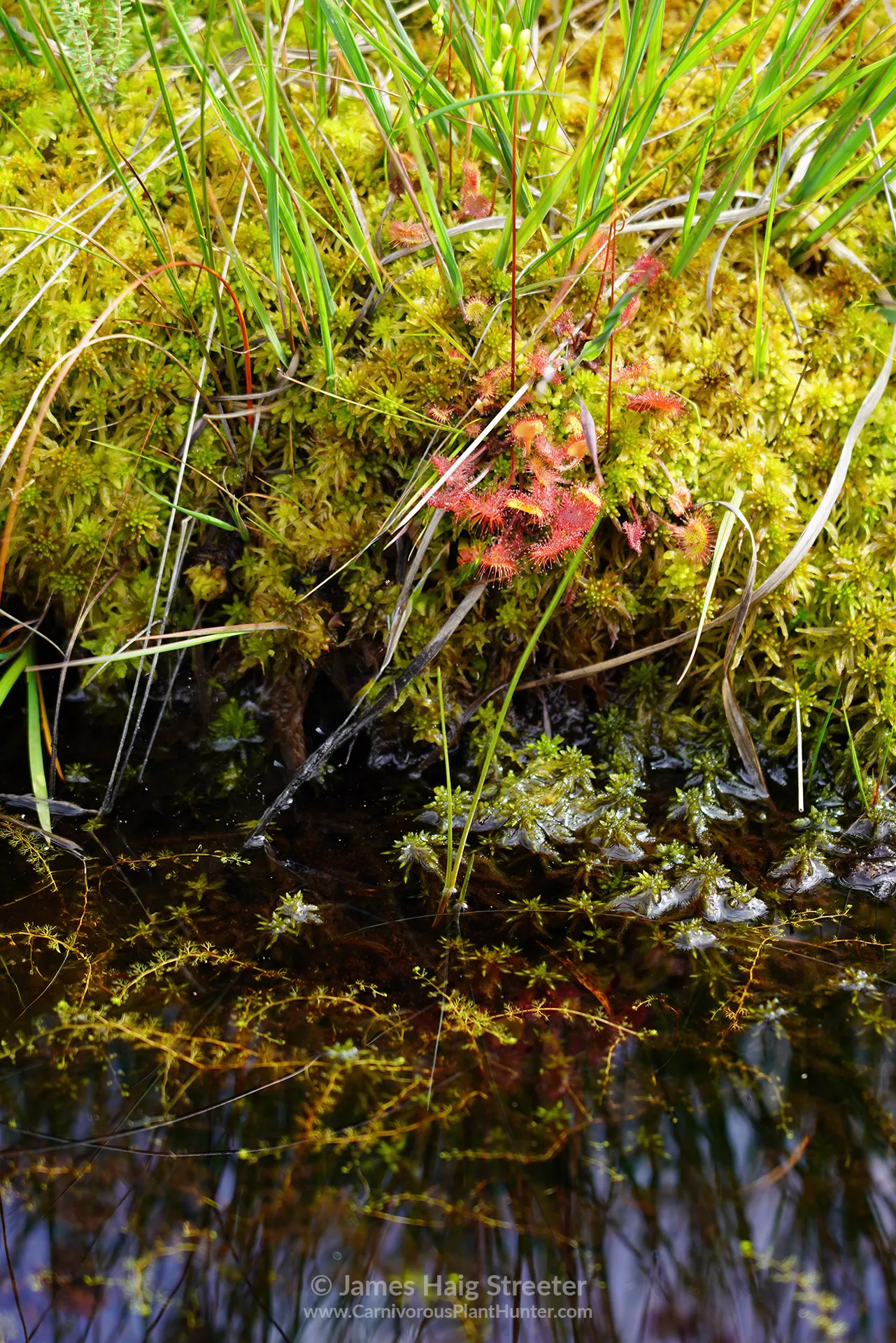
Growing among the sphagnum around the margins of the pools are two native sundews: the round-leaved sundew, Drosera rotundifolia, and the oblong-leaved sundew, Drosera intermedia. Both can turn bright red in strong light but are easily overlooked because of their small size. Drosera rotundifolia often grows on raised mounds of sphagnum, forming low rosettes of rounded leaves, while D. intermedia occupies slightly wetter ground and produces narrower, more upright leaves.
Each leaf is covered in red tentacles tipped with drops of clear, sticky mucilage. In sunlight, these droplets glisten like dew, giving the genus its common name. Small flies and midges that touch the mucilage become stuck, and their attempts to escape bring them into contact with more tentacles. The leaf may gradually bend around the struggling prey, while digestive enzymes break down its softer tissues, allowing the plant to absorb nutrients that are scarce in the surrounding acidic, waterlogged ground.
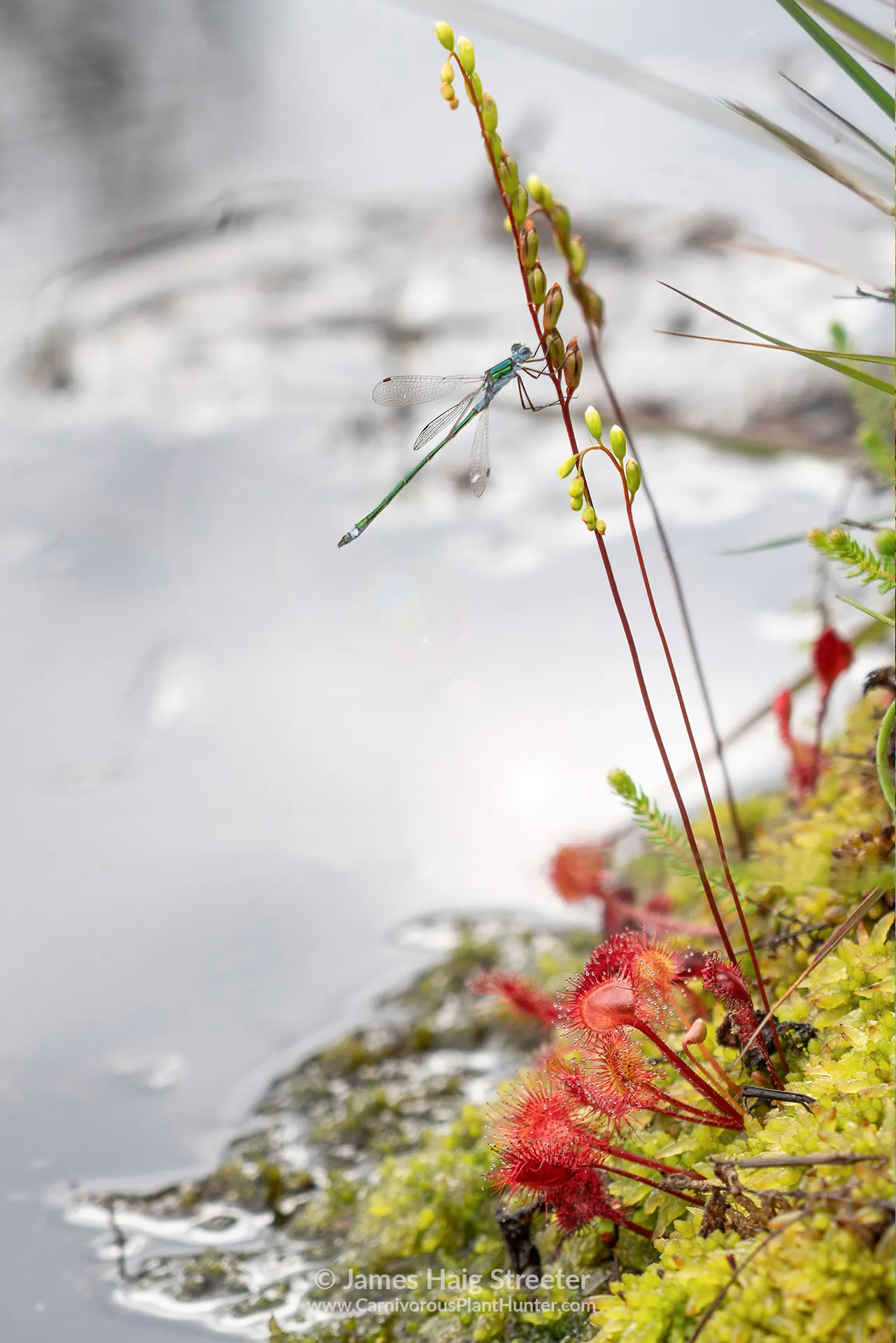
Left: Drosera rotundifolia growing among sphagnum. Right: An Emerald Damselfly (Lestes sponsa) resting on a Drosera inflorescence. A little lower, and the outcome might have been very different.
Most of the sundews’ prey is tiny, but the relationship between predator and prey is determined partly by scale and partly by chance. A dragonfly is generally too large and powerful to be restrained by either of these small plants. A smaller damselfly, however, may be more vulnerable. Should one land among the sticky leaves and become entangled across several traps, the accomplished aerial hunter could find itself on the other side of the predatory relationship. This would be an occasional event rather than a major source of damselfly mortality, but it introduces an unusual reversal into the wetland food web.
Above the bog, the insects hunt. Among the sphagnum, the plants do too.
The adult dragonflies patrolling Thursley’s ponds represent only the final stage of a much longer life. Before taking to the air, dragonflies and damselflies live underwater as aquatic nymphs. Depending on the species, they may spend months or several years beneath the surface before climbing from the water, shedding their final larval skin, and emerging as winged adults.
Dragonfly nymphs look very different from the insects they become. They are compact, well camouflaged, and equipped with a remarkable extendable mouthpart that shoots forward to seize prey. They are voracious aquatic hunters. Larger nymphs can take tadpoles and even small fish, but they do not begin life at that scale. When newly hatched, they must hunt much smaller organisms, including copepods, tiny insect larvae, and cladocerans such as water fleas. At this stage, they are already predators, but are also small and vulnerable enough to become prey themselves.
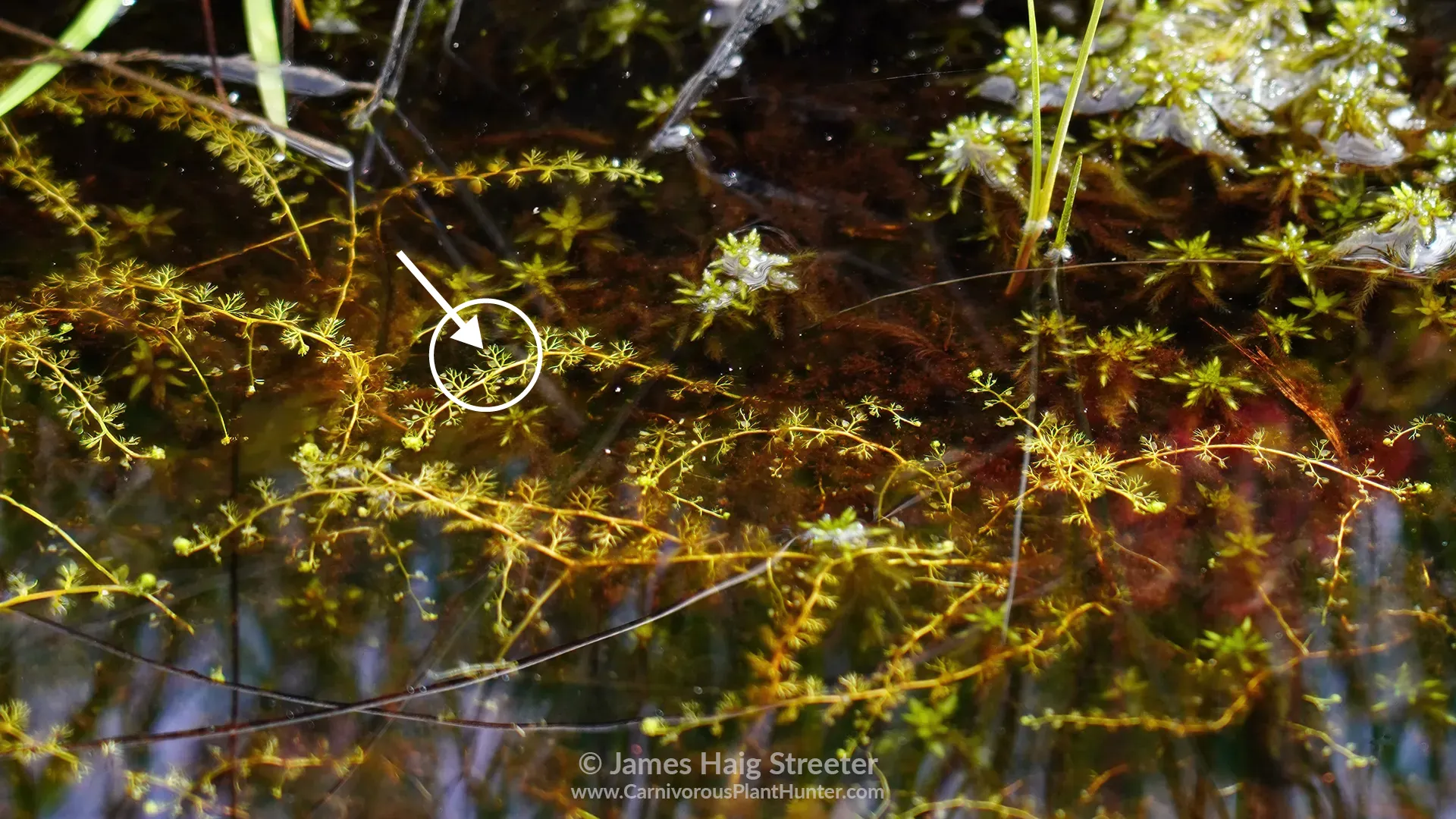
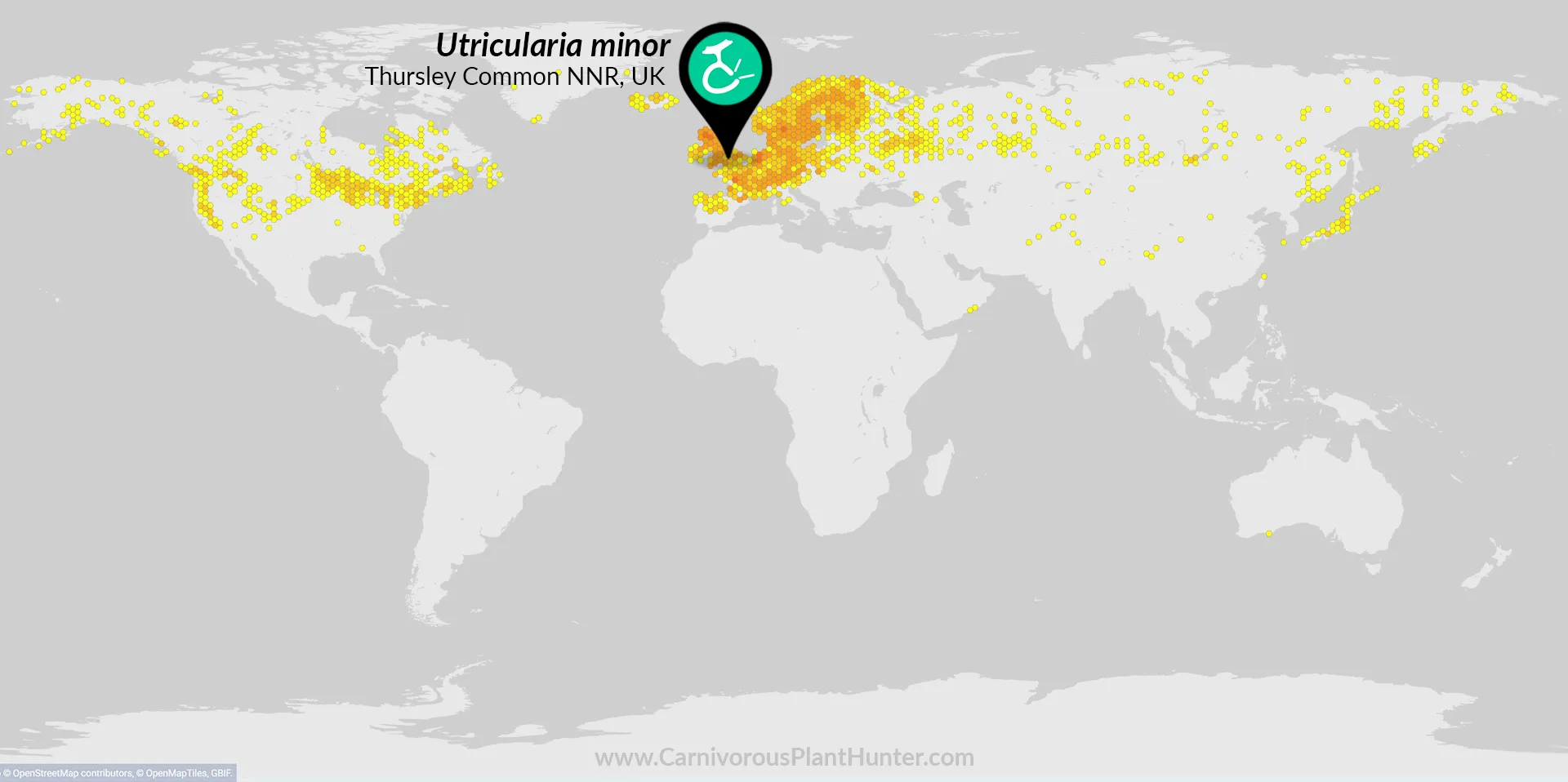
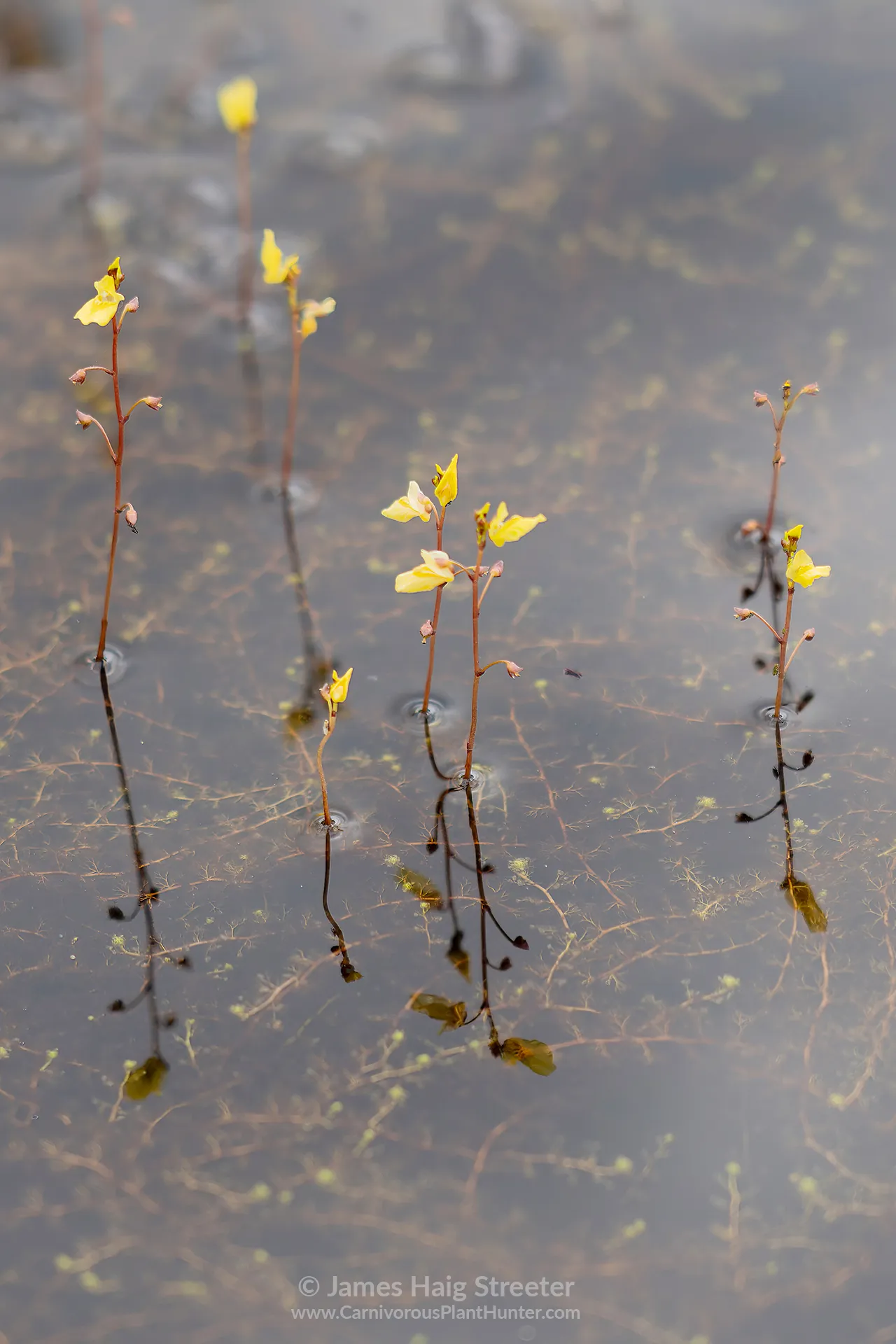
They are also hunting within a food web already occupied by the fastest known freshwater predator on the planet, at least in terms of the speed of its feeding strike. Remarkably, this formidable hunter is a plant: Utricularia, commonly known as bladderwort. Here at Thursley Common, the species is Utricularia minor, the lesser bladderwort.
“…the fastest known freshwater predator on the planet… Remarkably, this formidable hunter is a plant.”
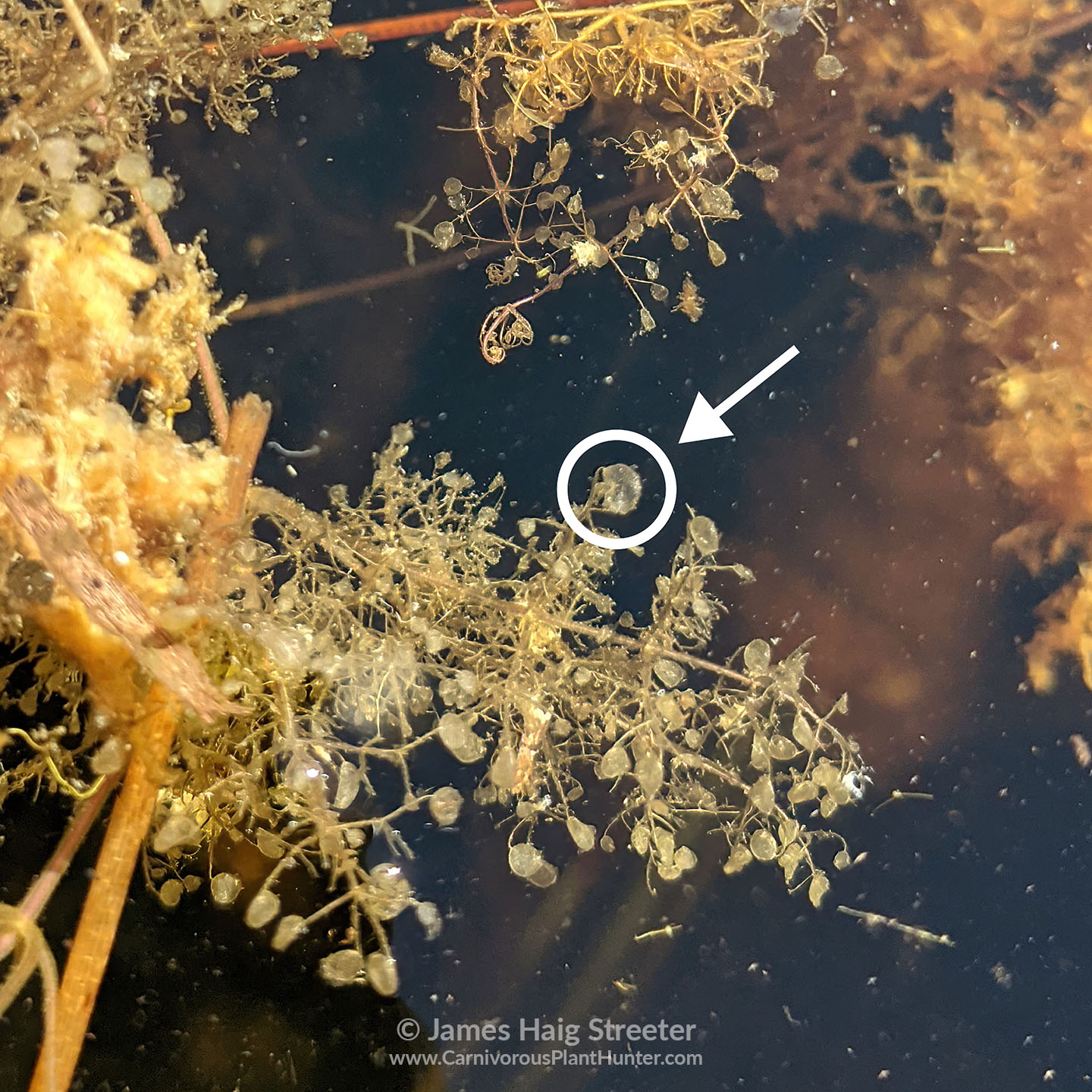
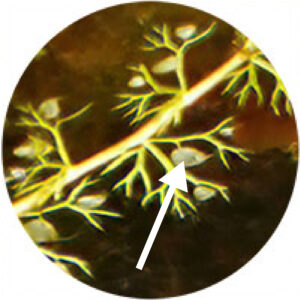
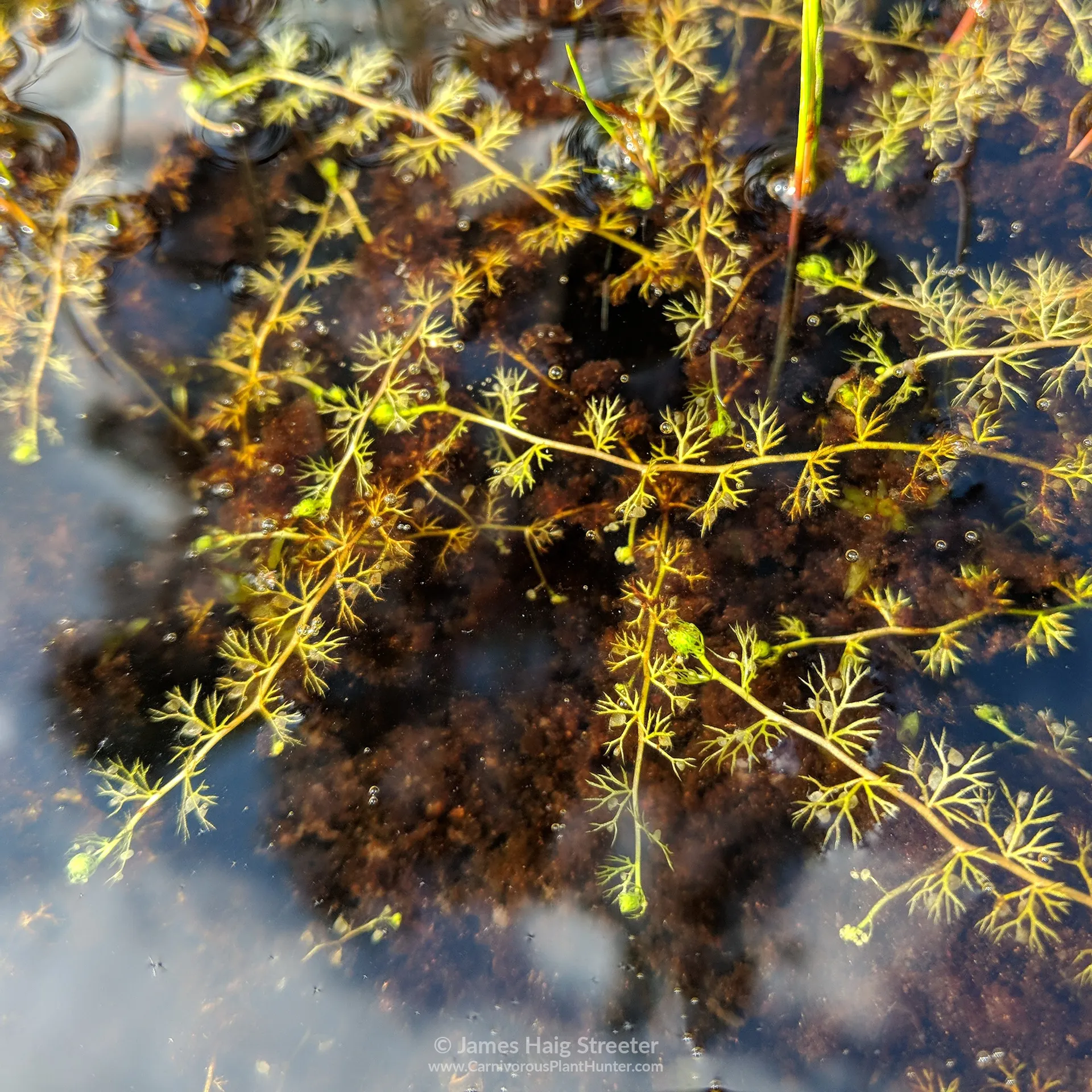
Unlike the sundews growing visibly across the sphagnum, almost all of Utricularia minor remains concealed beneath the surface of the water. To the untrained eye, it resembles a tangle of ordinary submerged pondweed, its only conspicuous feature being the small sulfur-yellow flowers that rise above the water during summer. Its fine, branching stems spread through shallow water, carrying numerous translucent bladders often only a few millimeters across. These may appear to be air-filled flotation structures. Incredibly, each one functions like a tiny stomach, acting as both a trap and a digestive chamber.
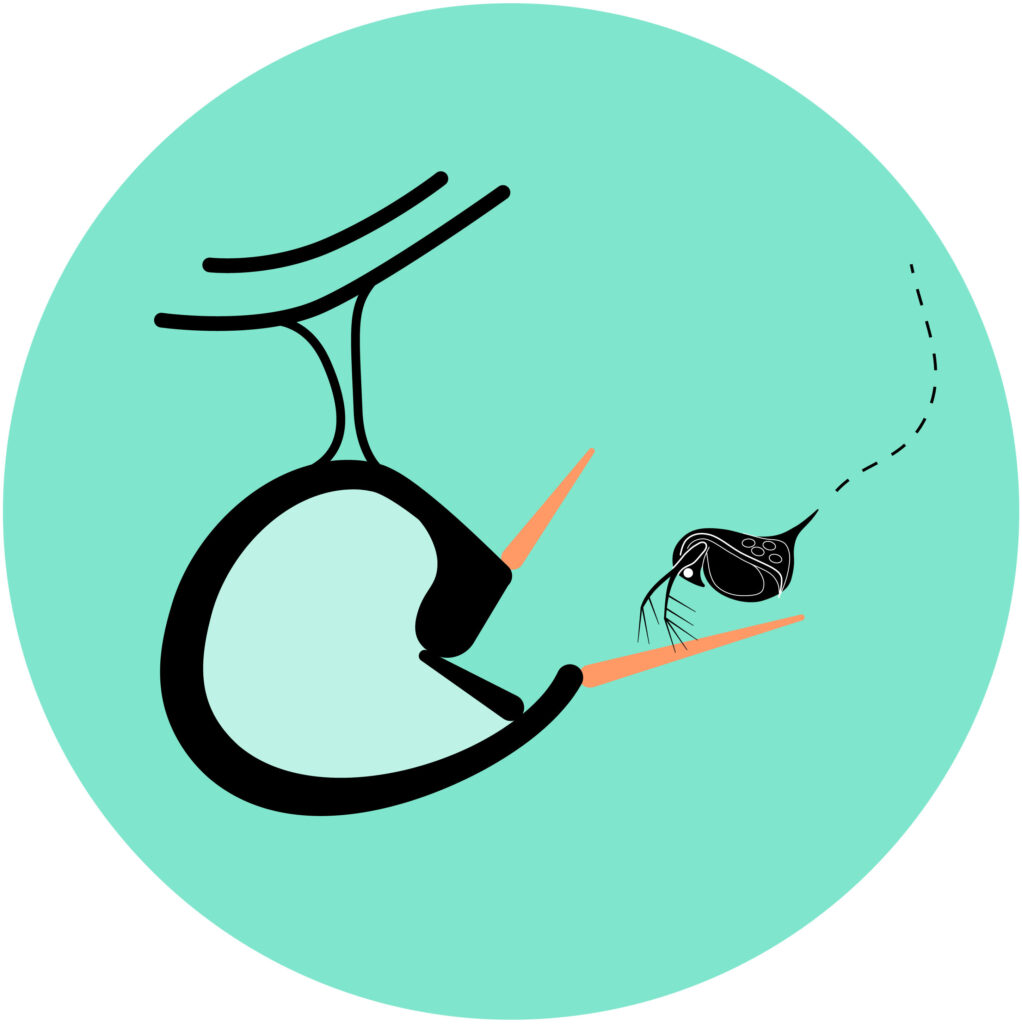
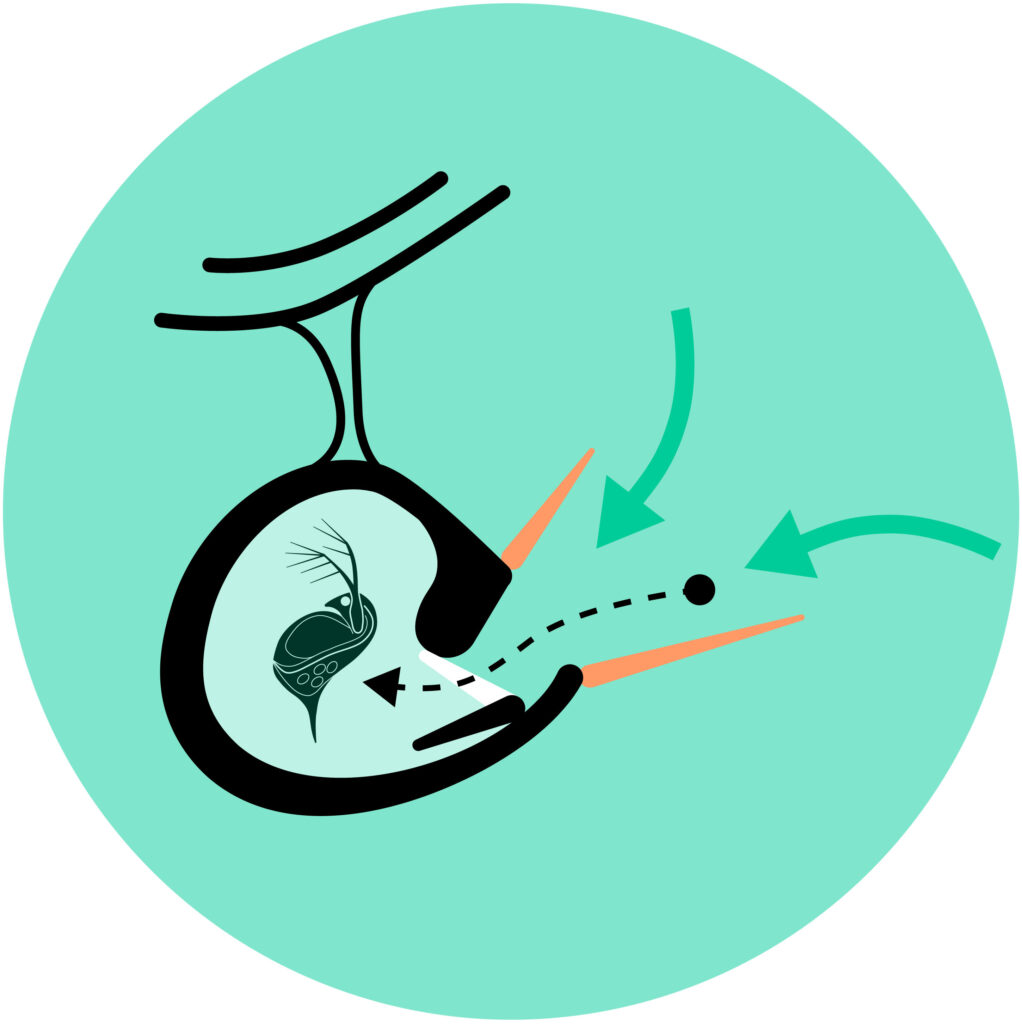
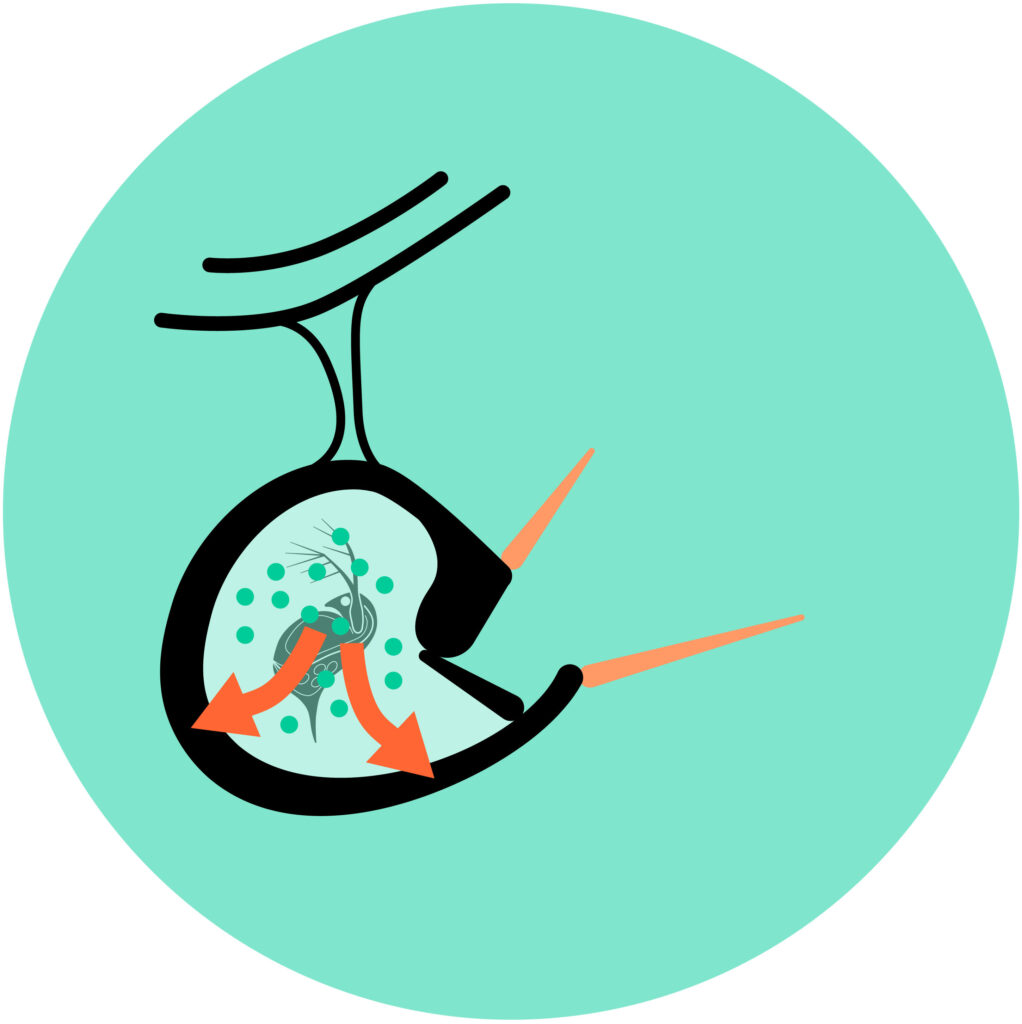
To prepare for capture, the plant pumps water out of the bladder. This creates negative pressure inside, pulling the flexible walls inward and storing elastic energy in the deformed trap. The entrance is sealed by a small door surrounded by sensitive trigger hairs. When a suitably small aquatic organism touches them, the door opens inward and the pressure difference is suddenly released. Water rushes into the bladder, carrying the prey with it, before the door closes again and traps the organism inside. Enzymes are then released and digestion begins.
In studied aquatic bladderworts, the suction phase occurs in around 0.5 to 2 milliseconds. For comparison, the famously rapid prey-capture strike of a frogfish—a type of anglerfish—takes around 6 milliseconds, making the bladderwort’s suction between 3 to 12 times faster. It is an extraordinary solution to predation, relying not on muscles or a nervous system, but on pressure, geometry, and the sudden release of stored elastic energy. And it belongs to a plant that most people walking across Thursley Common’s boardwalk will never notice.
3. Enzymes are released to digest the prey, which the plant then absorbs.
2. The trap’s door opens for a split second, sucking the prey inside.
1. A trigger hair is touched by its aquatic prey, activating the trap.
A young dragonfly nymph and a bladderwort could hardly be more different, yet both are predators. That they hunt similar prey raises the possibility of an unusual form of ecological competition.
The nymph and the plant do not confront one another directly, but each may remove prey that might otherwise have been available to the other. Ecologists describe this as exploitative competition: two predators drawing from the same limited resource.
Whether this occurs to a meaningful degree between young dragonfly nymphs and Utricularia minor at Thursley has not, as far as I can find, been studied. The extent of any competition would depend on how closely their prey and microhabitats overlap, and whether the shared prey is sufficiently limited. It is also possible that both simply benefit from the abundance of tiny life within the pools without significantly affecting one another. But the overlap is real enough to make the question worth asking.
Within the same shallow water, an animal armed with an extendable mouthpart hunts alongside a plant equipped with vacuum-powered traps, both potentially drawing prey from the same submerged food web. This alone challenges what many people would consider possible.
IUCN Conservation Rating: Least Concern
Utricularia minor was formally described by Carl Linnaeus in 1753. It has a broad circumpolar distribution across the cooler regions of Europe, Asia, and North America. Within Britain, it is most frequent in northern and western areas, particularly Scotland, with more scattered populations in southern and eastern England, including Thursley Common.
The species grows submerged in shallow, acidic, nutrient-poor pools, within bogs and wet heathlands. It is often loosely anchored among vegetation or peat, although it may also survive suspended in the water.
Globally, Utricularia is one of the two largest genera of carnivorous plants, alongside Drosera, with more than 230 recognized species. While some, including Utricularia minor, are aquatic, most species grow terrestrially in waterlogged soils. Seven species are currently recorded in Britain, all of which are aquatic.
Thursley Common is about a 15-minute drive southwest of Guildford, Surrey, and approximately 50 minutes by car from London Heathrow Airport (LHR). Access is best from the Moat Pond Car Park, off Thursley Road. From there, a boardwalk leads across the common; all three carnivorous plant species can be found along this route.
At 325 ha, Thursley Common forms part of the much larger 2,765 ha Wealden Heaths National Nature Reserve, which extends into the neighboring counties of West Sussex and Hampshire.
Thursley Common is a sensitive wet heath and bog habitat. Visitors should stay on established paths and boardwalks, avoid trampling wet ground, and follow all local signage and guidance. This page is intended to raise awareness of the common’s natural history, not to encourage disturbance of its fragile plant communities.
Map icons show approximate plant locations only, leaving the exact whereabouts to the intrepid explorer to uncover. GPS data from iNaturalist.org is a great starting point to do this.
What makes Thursley particularly interesting is not simply that three carnivorous plant species grow here, but the way they fit into a much larger predatory landscape. Adult dragonflies hunt above the ponds, while smaller damselflies may occasionally become trapped by sundews growing at the water’s edge. Beneath the surface, dragonfly and damselfly nymphs are also predators, hunting within the same food web as carnivorous bladderworts — plants equipped with vacuum-powered traps that operate faster than any animal suction feeder yet measured.
The boundaries between hunter, competitor, and prey are continually shifting. More importantly, so are the boundaries between what most people imagine a predator to be and what a plant is capable of.
“…[shifting] the boundaries between what most people imagine a predator to be and what a plant is capable of.”
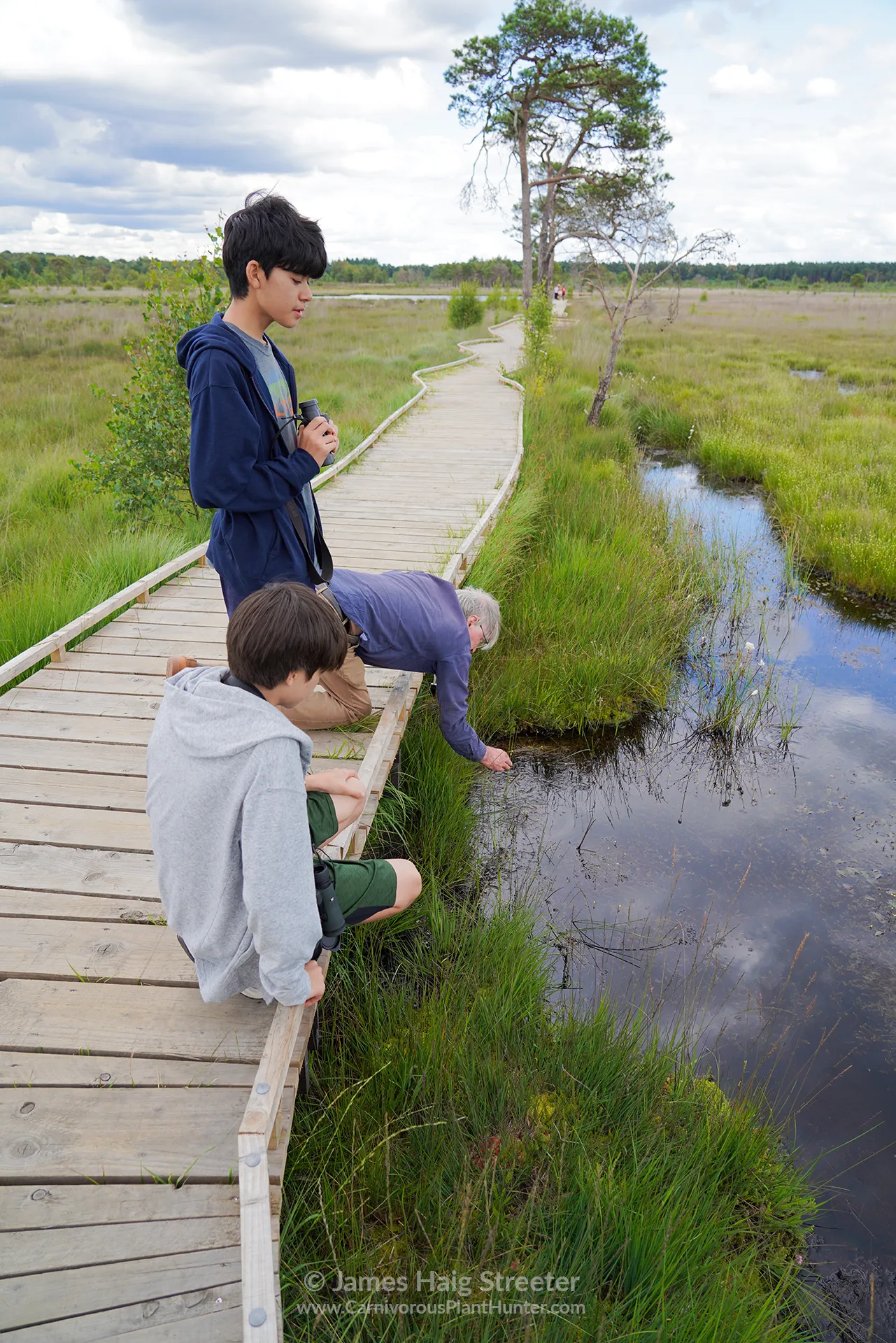
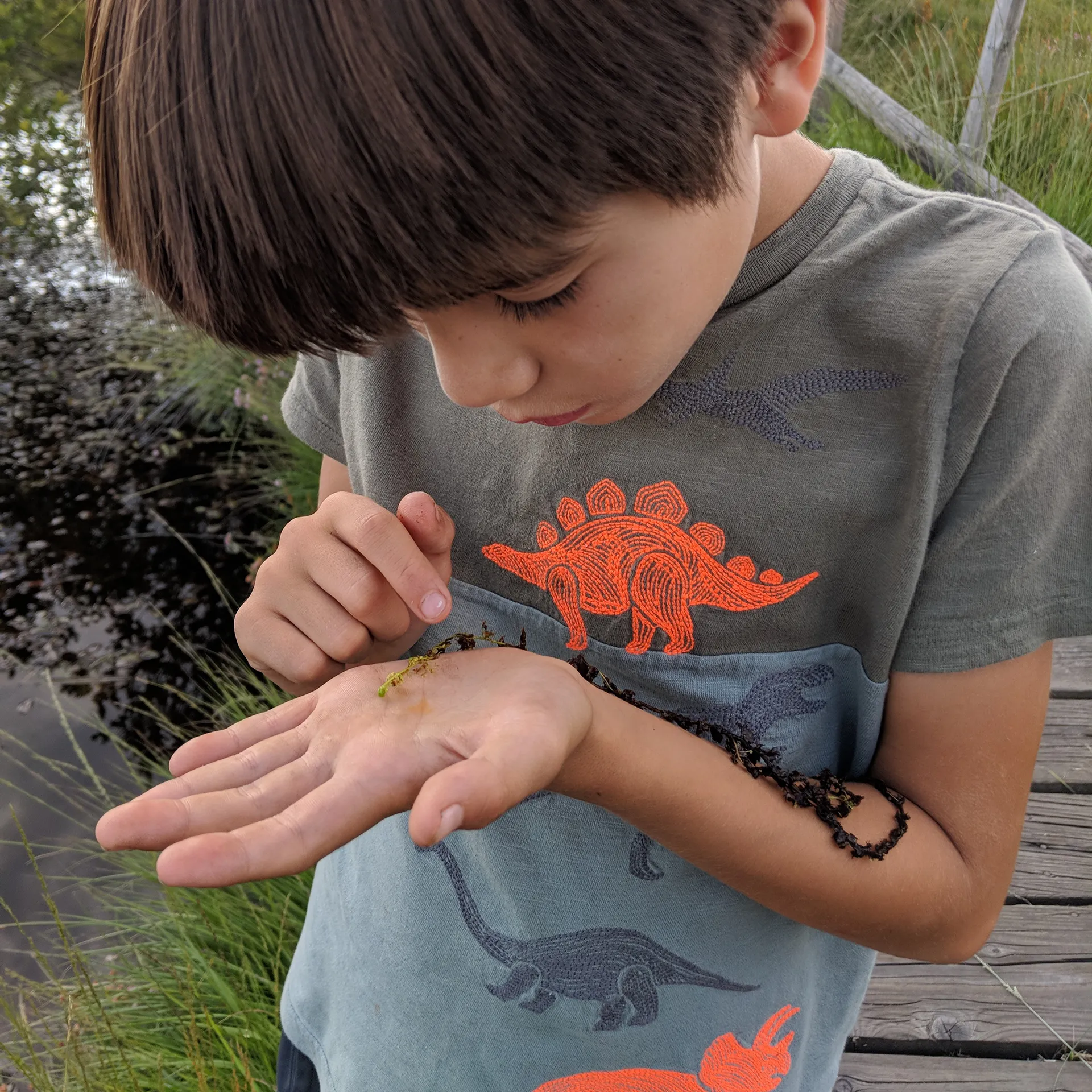
Left: My dad and children hunting for bladderwort along the boardwalk. Right: My son examining a strand of Utricularia before returning it to the pond.
All of this is taking place beside a tranquil English village, within easy reach of London. There are no towering tropical pitchers or flytraps snapping visibly shut; the sundews sit low among the moss, while the bladderwort’s traps remain hidden beneath dark water. Yet that is part of what makes Thursley Common so revealing. Extraordinary natural phenomena are not confined to remote rainforests or distant mountains. They are unfolding in ponds, bogs, and patches of heathland close to home, often unnoticed. Carnivorous plants, with their bold and unmistakable adaptations, give us a way into this hidden world. They catch the eye, then sharpen it, helping us notice the wider relationships, pressures, and possibilities that were there all along.
The dragonflies may be Thursley’s most celebrated hunters, but through the plants growing around and beneath them, the entire wetland begins to look far more extraordinary.
Looking for your next adventure?
Explore the Plant Map to discover more wild locations, habitats, and species around the world.
James is an award-winning landscape architect turned documenter of wild carnivorous plant habitats. He has spent decades tracking these remarkable species across the globe, guided by research, patience, and the joy of discovering plants in the places nature intended.
A member of the IUCN Carnivorous Plant Specialist Group, James founded the Carnivorous Plant Hunter to help people experience carnivorous plants in the wild, understand the stories behind them, and connect more deeply with the natural world.
What began as a personal project to map wild plant sightings has grown into a platform where exploration, science, and the wild world of carnivorous plants collide.
The free Ultimate Carnivorous Plant Nursery Guide will help you find trusted specialist nurseries in your region, so you can begin with healthy plants, avoid wild-collected material, and support conservation through ethical cultivation.
You’ll also receive the Explorer’s Notebook, giving you early access to new field stories, discoveries, and upcoming Explorer Guides.
Explorer’s Notebook emails are occasional and meaningful. Unsubscribe anytime.

Why carnivorous plants are more than curiosities — and how their traps reveal habitat, evolution, adaptation, and the natural world more clearly.

Discover Drosera binata var. multifida in Noosa, Australia — a giant fork-leaved sundew that reveals evolution, climate, and habitat in action.
The Green Swamp Preserve. One of the last strongholds of the Venus flytrap — and a mecca for carnivorous plant hunters.
A free guide to buying carnivorous plants safely. Learn where to buy Venus flytraps and pitcher plants, avoid wild-collected plants, and grow them successfully.
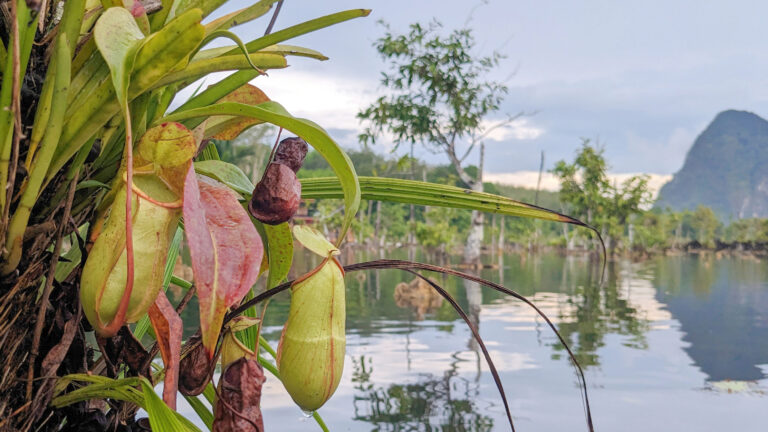
I found my first wild Nepenthes in the last place I expected — growing epiphytically in the middle of a lake.
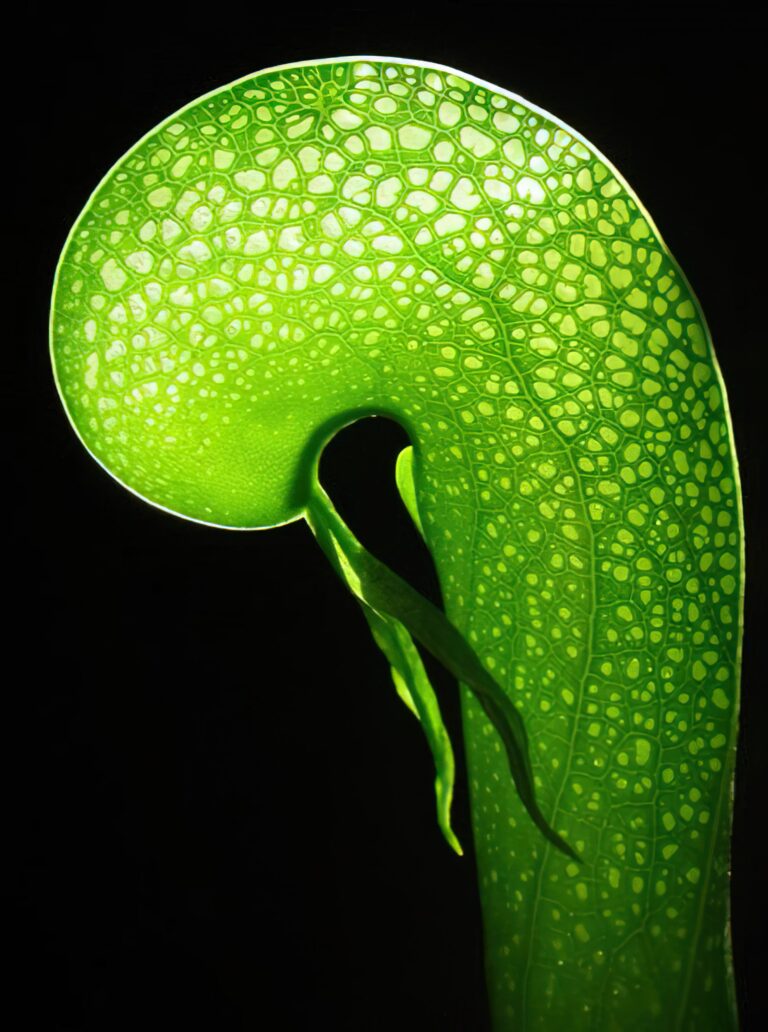
What carnivorous pitcher plants can teach us about creativity, constraint, biomimicry, and designing with nature’s principles rather than against them.